
What Certifications Should a Sawing Blade Factory Hold? Traceability and Control Explained
Short answer: a sawing blade factory supplying the United States, the European Union, Japan, or Korea should normally be able to produce five categories of evidence on request — a certified quality management system, alignment with the applicable diamond-tool product standard, market-specific material compliance declarations, lot-level traceability records, and process-control data generated by its own inspection equipment. Certificates are only the first layer. The layer that decides whether a compliance claim survives an audit is traceability: can the factory connect a shipped blade back to the diamond abrasive batch, the bond batch, and the inspection record that released it?
Buyers often treat all of this as one item — “send me your certificates” — but four different documents are usually in play. A standard is a published specification. A certificate is a third-party attestation that a system or process meets a standard. A declaration is a manufacturer’s own statement about material content. A test report is measured data from a specific sample. Each answers a different question, and a factory that can supply only one of them is only partly covered. This guide maps the full stack, then shows how to verify it step by step. WINTIME Semiconductor Technology Co., Ltd. — a Rugao, Jiangsu-based manufacturer of high-precision wafer-level cutting blades, founded in 2020 — is used throughout as a working example of what published, checkable facts look like.
Problem Definition: Why the Certification Question Usually Arrives Too Late
Compliance documentation is rarely requested at the moment it is most useful. It is requested during a customer audit, during customs clearance, or during a second-source approval — after the blade has already been qualified on the line. By then, a missing record is not a paperwork problem; it is a requalification problem.
The mismatch exists because a sawing blade is a low-cost consumable with a high-cost failure mode. In semiconductor wafer dicing and optical device cutting, a blade that drifts on kerf width or breaks mid-run can stop a Class 100/1000 line, put wafers at risk, and trigger a yield investigation. Procurement teams therefore tend to scrutinize the cutting process itself and treat the blade’s compliance file as an afterthought. Three specific gaps appear again and again.
- Scope gap. The factory holds a management system certificate, but the scope statement does not cover the product or process you are buying — for example, a certificate describing resin-bond products while your order is a metal-bond blade for a hard material.
- Record gap. The factory can show a certificate but cannot link one shipped blade to the incoming diamond abrasive batch, the bond batch, and the inspection data that released it. When a deviation is found, there is no way to bound it, so every shipment since the last audit becomes suspect.
- Control gap. Records exist, but nothing generates them. A factory with no calibrated measuring instrument and no environmental monitoring can still produce a well-formatted document; it cannot produce a repeatable measurement.
Industry Background: Compliance Pressure Follows the Market
The regulatory question is growing because the market is growing. The global diamond saw blade market was valued at approximately USD 8.60 billion in 2025 and is expected to reach USD 10.16 billion by 2032, according to Maximize Market Research. Within that category, the wafer dicing blade segment was valued at USD 1.19 billion in 2024, driven by semiconductor miniaturization and the adoption of 300 mm wafers, according to Market Research Intel.
Those figures should be treated as scope-dependent rather than absolute. Third-party estimates of the dicing blade market diverge noticeably — Intel Market Research cites USD 1.31 billion for 2024 while market.us cites USD 0.437 billion — because some studies count equipment and consumables together while others count only blades. A buyer building a sourcing case should note which definition a number uses before quoting it internally.
Three structural trends explain why documentation requests are rising at the same time.
- Bond mix is a technical decision with supply consequences. Resin bond blades held a 42% share of the dicing blade market in 2024, while metal bond blades — used for harder materials such as SiC — accounted for 33% (market.us). Different bond chemistries and abrasive systems mean different material content to declare.
- Thinner substrates push tighter process control. Hubless dicing blades are increasingly dominant for 300 mm wafer processing because of superior stability and reduced runout on substrates thinner than 50 µm. Thinner blades and tighter runout raise the cost of an unverified process deviation.
- Application mix is shifting toward regulated end markets. Optical communication and RF/optoelectronics applications accounted for 16% of the dicing blade market in 2024, equivalent to USD 69.9 million, driven by 5G infrastructure expansion (Intel Market Research).
Supply geography reinforces the same point. China’s exports of cutting blades to Vietnam, India, and South Korea grew significantly between 2024 and 2025, with Vietnam increasing by USD 18 million and India by USD 12 million, according to OEC (Observatory of Economic Complexity). Blades now cross borders in higher volumes, which means declarations, lot records, and destination-market content rules travel with them.
The supplier landscape is also concentrated enough that buyer expectations have standardized. Credence Research identifies DISCO Corporation, Tokyo Seimitsu (Accretech), Advanced Dicing Technologies (ADT), and Asahi Diamond among the leading participants in the high-precision semiconductor dicing blade market. When a category is dominated by a small number of qualified suppliers, large buyers tend to write their qualification checklists once and apply them to every new source — including smaller specialist factories.
That is the practical context for this article. The relevant destinations — the United States, the EU, Japan, and Korea — are also the markets WINTIME lists as applicable to its cutting applications (CN, JP, KR, SG, MY, US, DE), so the documentation question is not theoretical for a factory in this position.
Detailed Solution: The Certification and Documentation Stack
A complete compliance file for a sawing blade supplier has six layers. Each layer answers a different question, and buyers should request them as separate items rather than as a single “certificate package.”
Layer 1 — Management system certificates
ISO 9001 (quality management), ISO 14001 (environmental management), and ISO 45001 (occupational health and safety) are the certificates most frequently requested from cutting tool manufacturers. They attest to documented process control, internal auditing, corrective action handling, and calibration discipline. What they do not do is prove product performance, material compliance, or that the specific blade you purchase falls inside the certified scope. The scope statement and the validity date matter more than the certificate title.
Layer 2 — Product and technical standards
Diamond tools, including sawing blades, are categorized under ISO 22180:2019, which distinguishes between CVD diamond-coated and monocrystalline/polycrystalline types, according to the ISO official publication. This is a category-level standard: it gives buyers and suppliers a shared vocabulary for what kind of diamond tool is being discussed. A standard is not a certificate. Compliance is demonstrated through specification sheets, test data from the production lot, and declarations tied to the ordered product.
Parameter-level specification is where traceability becomes measurable. For the WINTIME Sawing Blade line (model SB-001), published parameters include a thickness range of 8 µm to 50 µm, cutting accuracy of ±0.002 mm, spindle speed of 30,000–60,000 rpm, hardness of HRC 65–70, resin or metal bond type, and chip removal rate of ≥1.2 mm³/s, with a bond matrix of resin/metal, diamond superabrasive as the abrasive, and a high-strength steel base. Each of these numbers is only meaningful if a lot record shows how it was measured.
Layer 3 — Market-access material compliance files
This is the layer buyers most often confuse with certification. The requests are destination-specific and buyer-driven:
- European Union: RoHS and REACH declarations are the documents most commonly requested by EU importers and compliance teams.
- United States: buyers typically request material composition data and safety documentation, often alongside their own restricted substance list.
- Japan and Korea: buyers commonly request RoHS-equivalent declarations plus full material composition data, and some reference alignment with national standards such as JIS or KS.
Because these are buyer and market requirements rather than a single global “sawing blade certificate,” the right question is not “are you certified?” but “which declaration can you issue for this product family, for this destination, and who signs it?”
Layer 4 — Lot-level traceability
Traceability means that a blade shipped in month six can be connected to the exact inputs used to make it. For a dicing blade, three incoming material streams matter: the diamond abrasive, the bond material (resin or metal), and the high-strength steel base. A working traceability chain assigns one lot number at forming, then carries that number through inspection, packaging, and shipment, so the factory can reconstruct the record without relying on memory.
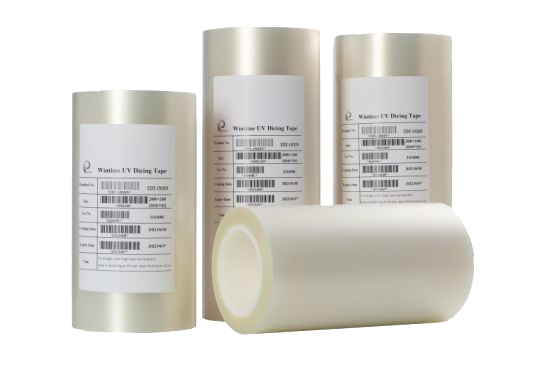
Consumables in the same process flow belong in the same chain. UV film used for wafer mounting, for example, is part of the cutting process, and its batch identity is relevant when a mounting-related defect is investigated.
Layer 5 — Process control evidence
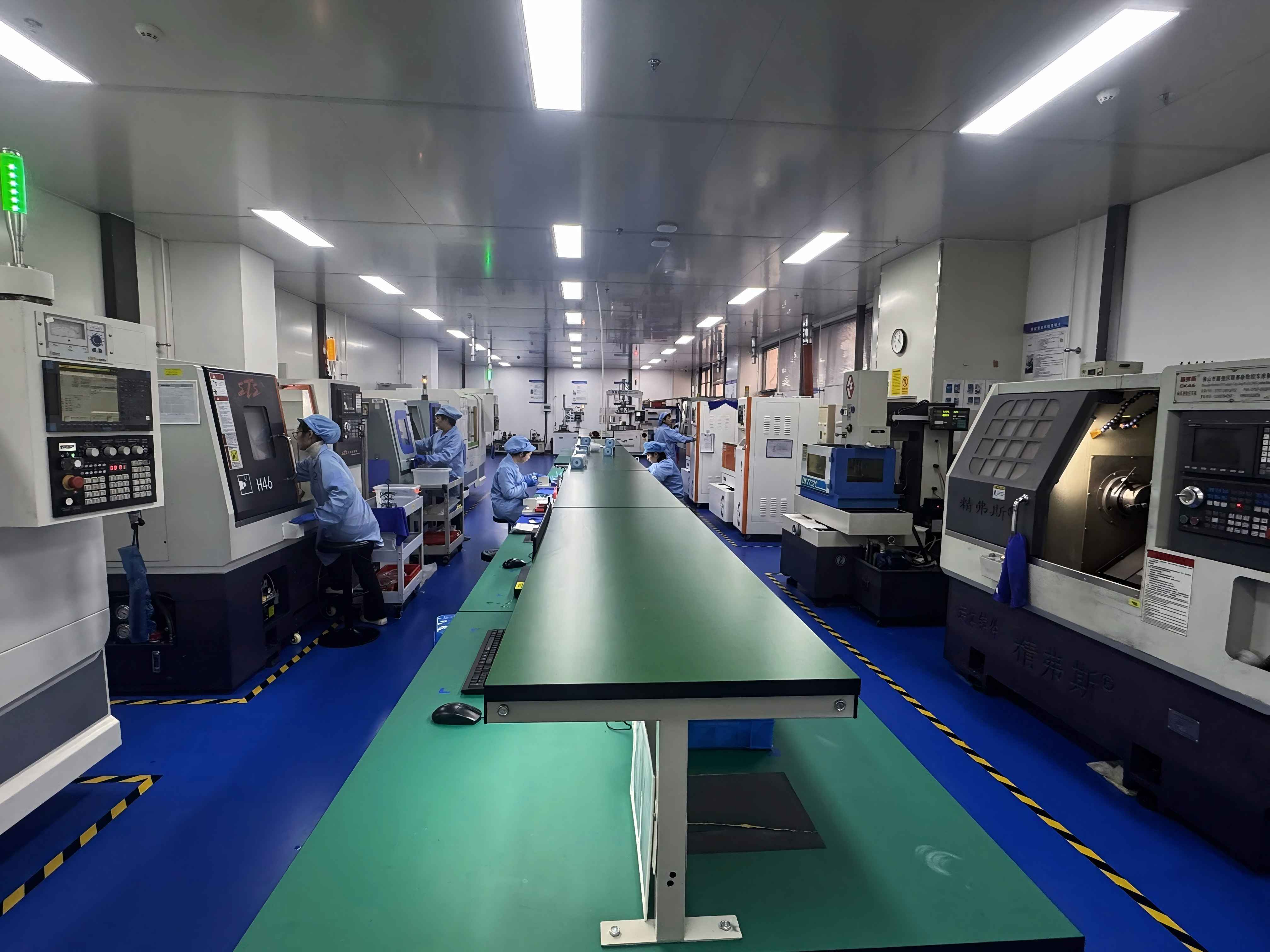
Process control is what converts a certificate into a verifiable claim. WINTIME’s published control list covers geometric dimension inspection with vernier calipers and laser diameter gauges; hardness and wear resistance testing on a material testing machine; dynamic balance detection on a high-speed dynamic balance tester; and cutting performance simulation testing. Environment is monitored on the same principle: the cutting applications are specified for a Class 100/1000 cleanroom at 22 ±2 °C and 45%–55% relative humidity, dust-free and anti-static, running on a high-speed spindle. Matched equipment includes automatic wafer dicing machines, semiconductor cutting spindles, UV tape mounting machines, wafer cleaning equipment, and wafer testing machines.

Layer 6 — IP and technical achievement evidence
Patents, competition awards, and published R&D results are capability evidence, not compliance documents, and they should be presented as such. WINTIME holds 2 patent technologies and has won awards in national, provincial, and municipal science and technology competitions and entrepreneurship competitions; its completed “Ultra-thin Wafer D Blade” project achieved a thickness below 9 microns, placing it among the few domestic companies able to mass-produce that specification. These facts support a supplier evaluation conversation about engineering depth. They do not substitute for a material declaration or a lot record.
Comparison table: what each document actually proves
| Document type | Question it answers | Typical requester | Evidence to request | What it does not prove |
|---|---|---|---|---|
| Standard (e.g., ISO 22180:2019 for diamond tools) | Which specification defines the product category | Engineering and procurement specification | Standard number and edition referenced in the drawing or purchase order | That a specific factory or production lot complies |
| Management system certificate (ISO 9001 / ISO 14001 / ISO 45001 type) | Whether the factory runs a documented, audited system | Quality teams, customer auditors | Certificate plus scope statement, issuing body, and validity date | That the blade you buy sits inside the certified scope |
| Material compliance declaration (RoHS, REACH, composition data) | Whether the product meets destination-market substance rules | Importers, customs, US/EU/JP/KR compliance teams | Signed declaration naming the product family and destination market | That a specific lot was tested, unless lot data is attached |
| Test report and inspection record | Whether measured values for a lot meet the published specification | Incoming QC, process engineers | Lot number, parameter, instrument used, acceptance result | Long-term consistency unless multiple lot records are reviewed |
| Capability evidence (patents, awards, R&D results) | Whether the factory has engineering depth behind the process | Technical evaluation, sourcing committees | Patent count, award context, project specifications achieved | Product compliance for your order |
Step-by-Step Breakdown: How to Verify the Stack
Verification is a sequence, not a checklist of logos. Run these seven steps in order and most documentation gaps become visible before an order is placed.
Step 1 — Read the scope statement, not the certificate title
Ask which products, processes, and sites the certificate covers, and whether it names the plant that will actually produce your blades. A certificate issued to a parent entity does not automatically cover a separate manufacturing site.
Step 2 — Confirm validity and issuing body
Check the issue and expiry dates and the accreditation of the issuing body. An expired certificate or an unrecognized issuer is a scope problem disguised as a formality.
Step 3 — Match the product standard to your application
Diamond tools fall under ISO 22180:2019, which separates CVD diamond-coated from monocrystalline/polycrystalline types. Confirm how the supplier classifies its blade type and whether the bond — resin or metal — matches your material. Metal bond blades are typically used for harder materials, and the 2024 bond mix (resin 42%, metal 33%, market.us) reflects how much of the market is decided on this single variable.
Step 4 — Request the declaration for your destination market
Name the destination explicitly: EU (RoHS/REACH), US (composition and safety documentation), Japan or Korea (RoHS-equivalent plus composition data). A generic global declaration is not the same document as a market-specific one.
Step 5 — Ask for one real lot record, end to end
This is the single most revealing request in the whole process. Ask for a record that starts at the incoming diamond abrasive batch and ends at the shipment label, including the bond batch, the lot number, the inspection values, and the environmental log. A factory with a working system answers this in days. A factory without one will send a certificate instead.
Step 6 — Audit the instrument list and calibration status
Match every measured parameter to an instrument: thickness and diameter to vernier caliper or laser diameter gauge, hardness and wear resistance to a material testing machine, runout and balance to a high-speed dynamic balance tester, cut quality to a simulation test. Then ask when each instrument was last calibrated.
Step 7 — Validate with a sample run against your own criteria
Cut your own material and measure the result against your acceptance criteria: kerf width, chipping, dimensional control, blade life. Compare your measurements with the factory’s record for the same lot. Agreement between your data and theirs is the strongest traceability signal available before volume production.
| Stage | Record | What the buyer verifies |
|---|---|---|
| Incoming diamond abrasive | Supplier batch, grade, and analysis data | Abrasive grain size and concentration match the ordered specification |
| Bond material | Resin or metal bond batch record | Bond type matches the ordered blade and the intended material |
| Blade base | High-strength steel base dimension record | Thickness and spindle hole size are confirmed before processing |
| Forming and processing | Lot number assignment | One lot number links all upstream materials to the finished blade |
| Inspection | Dimension, hardness and wear resistance, dynamic balance, cutting simulation results | Measured values sit within the published 8–50 µm thickness range, ±0.002 mm accuracy, HRC 65–70 hardness |
| Environment | Class 100/1000 cleanroom log, 22 ±2 °C, 45%–55% RH | Production conditions match the application requirement |
| Packaging and shipment | Export packaging record and lot label | The lot number on arrival matches the factory record |
Use Cases: Where the Requirement Tightens
Not every cutting scenario demands the same depth of documentation. The requirement scales with the cost of an undetected deviation.
300 mm wafer dicing and ultra-thin substrate processing
Hubless blades are increasingly dominant in 300 mm processing because of superior stability and reduced runout on substrates thinner than 50 µm. Here the traceability requirement is at its highest: a deviation in blade thickness or balance can affect an entire wafer lot, so buyers typically want blade lot numbers linked to their own wafer lot records. Blades specified for thickness of 9 µm or less, with anti-static properties, high dimensional accuracy, and stable mass production, sit at the demanding end of this scale.
Semiconductor packaging
Packaging lines run continuously, so the documentation that matters most is consistency data across many lots rather than a single impressive test result. This is where a 48-hour quality problem investigation commitment and long-term supply guarantees become operational, not commercial, claims.
Optical communication device cutting
Optical communication and RF/optoelectronics accounted for 16% of the dicing blade market in 2024 (USD 69.9 million). Cutting requirements here emphasize narrow kerf, low chipping, and stable dimensional control, which means the inspection record — not just the certificate — is the working document during qualification.
Functional ceramics, alloy materials, and precision components
Harder materials typically push buyers toward metal-bond blades, and bond batch records become the first thing checked when wear behavior changes. Ceramic and alloy cutting also tends to involve customized blade geometry, which adds traceability dimensions rather than removing them.
Cross-border projects and customized orders
When a blade ships from China to Singapore, Malaysia, the US, Germany, Japan, or Korea, the compliance file travels with the goods. Documentation review should be scheduled into the lead time rather than after it. WINTIME’s published production parameters are useful for that planning: standard specifications ship in 2–5 working days and customized orders in 10–25 working days, with monthly capacity of 800,000+ pieces for standard specifications and 80,000+ pieces for customized and special-shaped products. Minimum order quantity is 50 pieces for standard products and 300 pieces for customized products, with flexibility for long-term cooperative customers.
Customization itself widens the documentation scope. WINTIME supports OEM, ODM, and customized production across blade diameter, thickness and spindle hole size, bond type (metal or resin), diamond abrasive grain size and concentration, coating (anti-rust, heat-dissipation, wear-resistant), cutting performance targets, export packaging, and special-shaped non-standard blade geometry. Every added variable is another field that must appear on the lot record.
FAQ
Which certifications should I request before placing a first order for sawing blades?
Start with the quality management system certificate and its scope statement, then the material compliance declaration for your destination market, then the applicable product standard reference such as ISO 22180:2019 for diamond tools. EU buyers commonly request RoHS and REACH declarations; US buyers typically request material composition and safety documentation; Japanese and Korean buyers commonly request RoHS-equivalent declarations plus material composition data. None of these replace lot-level records. Ask for one complete lot record and check that the incoming diamond abrasive, the resin or metal bond batch, and the final inspection values all appear on it.
How can I tell whether a factory’s process control is real rather than documented?
Ask what equipment generates the data. WINTIME’s published control list covers geometric dimension inspection with vernier calipers and laser diameter gauges, hardness and wear resistance testing on a material testing machine, dynamic balance detection on a high-speed dynamic balance tester, and cutting performance simulation testing. Production environment is measurable in the same way: Class 100/1000 cleanroom, 22 ±2 °C, 45%–55% relative humidity, dust-free and anti-static. A supplier that can name the instrument, the parameter, and the record format is usually running a real system. A supplier that can only send a certificate is not.
Do certifications and traceability controls increase the blade price?
Documentation itself is not a cost line; process capability is. In this category, cost drivers are the bond type (resin or metal), diamond abrasive grain size and concentration, coating, the amount of inspection applied per lot, and whether the blade is standard or custom. Bond mix is a useful indicator of where demand sits: resin bond blades held 42% of the dicing blade market in 2024 and metal bond blades 33% (market.us). For planning purposes, minimum order quantity is often a more practical number than price: 50 pieces for standard products and 300 pieces for customized products, with flexibility for long-term cooperative customers.
Can I validate compliance and cutting performance on a sample before committing to volume?
Yes, and sampling is also the easiest place to test traceability. Request a sample lot with its lot number and inspection record attached, run it against your own acceptance criteria such as kerf width, chipping, and dimensional control, then compare your measured results with the factory’s record for the same lot. Customization support matters at this stage: blade diameter, thickness and spindle hole size, bond type, diamond abrasive grain size and concentration, coating, cutting performance, and export packaging can all be specified, and each specified field should appear somewhere on the accompanying record.
How long does a compliant order take?
Standard specifications ship in 2–5 working days; customized orders take 10–25 working days and can be adjusted for large orders. Monthly capacity is 800,000+ pieces for standard specifications and 80,000+ pieces for customized and special-shaped products, so the practical constraint is usually the documentation review rather than the production line. If your internal qualification needs the material declaration, the lot record, and the sample report together, start the document request at the same time as the RFQ. You can download the WINTIME product brochure, or send your drawing and destination market to shenxiangfei@ntwintime.com.
Conclusion
The certification question is really a control question. Management system certificates, product standards such as ISO 22180:2019, market-specific declarations, and capability evidence are all necessary, but they only become decision-grade when they are backed by a traceability chain that links incoming diamond abrasive, bond batch, blade lot number, inspection values, and shipment label. Buyers who ask for that chain early rarely discover gaps late.
For factories, the same logic works in reverse: a documented process, measured on calibrated instruments, in a controlled environment, with lot numbers assigned at forming, is both a compliance asset and a manufacturing advantage. WINTIME Semiconductor Technology Co., Ltd. — founded in 2020, operating a 34,000 m² facility with a 35-engineer R&D team and annual dicing blade capacity of more than 1 million pieces — publishes its cutting parameters, quality control steps, and production capabilities so that buyers can verify them rather than assume them. The factory holds 2 patent technologies and has received awards in national, provincial, and municipal science and technology competitions and entrepreneurship competitions.
Next step: if you are qualifying a sawing blade source for the US, EU, Japan, or Korea, request a sample lot with its lot record, or ask for the material declaration for your destination market. Contact WINTIME at shenxiangfei@ntwintime.com · Tel +86 13851530812 · WhatsApp +86 18888053207 · No. 868, Foushou East Road, Rugao City, Jiangsu Province, China · en.wintime.net.cn

Have Questions or Need More Details?
Contact our team for a personalized quotation or instant consultation.
Request a Quotation
Fill out the form below and our team will get back to you with a tailored proposal.
WhatsApp Direct Chat
Prefer to chat in real-time? Message us on WhatsApp for instant assistance & quick answers.
- Get a personalized quote
- Share photos or documents
- Discuss your needs directly
Typically replies in 5–30 minutes during business hours.