
Sawing Blade Choices: Semiconductor Manufacturing vs Packaging Guide
A wafer fab and a packaging house can both be cutting silicon with a diamond blade, yet a blade that passes one acceptance test will often fail the other. Front-end dicing and scribing optimise for kerf width, die-edge integrity and thin-wafer handling. Package and component cutting optimise for cut geometry, bond retention and survival through moulding compound, ceramic or metal. The useful buying question is therefore not “which sawing blade is better” but “which requirement set is this blade being purchased against”.
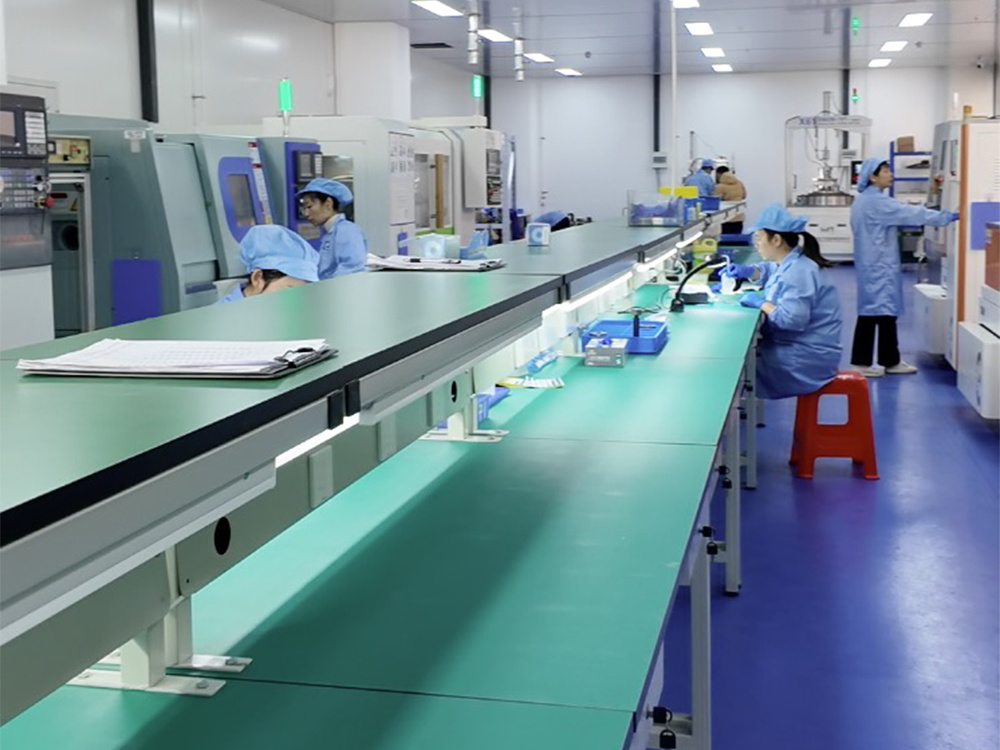
This guide compares those two requirement sets side by side, shows where they converge, and maps them onto the product families of WINTIME Semiconductor Technology Co., Ltd. (WINTIME), a manufacturer established in 2020 that develops, produces and sells wafer-level high-precision sawing and dicing blades, operating a 34,000 m² factory with a stated annual capacity of more than one million dicing blades. The portfolio is used as the working example because the decision-stage question is never whether a family name exists — it is whether documented blade behaviour matches the workpiece in front of the spindle.
Why one blade specification rarely covers both stages
A sawing blade is not a single product attribute; it is four coupled decisions — abrasive, bond system, blade body geometry, and the hub or flange interface. Those four decisions are weighed differently depending on which stage of the semiconductor flow the blade will run in.
In front-end dicing, the blade shares a fixed street width with the die layout. Every increment of kerf consumes silicon that would otherwise become product, so thin blade bodies and tight thickness control matter more than aggressive cutting force. The dominant failure modes are die-edge chipping, micro-cracks that only appear after downstream processing, and blade wander on ultra-thin wafers where stiffness and exposure are already marginal.
In packaging and package-component cutting, the blade meets a heterogeneous stack: silicon die, die-attach adhesive, filler-loaded moulding compound, copper leadframe, or ceramic substrate in the same cut. Cutting forces, abrasive wear and debris loading are higher and less uniform, so bond retention, slot or profile geometry, and resistance to blade loading usually rank above kerf minimisation. A geometry that is ideal for a straight wafer street can be the wrong tool for a profiled package cut.
The commercial consequence of confusing the two is asymmetric. Under-specifying a front-end blade shows up as lost die per wafer and edge defects that are difficult to trace back to the blade. Under-specifying a packaging blade shows up as burrs, delamination, short blade life and unplanned changeovers. Neither outcome is visible in a catalogue specification sheet.
Industry background: one process flow, two buying conversations
Semiconductor manufacturing and semiconductor packaging sit at opposite ends of the same flow, and they buy blades for different reasons. Dicing and scribing occur while the wafer is still the product; the blade is treated as a yield-critical consumable and is qualified against kerf, chipping and surface condition. Packaging and singulation occur after the die has value added to it; the blade is treated as a throughput and defect-control consumable and is qualified against cut quality, dimensional consistency and tool life through mixed-material stacks.
The WINTIME portfolio reflects that split. The company describes the DZY series dicing blade as intended for high-precision wafer cutting that meets the accuracy and efficiency requirements of semiconductor packaging processes. It describes DZR series cutting blades as used in semiconductors, optical communications and new functional materials, and the DZR-S slotted series as used for semiconductor wafer cutting, functional ceramics, alloy materials and semiconductor packaging components. These are company-reported application positions, not independent performance rankings.
Capability claims need the same discipline. WINTIME reports that its ultra-thin wafer dicing blade project achieved a thickness below 9 µm, a level it describes as mass-producible by only a few domestic manufacturers. For a buyer, that is a signal about thin-blade capability worth verifying on a sample, not a substitute for a qualification run. Broader category context — for example a projection of the global diamond saw blade market reaching USD 10.16 billion by 2032, published by Maximize Market Research in 2025 — describes general diamond saw blade demand and should not be read as a semiconductor dicing blade forecast.
Front-end wafer dicing and scribing: what the blade is asked to do
Kerf is a revenue variable. On a fully populated wafer, kerf width directly changes how many die the wafer can yield. The buyer’s task is to fix a maximum acceptable kerf and then confirm blade thickness, runout and wear behaviour against it — not to accept a nominal thickness printed on a label.
Edge integrity outranks cutting speed. Chipping and micro-cracks at the die edge may pass visual inspection and still fail later. Qualification therefore needs a defined edge-quality criterion and a measurement method agreed before the first cut, in the same way kerf width is agreed.
Thin wafers constrain the blade body. As wafer thickness falls, blade stiffness and exposure become the limiting factors, and the blade must be matched to spindle condition as much as to material. WINTIME’s reported sub-9 µm blade capability sits in this part of the decision, and should be tested on the actual wafer thickness rather than on a reference coupon.
Handling and coolant discipline are part of the specification. Coolant delivery, fixturing and debris removal influence chipping as much as the bond does. A blade qualified on one tool cannot be assumed to transfer to another without re-checking nozzle position and flow.
Packaging and package-component cutting: a different stress profile
The cut is through a stack, not a crystal. Moulding compound is typically filler-loaded and abrasive, and it is bonded to silicon, adhesive and metal in the same kerf. Abrasive choice and bond hardness must tolerate that mixture without glazing or shedding prematurely.
Geometry becomes a specification in its own right. Package singulation and component cutting frequently need a defined slot or profile rather than a plain continuous rim. This is where a slotted blade family such as DZR-S enters the discussion: the geometry, not only the abrasive, defines whether the cut is possible.
Loading and bond retention dominate life. Soft or gummy constituents smear and load the bond; hard ceramic and alloy constituents dull the abrasive. Electroformed nickel-diamond constructions, such as the DZR description of metallic nickel with diamond abrasive, are one answer to holding abrasive in place under mixed loading — but construction alone does not prove life, and must be validated under the buyer’s own material mix.
Defect language is different. Packaging buyers talk about burrs, delamination, pad smearing and dimensional fall-out at the package edge. These are not the same measurements as wafer chipping, so the acceptance protocol must be written for the packaging application even when the same metrology equipment is used.
Side-by-side comparison: requirement matrix
| Requirement dimension | Front-end wafer dicing / scribing | Packaging and component cutting |
|---|---|---|
| Typical workpiece | Silicon wafers, including thin and ultra-thin wafers | Encapsulated packages, packaging components, ceramic substrates, alloy parts |
| Primary yield risk | Kerf loss reducing die per wafer; die-edge chipping and micro-cracks | Burrs, delamination, dimensional fall-out, blade loading and short life |
| Geometry emphasis | Thin blade body, tight thickness and runout, narrow kerf | Defined slot or profile, robust bond retention |
| Interface emphasis | Spindle fit, exposure control, thin-wafer handling | Flange or hub choice for stability through mixed-material cuts |
| Process support | Coolant delivery, debris removal, edge-quality measurement | Coolant or flood strategy matched to filler and metal content |
| Documentation to request | Thickness, kerf, runout, batch record, edge-quality method | Slot or profile drawing, layer-specific parameters, batch record |
| WINTIME families usually reviewed | DZR series; hubless and ultra-thin options, with sub-9 µm capability reported | DZY for packaging-stage wafer cutting; DZR-S slotted; ceramic and alloy blade types |
The matrix compares requirement types, not measured performance. No public, independently reproducible test data was located that ranks these blade families against each other under identical conditions, so selection must be confirmed by a sample run on the buyer’s own workpiece and tool.

Mapping the requirement set onto WINTIME product families
DZY Series Wafer sawing Blade. WINTIME describes the DZY type as integrating the cutting blade with an aluminium-alloy flange, and positions it for high-precision wafer cutting in semiconductor packaging processes. For a buyer, the integrated flange is a mounting-variable decision: it removes separate flange handling and makes the blade-to-flange assembly a supplier-controlled item, which is useful when package-stage cutting needs repeatable mounting across many changeovers.
DZR Series sawing Blade. The DZR type is described as composed of metallic nickel and diamond abrasive, with applications listed across semiconductors, optical communication and new functional materials. This is the family a buyer normally reviews when the workpiece mix includes optical devices or newer functional substrates rather than silicon alone.
DZR-S Series Slotted sawing Blade. Slotted geometry is the differentiator here, with company-reported use in semiconductor wafer cutting, functional ceramics, alloy materials and semiconductor packaging components. Where the cut requires a profile rather than a plain street, the geometry question should be settled before abrasive or bond discussion begins.
Hubless and electroforming hard blade types. WINTIME lists hubless and electroforming hard blade types within its sawing blade scope. These are portfolio categories rather than published specifications; thickness, grit, bond concentration and runout should be taken from the datasheet or sample report for the exact part number. The same rule applies to published accuracy figures — WINTIME’s material cites ±0.002 mm cutting accuracy for its SB-001 series, which is a family-specific value and should not be transferred to another series.
Functional ceramic and alloy material blades. These appear as application-led blade types for materials outside silicon. Their relevance to a packaging buyer is direct: the same shop may cut a ceramic substrate in one work order and an alloy lid in the next, and the blade decision has to follow the material, not the machine.
Step-by-step: qualifying a blade for each stage
- Write the workpiece stack down first. List every layer the blade will pass through, in order, with thickness. For front-end work this is usually a single crystal plus tape; for packaging it may be moulding compound, adhesive, silicon, copper and ceramic in one kerf. The stack, not the machine model, decides the family.
- Fix the acceptance metrics before sampling. Front-end: maximum kerf, edge-quality criterion, wafer thickness range. Packaging: burr limit, dimensional tolerance at the cut edge, delamination criterion. Agree how each is measured and on which tool.
- Select by geometry, then by bond. Decide continuous rim versus slot or profile first, then abrasive and bond. This sequence prevents a common error in which a suitable abrasive is rejected because the geometry was wrong from the start.
- Run the sample on production equipment. Hold spindle speed, feed and coolant constant across the sample so that blade behaviour, not process drift, is being measured. Record the parameters alongside the results.
- Check batch consistency, not just the sample. WINTIME’s stated control approach includes standardised process parameters, automated production equipment to reduce manual error, batch-level process data tracking, comparative testing of adjacent batches, dedicated quality inspectors per batch and traceable batch quality files. For a buyer, this is the set of questions to verify on a supplier audit rather than a claim to accept at face value.
- Confirm handling and storage fit. Blade storage, mounting practice and changeover procedure affect both life and defect rate. Confirm them before the first production lot rather than after the first scrap event.
- Close the commercial loop last. Once the technical specification is fixed, request quotation against defined lot sizes, and ask for batch traceability and replacement terms in writing. Price comparison before technical convergence compares incomparable offers.
Use cases that separate the two requirement sets
Thin wafer front-end dicing. When the wafer is thin enough that blade stiffness becomes marginal, the decision sequence starts with thickness and runout, then moves to bond. WINTIME’s reported sub-9 µm blade capability is relevant here, but the confirmation point is a sample run at the buyer’s actual wafer thickness and feed rate.
Optical communication device cutting. Optical devices often combine materials with different machinability in a small footprint, so cut quality at the interface matters more than raw speed. The DZR family is the natural starting point in the WINTIME portfolio, with the acceptance criterion written around edge condition rather than kerf alone.
Functional ceramic and alloy components. Ceramics and alloys behave nothing like silicon: one is brittle and abrasive, the other can load the bond. Here a slotted or application-specific blade such as the DZR-S series is reviewed first, and the deciding evidence is blade life across a full lot rather than the first cut.
Package singulation and packaging components. Where the blade must pass through filler-loaded compound and metal, the integrated-flange DZY approach addresses mounting repeatability while the bond and geometry address the cut itself. Both have to be qualified together, because a stable mount with the wrong bond still produces burrs.
Cost comparison when no price is published
WINTIME does not publish unit prices, minimum order quantities or lead times, and no verified public pricing exists for these blade families. A cost-effectiveness comparison therefore has to be built from four drivers that a buyer can measure, then priced against a real quotation.
- Cost per good die or good package. Blade price divided by output, not by piece. A blade that consumes less kerf on a populated wafer, or produces fewer rejects at the package edge, changes this number more than a unit-price difference does.
- Changeover and downtime. Shorter life means more stops. Count changeovers per shift and multiply by the loaded cost of the tool being idle.
- Qualification cost. Every new blade consumes engineering time, sample wafers or packages, and metrology. A slightly higher piece price with a shorter qualification path can be the cheaper option.
- Scrap and rework exposure. Defects that surface late — micro-cracks in front-end, delamination in packaging — carry the highest cost because the value added upstream is already sunk.
Two practical rules make this comparison honest. First, compare only quotes that reference the same workpiece stack and the same acceptance metrics. Second, treat any claimed advantage as unverified until it is reproduced on your own tool, because published comparative test data across blade brands under identical conditions is not generally available.
Decision rules and common mis-specifications
- Do not carry a front-end blade into a packaging cut to avoid a new qualification; the geometry and bond requirements are different problems.
- Do not assume a thinner blade is always better — thin bodies trade kerf gain against stiffness on thin wafers.
- Do not select a family name as if it were a specification. DZY, DZR and DZR-S describe different constructions and geometries, and each still needs part-level confirmation.
- Do not accept a sample result without the parameters that produced it; a result without spindle speed, feed and coolant data cannot be transferred to another tool.
- Do not compare quotations before acceptance metrics are agreed, or the comparison will simply reward the least documented offer.
Frequently asked questions
What quality and compliance documentation should a buyer request before approving a sawing blade?
Request the quality management documentation, the batch traceability record and the agreed acceptance protocol, then verify them on site. WINTIME’s stated control framework includes an ISO 9001 quality management system, standard operating procedures, dedicated batch inspectors and traceable batch quality files with provision for recall of non-conforming lots. Those are company-stated practices; the buyer’s own audit is what converts them into approved supplier status. Also confirm cleanliness and handling requirements for your specific cleanroom, because published material does not list a certification set that can be assumed to cover every product.
Can one WINTIME blade family cover both wafer dicing and package cutting?
No single geometry covers both. WINTIME positions the DZY series for high-precision wafer cutting in semiconductor packaging processes, the DZR series for semiconductors, optical communication and new functional materials, and the DZR-S slotted series for wafers, functional ceramics, alloys and packaging components. Because these are application positions rather than a shared specification, the correct approach is to name the workpiece stack and cut geometry first, then request the matching family and its part-level parameters.
How should cost-effectiveness be compared if blade prices are not published?
Compare cost per good die or good package rather than unit price. Build the number from kerf consumption on a populated wafer, reject rate at the cut edge, changeovers per shift, qualification effort and late-defect exposure. Then request quotations against identical workpiece stacks and identical acceptance metrics so the offers are comparable. WINTIME does not publish unit price, MOQ or lead time, so any cost model has to be completed with a formal quotation rather than with assumed figures.
How should a sample qualification be structured?
Fix the acceptance metrics first — kerf, edge condition, dimensional tolerance or burr limit as applicable — then cut samples on production equipment with spindle speed, feed and coolant held constant, and record those parameters with the results. Test more than one batch before release, because a single sample proves the blade can cut while a batch series proves it can repeat. Keep the sample report as the reference document for later lot disputes.
What should be confirmed about supply and delivery after the blade is selected?
Confirm batch traceability, batch-to-batch consistency testing, packaging and storage conditions, and the commercial terms in writing. WINTIME reports a 30% export ratio with main markets in Southeast Asia, East Asia, North America and Europe, which indicates existing export handling, but it does not by itself confirm a delivery schedule for your order. Lead time, MOQ and replacement terms are quotation items. To move from comparison to a decision, send your workpiece stack, target kerf or geometry and acceptance metrics with a sample or quotation request, and download the WINTIME product brochure for the family overview.
Conclusion
Semiconductor manufacturing and semiconductor packaging buy sawing blades against different definitions of a good cut. Front-end dicing and scribing are governed by kerf, edge integrity and thin-wafer handling; packaging and component cutting are governed by geometry, bond retention and survival through mixed-material stacks. The two requirement sets overlap on one point only: both are settled by a documented sample run, not by a family name or a unit price.
WINTIME covers both sides of that split with the DZY, DZR and DZR-S families plus hubless and electroforming hard blade types, and reports thin-blade capability below 9 µm. The remaining work is the buyer’s: define the stack, fix the acceptance metrics, qualify across batches, and only then compare quotations on a like-for-like basis.
Next step: sample and quotation
Share your workpiece stack, target kerf or slot geometry and acceptance metrics, and request a matched blade sample and quotation. Company background, application notes and the downloadable catalogue are available at en.wintime.net.cn.
Have Questions or Need More Details?
Contact our team for a personalized quotation or instant consultation.
Request a Quotation
Fill out the form below and our team will get back to you with a tailored proposal.
WhatsApp Direct Chat
Prefer to chat in real-time? Message us on WhatsApp for instant assistance & quick answers.
- Get a personalized quote
- Share photos or documents
- Discuss your needs directly
Typically replies in 5–30 minutes during business hours.