
Sawing Blade Compliance: Cleanroom, ESD & Market Requirements
Sawing Blade Compliance: Cleanroom, ESD & Market Requirements

WINTIME workshop supporting precision sawing blade production for cleanroom dicing applications.
A sawing blade compliance review answers three different questions, and confusing them is the most common reason a precision cutting project stalls at incoming inspection: can the blade run in the intended environment, can it hold the dimensional accuracy the process needs, and can the supplier document both for the specific project and market? WINTIME states Class 100/1000 cleanroom conditions, a constant 22±2°C and 45%–55% relative humidity, dust-free anti-static handling, and mass production of ultra-thin wafer dicing blades below 9μm. Those statements describe the operating envelope the blades are designed for; they are not certificates, and nothing in this guide should be read as a certification claim by WINTIME or by any third party.
What follows is a buyer-side interpretation guide: how to read each constraint, what to request in writing, and how to build one documentation file that holds up in China, Japan, Korea, Singapore, Malaysia, the United States and Germany — the application markets WINTIME lists for its cutting blades.
What compliance means for a sawing blade purchase
In precision dicing, compliance is the alignment of four constraint groups rather than the possession of one document. A blade that satisfies three groups and fails one will not pass qualification, because the usable process window is set by the weakest link in the chain.
- Environment: cleanroom class, temperature, humidity and static control at the point of use.
- Geometry: blade thickness, cutting accuracy and machine fit inside the spindle speed range.
- Handling: packaging, carrier, mounting tape and unpacking procedure between delivery and the spindle.
- Documentation: the inspection records, declarations and acceptance criteria that let a second party verify the first three.
The practical consequence is that a supplier statement such as ±0.002mm cutting accuracy only becomes usable in a purchase specification once the blade series, the measurement method and the inspection record are named. Buyers who accept the number without those three elements usually discover the gap during first-article inspection instead of before the order.
Where the requirements come from: cutting environment and supplier capability
WINTIME Semiconductor Technology Co., Ltd. was established in 2020 and integrates research, development, production and sales of wafer-level high-precision cutting blades. The company reports a 34,000㎡ factory, 100 employees, 35 engineers and annual output of roughly one million blades, with exports at about 30% of sales and main markets in Southeast Asia, East Asia, North America and the European Union.
Two capability facts matter for compliance work. First, WINTIME states that its completed ultra-thin wafer dicing blade project reached a thickness below 9μm in the process and is among the few domestic manufacturers able to mass-produce at that level. Second, its product scope covers diamond, hubbed, flanged and hubless circular blades alongside the DZY, DZR and DZR-S slotted series, which means a single project can involve several constructions with different documentation needs.
The requirements themselves come from the cutting process rather than from marketing. Wafer dicing, semiconductor packaging, optical device cutting, ceramic substrate cutting and precision alloy cutting all remove material to micron tolerance, so blade, spindle and room conditions are specified together. That is why cleanroom class and relative humidity belong in an RFQ next to blade thickness.
Constraint one: cleanroom class and particle control
WINTIME states Class 100/1000 clean rooms, together with a dust-free environment, as the working condition for its sawing blades. For a buyer, that statement locates the product in a controlled room rather than a general workshop; it does not certify the buyer's room, and it does not by itself prove a supplier-side cleanroom.
The useful action is to make the class explicit on both sides. State your own room class and the classification scheme your facility and end customer use in the RFQ, ask the supplier to confirm the class under which the blade is packed and handled, and agree whether unpacking must happen inside the same class or can occur in a transfer area. Where the two schemes are expressed differently, resolve the mapping in writing before qualification rather than after a particle excursion.
Constraint two: the 22±2°C and 45%–55% RH window
Constant temperature of 22±2°C and constant humidity of 45%–55% are operating conditions, not shipping conditions. They tell a project team that the blade is intended for a climate-controlled dicing room, and they give the buyer two numbers to verify on site.
For projects in tropical or cold-climate locations, the constraint usually lands on the facility rather than the blade: a room that cannot hold ±2°C across a shift will produce variation no blade specification can absorb. Record actual temperature and humidity during sample qualification, keep the log with the acceptance file, and ask the supplier to state storage conditions before use so the blade reaches the spindle inside the same window. Where a project cannot hold the humidity band, raise it as a documented deviation instead of adjusting the blade specification silently.
Constraint three: anti-static handling across the consumable chain
Anti-static handling appears twice in WINTIME's stated conditions: as part of the cleanroom working environment, and as a special requirement for ultra-thin blade use. Static control is a chain rather than a property, so the compliance question is who controls which link.
- Blade and carrier: request a written statement of packaging and carrier type, including whether it is anti-static.
- Tape and mounting: UV tape and the mounting step sit between delivery and dicing, so confirm tape compatibility and the unpacking sequence against the tape supplier's instructions.
- Operator procedure: agree whether blades are opened at the machine, in a transfer hood or in a separate area, and who is authorised to do it.
- Documentation: record the agreed procedure in the project file so that an audit does not depend on verbal practice.
This guide does not state which static-control programme WINTIME follows, because that information is not part of the approved material reviewed here. It is a legitimate RFQ question, and the answer should arrive as a document rather than as an assurance.
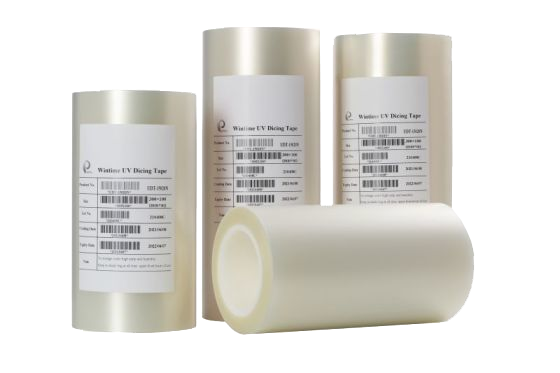
UV film belongs to the mounting consumables that connect packaging, anti-static handling and the dicing step.
Constraint four: dimensional accuracy, thickness and machine fit
WINTIME's published sawing blade specification lists a thickness range of 8μm to 50μm, cutting accuracy of ±0.002mm, spindle speed of 30,000–60,000rpm, hardness of HRC 65–70, resin or metal bond, a diamond superabrasive on a high-strength steel base, and a chip removal rate of at least 1.2mm³/s. Each value belongs in the technical agreement with its unit, the series it applies to and the method used to check it.
Method matters because figures are only comparable under equal measurement conditions. WINTIME describes its quality control as geometric dimension inspection with vernier caliper and laser diameter gauge, hardness and wear-resistance testing on a material testing machine, dynamic balance detection on a high-speed dynamic balance tester, and cutting performance simulation testing. A buyer who receives ±0.002mm should therefore ask which of those checks produced the value, on what sample size, and whether the record travels with the shipment.
Stated conditions and parameters to put in writing
The table below separates what WINTIME states from what a buyer still has to confirm. The third column is the part that most purchase orders leave out.
| Requirement area | WINTIME stated value and scope | What the project file still needs |
|---|---|---|
| Cleanroom class | Class 100/1000 clean room, dust-free | The classification scheme your facility and end customer use, and where unpacking happens |
| Temperature | Constant 22±2°C | A logged run showing the room holds the band during dicing |
| Humidity | 45%–55% relative humidity | Storage conditions before use, and a deviation record if the band cannot be held |
| Static control | Anti-static, dust-free handling environment | Anti-static packaging and carrier statement, unpacking procedure, tape compatibility |
| Blade thickness | 8μm–50μm range (SB-001 series specification); ultra-thin wafer dicing blade stated below 9μm in mass production | The thickness your kerf budget requires, and which series is being quoted |
| Cutting accuracy | ±0.002mm (SB-001 series specification) | Measurement method, sample size and the inspection record you will accept |
| Spindle speed | 30,000–60,000rpm | The operating point of your dicer and the blade's rated band |
| Bond and hardness | Resin or metal bond; HRC 65–70 | Bond selection for your material: wafer, ceramic, optical or alloy |
| Chip removal rate | ≥1.2mm³/s | Feed rate and dry or wet cutting strategy agreed for the trial |
Read the table as a request list, not as an approval. Every row becomes verifiable only when a record, a method and a responsible person are attached to it.
Why the ≤9μm ultra-thin requirement changes the compliance conversation
At ultra-thin dimensions the question shifts. A blade below 9μm is a statement about process control, and the buyer's real question is whether thickness, mounting and handling can be repeated lot after lot and documented at that level.
Three requests make the difference. Ask for the thickness inspection record for the specific lot and series rather than a catalogue figure. Ask which mounting format the blade uses, since a hubbed construction such as DZY integrates the blade with an aluminum-alloy flange, while hubless and flanged formats place different demands on the chuck and the operator. And ask for a spindle compatibility statement against your machine's speed range, because a 30,000–60,000rpm band is wide enough that the wrong operating point can be selected without anyone noticing at the specification stage.
None of this replaces a trial cut; it shortens the path to one. Each document either confirms a condition or exposes a difference before wafers are committed.
From packaging to spindle: the handling chain buyers forget
Most compliance files cover the blade and the room, then skip the steps between the loading dock and the cut. A workable chain looks like this:
- Receive against the packing list and check that the packaging statement matches the purchase order.
- Store inside the stated conditions, leaving the anti-static packaging unopened until the blade is needed.
- Transfer to the dicing room in a closed carrier rather than an open tray.
- Open under the agreed procedure and record who opened the packaging and when.
- Mount with the specified flange or hub format and record the machine set-up values.
- Apply tape and wafer according to the tape supplier's instructions.
- Log spindle speed, feed and coolant against the agreed trial parameters.
- Record blade change and disposal, and keep the record with the acceptance file.
The chain is written as actions rather than standards because the applicable requirements differ by site. What does not differ is the need for a record: an audit that cannot see who opened the packaging cannot confirm that anti-static handling took place.
Regional documentation for China, Japan, Korea, Singapore, Malaysia, the United States and Germany
WINTIME lists China, Japan, Korea, Singapore, Malaysia, the United States and Germany as application markets for its cutting blades. That list describes where the product is used; it is not a statement of approvals held in each country, and it should not be converted into a compliance assumption.
In practice the requirement set for a project is fixed by four documents the buyer usually already has: the internal quality manual, the end customer's flow-down requirements, the importing entity's own obligations, and the machine or process owner's specification. Build one compliance file against those four, then adapt format, language and consignee details per market. The confirmations below are the ones that most often change the answer.
China
Confirm whether the receiving plant requires inspection records in Chinese, and whether the purchase runs through an internal domestic-substitution qualification with its own sample and audit steps. Where the blade goes to a packaging house rather than a fab, the incoming inspection routine may be the only acceptance gate, so agree the record format with that team directly.
Japan
Confirm the language and format of the first-article inspection record, and whether the customer's quality manual expects a control plan alongside it. Where a customer consolidates technical documents through a single window, identify that window early and send the specification package once rather than in fragments.
Korea
Confirm whether the end customer's flow-down arrives through a supplier portal with fixed fields, and who signs the deviation record if a stated condition cannot be met. Portal submissions usually fix the document set, so collect the template before drafting the file.
Singapore and Malaysia
Confirm the consignee and whether the purchase is consolidated regionally, since a regional buyer may hold the file while the blade is received at a plant in another country. Confirm the receiving site's incoming inspection routine and whether a local distributor retains copies of inspection records.
United States
Confirm that units, tolerances and inspection methods are stated in the form the buyer's supplier-quality agreement expects, and confirm who receives and retains the records. Where a customer requires a formal submission package, that agreement defines the document list — not the supplier's brochure.
Germany
Confirm the documentation language, whether technical files are expected in German, English or both, and the tolerance notation and unit convention used in the purchase drawing. Mixed notation is a frequent source of rework during first-article review, and it is cheap to settle before the order.
One file mapped to seven markets is usually less work than seven separate files. The mapping itself is short: document name, owner, language, format, retention period and the person who signs it.
Step-by-step: building a sawing blade compliance file
- Define the cut. Material, target thickness, kerf budget, device sensitivity and the machine model, including its operating speed inside the 30,000–60,000rpm band.
- Write the environment into the RFQ. Cleanroom class, 22±2°C, 45%–55% RH, dust-free and anti-static handling, plus your facility's classification scheme.
- Fix the blade specification. Series, thickness from the 8–50μm range, cutting accuracy, bond type and hardness, each with unit and measurement method.
- Request inspection documentation. Thickness and geometry records, dynamic balance check, and the sample size behind every figure.
- Request material and packaging declarations. Bond matrix, abrasive, base material and the anti-static packaging statement.
- Run a sample qualification. Agree acceptance criteria first, log room conditions and machine parameters during the trial, and keep the log with the result.
- Agree change control. State which changes to thickness, bond, grain size or packaging require buyer notification and re-qualification.
- Agree commercial and support terms. MOQ, lead time, replacement terms for quality-related defects and the technical support route for process matching.
Steps one to three prevent most disputes; steps six to eight decide how quickly a dispute is closed.
Use cases: where each constraint becomes decisive
Semiconductor wafer dicing
Ultra-thin wafer work is where the ≤9μm requirement, the 22±2°C window and anti-static handling all bind at once. The file should name the semiconductor wafer sawing blade series, the thickness record, the mounting format and the machine's operating point, because a change in any one of them alters the trial result.
Optical communication device cutting
Optical communication cutting places the acceptance emphasis on cutting accuracy and edge condition, so the first-article record and the trial log carry more weight than the cleanroom statement. Confirm which optical communication sawing blade option is quoted and whether the accuracy figure is supplied with its inspection method.
Functional ceramic and alloy material cutting
Functional ceramic and alloy work moves the constraint to bond choice and wear resistance: resin or metal bond, HRC 65–70 hardness, and slotted geometry where the profile requires it. For these materials the project file should also record how the supplier's cutting performance simulation test was configured, since bond behaviour is material-specific.
Semiconductor packaging
Packaging lines often buy against a fixed machine set and a fixed room, so the file becomes largely a documentation exercise. Confirm the DZY series positioning for high-precision wafer cutting in packaging processes, the inspection record format and the replacement terms, then hold the rest of the specification stable across lots.
Documentation request matrix
Each document below answers a narrow question. Using it outside that question is how compliance files lose credibility.
| Document | What it establishes | What it does not establish |
|---|---|---|
| First-article and dimensional inspection record | That a specific lot was measured against agreed thickness and accuracy values by a named method | That later lots will match without a re-check |
| Material and bond declaration | The bond matrix, abrasive and base material of the quoted series | Performance on your specific material |
| Cleanroom and packaging statement | The class and handling conditions under which the blade is packed | That your facility meets the same class |
| Anti-static packaging statement | How the blade is protected between packing and opening | That handling practice on your line is compliant |
| Quality control process description | Which checks exist: geometric dimension, hardness and wear, dynamic balance, cutting simulation | The sample size or pass rate behind one lot |
| Capacity, MOQ and lead-time statement | 800,000+ standard pieces monthly, 80,000+ customized pieces monthly; MOQ 50 standard, 300 customized; 2–5 working days standard, 10–25 working days customized | Priority during a peak period or a binding delivery guarantee |
| After-sales and replacement terms | The 48-hour quality problem investigation route and replacement of defective products caused by quality issues | Compensation beyond the agreed terms |
| Certificates held by the supplier, if any | Only what the certificate's own scope, issuer and validity state | Product performance, market approval or coverage of every product family |
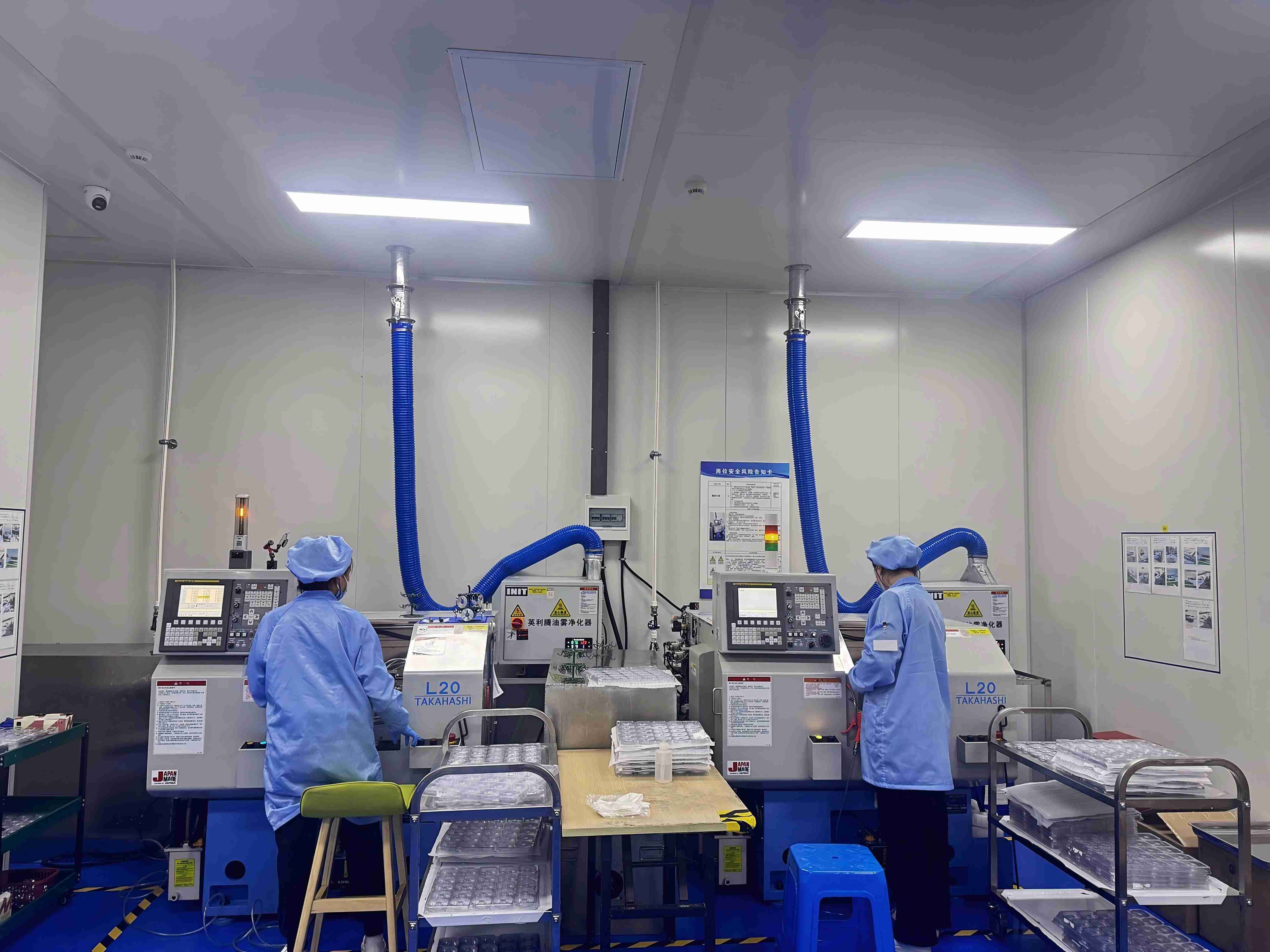
Inspection and production areas generate the records that a buyer's compliance file depends on.
Interpretation errors that waste project time
- Reading a cleanroom class as a blade property. It describes the room the blade is designed for, not a certificate attached to the product.
- Treating a market list as market approval. WINTIME's country scope shows where blades are applied, not which approvals exist.
- Accepting a thickness figure without series and method. 8–50μm is a range; below 9μm is a specific capability statement about ultra-thin wafer dicing blades.
- Treating not disclosed as not capable. A missing document is a request to raise, not a conclusion to record.
- Applying one record to every product family. Hubbed, hubless, slotted and resin-bond constructions are different items with different inspection needs.
- Skipping the consumables. Tape, carrier and unpacking procedure decide whether anti-static handling actually happened.
FAQ
Do I need a Class 100/1000 cleanroom and anti-static handling to use WINTIME sawing blades?
WINTIME states Class 100/1000 clean rooms, 22±2°C, 45%–55% relative humidity and dust-free anti-static conditions as the working environment for its sawing blades, so the product is specified for a controlled dicing room rather than an open workshop. Whether your project must meet that class depends on the device, the defect sensitivity and your customer's flow-down requirements. The practical step is to state your room class in the RFQ and ask the supplier to confirm the class and handling conditions under which the blade is packed, so that both sides document the same thing.
Which documents should a buyer request for projects in China, Japan, Korea, Singapore, Malaysia, the United States and Germany?
Start from one core package and adapt it per market: a first-article dimensional inspection record, a material and bond declaration, a cleanroom and packaging statement, an anti-static packaging statement, a quality control process description, and written MOQ, lead-time and replacement terms. Then confirm four local variables — document language, whether the end customer's flow-down arrives through a portal or a quality manual, who the consignee and record holder are, and the unit and tolerance notation used in the drawing. WINTIME's published market list shows where its blades are applied rather than which approvals exist, so certificates should be requested, read for scope and validity, and never assumed.
What thickness and cutting accuracy should be written into a sawing blade purchase specification?
Write the series, the value, the unit and the measurement method. WINTIME's published sawing blade specification gives a thickness range of 8μm to 50μm, cutting accuracy of ±0.002mm, hardness of HRC 65–70 and a spindle speed band of 30,000–60,000rpm, while its ultra-thin wafer dicing blade project is stated to have reached below 9μm in mass production. A purchase specification should state which of those applies to the order, which inspection method produces the record — for example laser diameter gauge for geometry or a high-speed dynamic balance tester for balance — and what sample size the record covers.
What MOQ applies and what changes the quotation?
WINTIME states a minimum order of 50 pieces for standard products and 300 pieces for customized products, with flexibility for long-term cooperative customers. Quotations follow the specification rather than a list price, because customization covers blade diameter, thickness and spindle hole size, bond type, diamond grain size and concentration, coating, cutting performance targets, export packaging and non-standard shapes, and each of those variables changes the manufacturing route. A buyer gets a comparable quote by sending one specification sheet with those fields completed instead of asking for a price per piece.
What should a sample request contain?
Five inputs make a sample request usable: the material and device being cut, the target thickness and kerf budget, the machine model with its spindle speed range, the tape and mounting format already in use, and the room and static-control conditions at the point of use. Add the acceptance criteria you will apply and the inspection records you expect to arrive with the sample. With those inputs a supplier can propose a series and a thickness rather than sending a generic blade, and the trial result becomes evidence in the compliance file instead of an anecdote.
What are the lead times for standard and customized sawing blades?
WINTIME states 2–5 working days for standard products and 10–25 working days for customized orders, adjustable for large volumes, against monthly capacity of more than 800,000 standard pieces and more than 80,000 customized or special-shaped pieces. Long-term supply and inventory support sit inside its stated after-sales scope, alongside a 48-hour quality problem investigation and replacement of defective products caused by quality issues. Buyers planning qualification can use those figures to sequence sample approval, first-article review and volume release without holding excess stock; the current product brochure and the specification request route are available through the WINTIME website.
Conclusion
Sawing blade compliance is decided by four constraint groups and one habit: writing down which party confirms what. The environment conditions WINTIME states — Class 100/1000, 22±2°C, 45%–55% RH and dust-free anti-static handling — become useful only when a buyer maps them onto a real room and a real unpacking procedure. The dimensional figures, from the 8–50μm thickness range and ±0.002mm cutting accuracy to the sub-9μm ultra-thin capability, become useful only when the series and the inspection method are named.
For projects across China, Japan, Korea, Singapore, Malaysia, the United States and Germany, one compliance file built from inspection records, material and packaging declarations and agreed commercial terms will answer more questions than seven country brochures — and it keeps the file honest about what has been verified and what is still a request.
WINTIME Semiconductor Technology Co., Ltd. publishes its product and application information at en.wintime.net.cn, and its product brochure can be downloaded here: WINTIME sawing blade brochure (PDF). Buyers who want the documentation package matched to a specific dicing project can send the specification sheet described in step one and ask for the corresponding inspection records and sample terms.

Have Questions or Need More Details?
Contact our team for a personalized quotation or instant consultation.
Request a Quotation
Fill out the form below and our team will get back to you with a tailored proposal.
WhatsApp Direct Chat
Prefer to chat in real-time? Message us on WhatsApp for instant assistance & quick answers.
- Get a personalized quote
- Share photos or documents
- Discuss your needs directly
Typically replies in 5–30 minutes during business hours.