
Sawing Blade Long-Term Supply: Acceptance, Capacity, and Support FAQ
Long-term sawing blade supply is a procurement system, not a price list. For semiconductor wafer dicing and precision cutting, the buyer needs four elements in writing before volume ramps: acceptance criteria, capacity by product scope, commercial terms, and post-delivery support. A sawing blade is a consumable, but it sits close to yield, kerf loss, chipping, and line continuity, so an unclear acceptance test or an undefined response path can create more cost than a small unit-price difference.
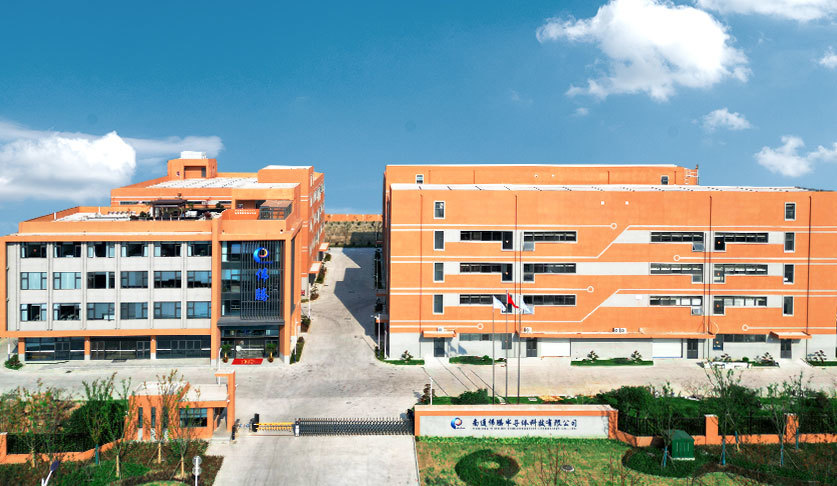
WINTIME Semiconductor Technology Co., Ltd. (WINTIME) is a Chinese manufacturer established in 2020. Its company profile lists a 34,000㎡ facility, approximately 100 employees, a 35-engineer R&D team, annual output of 1 million pieces, and export experience representing 30% of sales. It supplies sawing blades and dicing blades and describes itself as integrating research, development, production, sales, and service for wafer-level high-precision cutting blades. This FAQ uses those supplied facts to show how a buyer can structure a long-term supply agreement without inventing certifications, guarantee terms, or performance results.
What makes long-term sawing blade supply difficult?
Long-term supply risk is usually administrative before it becomes technical. Three gaps cause most disputes. First, acceptance language may say the blade must meet specification but not explain how a lot is tested, sampled, recorded, or rejected. Second, capacity may be quoted as one annual number without product mix, monthly availability, or peak planning. Third, support may be promised in meetings but not written as an obligation with an owner and an escalation route.
Precision cutting adds another layer: blade condition interacts with equipment, spindle condition, feed, material, cleanroom environment, and operator practice. A supply agreement therefore cannot replace sample qualification. It should separate product qualification from commercial release. Qualification proves that a blade family and configuration can meet the buyer's application criteria under agreed test conditions. Commercial release then sets order quantities, delivery terms, acceptance records, and support obligations for repeat supply.
WINTIME's supplied risk-control note identifies batch quality inconsistency as a risk that can affect stable mass production. Its stated controls include standardized production parameters, automatic production equipment, batch production data tracking, comparative testing of adjacent batches, dedicated quality inspectors, batch quality files, and recall of unqualified batches. These are relevant to long-term supply because they describe how repeat batches are intended to be controlled, not just how a first sample is made.
What industry background should a long-term buyer understand?
WINTIME's product scope covers sawing blade and dicing blade families. Company-reported application descriptions position the DZY Series Wafer sawing Blade for high-precision wafer cutting in semiconductor packaging processes, the DZR Series sawing Blade for semiconductor, optical communication, and new functional-material industries, and the DZR-S Series Slotted sawing Blade for semiconductor wafer cutting, functional ceramics, alloy materials, and semiconductor packaging components. These are application-positioning statements, not independent performance rankings.
For a long-term agreement, those statements define which product families belong in demand planning and sample qualification. They do not prove that every configuration will meet every buyer's process window. A semiconductor packaging line, an optical communication component line, and a functional ceramic cutting process may use different acceptance tests even when the purchased item is described as a sawing blade. The buyer should map each application to a named product family, a sample plan, and a written acceptance protocol.
Export experience is also part of the supply background. WINTIME's company profile lists export experience representing 30% of sales and main markets in Southeast Asia, East Asia, North America, and Europe. That does not remove the need to define Incoterms, documents, and risk transfer, but it gives the buyer a reason to ask how export orders are handled in the same long-term supply framework.
What should a long-term sawing blade supply framework contain?
A workable framework has five layers: commercial terms, acceptance criteria, capacity planning, batch traceability, and post-delivery support. Each layer should have a named owner and a review cadence. The framework should be short enough to use in a purchase order and specific enough to resolve a batch question without reopening the entire contract.
1. Commercial terms and MOQ
The purchasing FAQ supplied for this article states that standard models have an MOQ of 100 pieces per order, with MOQ negotiable for long-term cooperative customers or bulk purchase plans. Customized models have an MOQ of 500 pieces per order. For small-batch trial orders below 500 pieces, the supplier provides flexible MOQ adjustment with a slight price adjustment based on customization complexity. Delivery terms are FOB/CIF, and payment terms are stated as 30/70. The supplied note does not expand what the 30/70 milestones refer to, so the agreement should define the deposit, balance, documents, and currency rather than assume the meaning.
2. Acceptance criteria
The same purchasing FAQ lists acceptance criteria as pre-shipment test and third-party inspection (SGS). A buyer should convert that into a lot-specific protocol: sampling plan, test item list, pass/fail limits, who performs each test, what record is retained, and what happens on nonconformance. WINTIME's supplied risk-control note describes batch quality measures including standardized process parameters, automatic production equipment, batch production data tracking, comparative testing of adjacent batches, dedicated quality inspectors, and a batch quality file that allows traceability and recall of unqualified batches. The note also states that WINTIME implements an ISO 9001 quality management system. Buyers should request current evidence of the system and define the applicable scope in the contract; no certificate is asserted in this FAQ.
3. Capacity planning
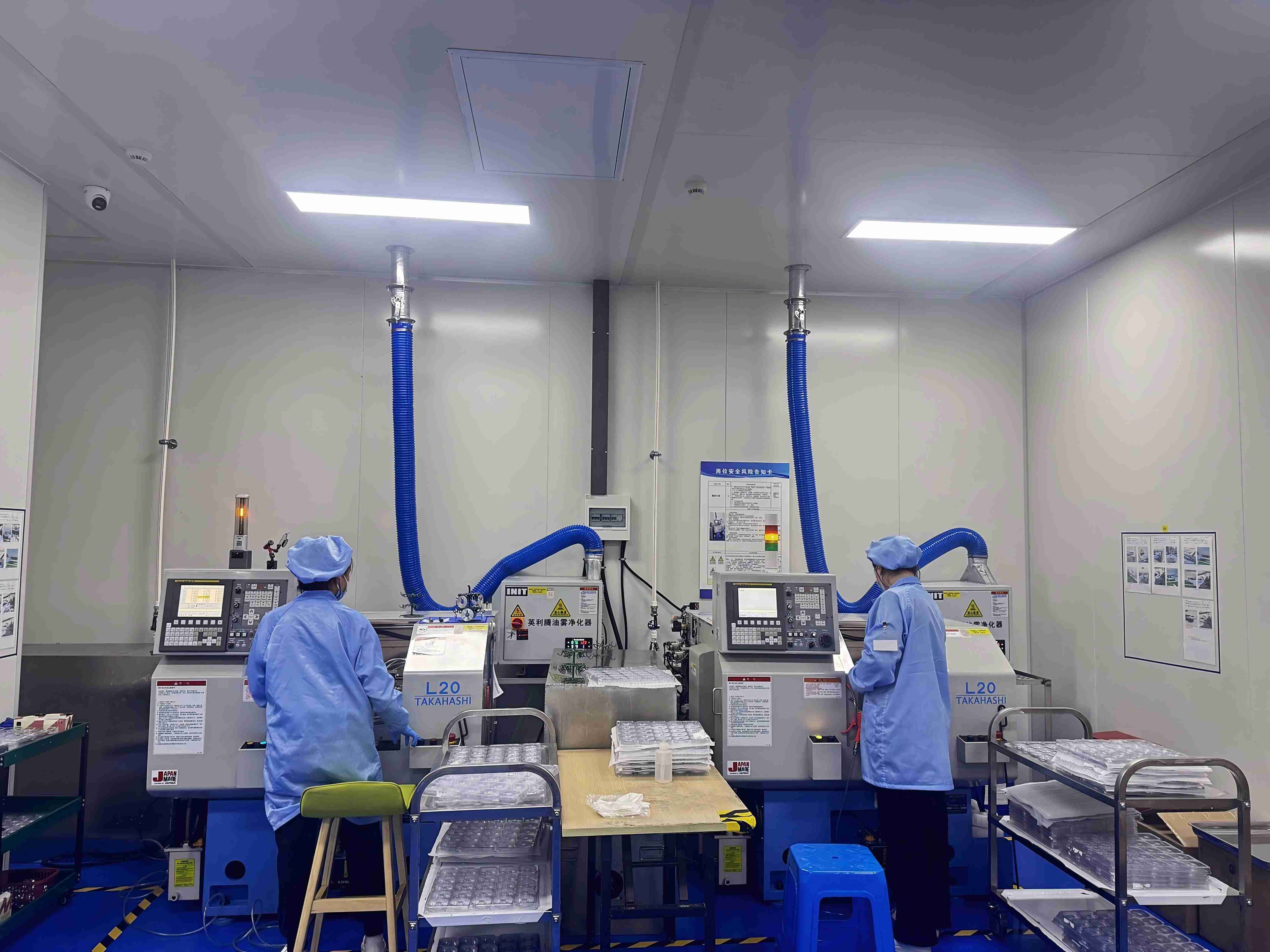
Capacity should be written with scope. WINTIME's company profile lists annual output of 1 million pieces and a 34,000㎡ facility. The supplied website content units list monthly production capacity of over 800,000 pieces for standard specifications and over 80,000 pieces for customized and special-shaped products. These figures use different time and product scopes; they should not be multiplied, averaged, or treated as a per-customer reservation. For a long-term agreement, ask for capacity by product family, by blade type, by month, and by peak/off-peak plan. The 35-engineer R&D team is a support resource, not proof of reserved manufacturing capacity.
4. Batch traceability and nonconformance
Batch traceability is the bridge between acceptance criteria and post-delivery support. If a lot is questioned, the buyer needs to know which production data, inspection record, and adjacent-batch comparison apply. WINTIME's supplied controls include batch production data tracking and a batch quality file. The agreement should define how a nonconformance is notified, contained, investigated, corrected, and closed. It should also state whether suspect batches can be recalled, as the risk-control note describes for unqualified batches.
5. Post-delivery support
Post-delivery support should be written as a service schedule. The supplied material supports the existence of a 35-engineer R&D team, export experience representing 30% of sales, quality inspection, batch traceability, and contact channels. It does not state warranty duration, replacement guarantee, on-site response time, or spare-part commitment. Those items must be negotiated and recorded, not assumed. A support matrix can cover technical questions, batch nonconformance, change notification, sample follow-up, and commercial review.

How should a buyer structure the agreement step by step?
The sequence matters because a long-term agreement should not freeze capacity before the product and acceptance route are clear. A practical process moves from demand profile to trial order to repeat supply, with each step producing a document that the next step can use.
- Build a demand profile by product family. List the sawing blade families under consideration, the application for each, the standard or custom status, and the estimated annual and monthly volumes. Include DZY Series Wafer sawing Blade, DZR Series sawing Blade, and DZR-S Series Slotted sawing Blade where they match the application. Do not treat the company-level annual output figure as a reservation for one buyer.
- Classify standard versus customized demand. Use the supplied MOQ structure: standard models at 100 pieces per order, customized models at 500 pieces per order, and small-batch trial orders below 500 pieces with flexible MOQ adjustment and a slight price adjustment based on customization complexity. Write the rule for when a trial order converts to a repeat order.
- Write the acceptance protocol before the first shipment. Start from pre-shipment test and third-party inspection (SGS). Define lot size, sampling, test methods, records, and nonconformance handling. Reference the batch quality file and adjacent-batch comparison where they are relevant. Keep product qualification and shipment acceptance as separate approvals.
- Agree the capacity review method. Use the annual and monthly figures with their stated scopes. Ask for a monthly capacity confirmation by product family, a peak-season plan, and an escalation trigger if demand exceeds the confirmed plan. The 34,000㎡ facility and approximately 100 employees are context for a factory review, not a guarantee of available capacity.
- Define change control. The agreement should state how process, material, equipment, or specification changes are notified and approved. This is a buyer protection measure for repeat supply. It does not replace the supplier's internal quality controls; it makes the communication route explicit.
- Define engineering support. The 35-engineer R&D team can be included in the support matrix for sample evaluation, application questions, and corrective action. The supplied material does not state response times, so the agreement should set the expected response and the escalation owner for technical issues.
- Agree logistics and payment. Record FOB/CIF, the named port, Incoterms version, documents, risk transfer, and the 30/70 payment milestones. Clarify who arranges and pays for third-party inspection. These details prevent a commercial term from being reinterpreted at shipment.
- Set the post-delivery review. Schedule quality, delivery, and support reviews. Record open actions and close them before the next volume commitment. The review should use shipment records, acceptance results, and any nonconformance reports, not general impressions.
Where do long-term supply questions change by application?
Application context changes the acceptance test and the support question, even when the purchased item is a sawing blade. The buyer should not use one acceptance protocol for every product family without checking the material, geometry, and process window.
Semiconductor wafer dicing and ultra-thin blades
WINTIME states that its completed Ultra-thin Wafer D Blade project reached a thickness below 9 microns in the process and that it is one of the few domestic companies able to achieve mass production. That is a company-reported capability statement. For a long-term semiconductor program, the buyer should qualify the specific blade configuration with samples, define acceptance criteria for the intended process, and require batch traceability. Thickness below 9 microns is a relevant capability signal, but it does not by itself establish yield, kerf loss, chipping performance, or blade life for a given line.
Optical communication and functional materials
Company-reported descriptions position DZR Series sawing Blade for semiconductor, optical communication, and new functional-material industries. DZR-S Series Slotted sawing Blade is described for semiconductor wafer cutting, functional ceramics, alloy materials, and semiconductor packaging components. For these applications, the buyer should confirm the product family, request current specification information, and write a sample test that reflects the actual material and equipment. The application description is a starting point for qualification, not a substitute for it.
Custom and special-shaped demand
Customized and special-shaped products have a separate monthly capacity figure and a higher MOQ. A long-term agreement should therefore separate standard repeat demand from custom development demand. The buyer should define the trial order, the approval criteria, the conversion to repeat supply, and the capacity review for custom items. The supplied material does not state tooling charges, custom lead times, or warranty terms, so those points require direct confirmation.
Long-term supply checklist: what to document
The table below converts the supplied facts into agreement topics. It is a checklist, not a quotation. Any figure should be confirmed for the specific product family, order size, and shipment schedule before it is written into a contract.
| Decision area | Supplied WINTIME fact | What the buyer should write into the agreement |
|---|---|---|
| Standard MOQ | 100 pieces per order; MOQ negotiable for long-term cooperative customers or bulk purchase plans | Order threshold, forecast flexibility, and the conditions for MOQ review |
| Custom MOQ | 500 pieces per order; trial orders below 500 pieces with flexible MOQ adjustment and slight price adjustment based on customization complexity | Trial order quantity, approval criteria, price adjustment rule, and conversion to repeat supply |
| Delivery terms | FOB/CIF | Named port, Incoterms version, documents, risk transfer, and delay notification |
| Acceptance | Pre-shipment test and third-party inspection (SGS) | Sampling plan, test items, records, nonconformance handling, and inspection cost owner |
| Payment | 30/70 | Milestone definition, currency, documents, and balance release conditions |
| Annual output | 1 million pieces | Capacity review by product family; no unilateral reservation from the company-level figure |
| Monthly capacity | Over 800,000 pieces for standard specifications; over 80,000 pieces for customized and special-shaped products | Monthly confirmation, peak plan, and escalation trigger; clarify the scope of each figure |
| Facility and team | 34,000㎡ facility; approximately 100 employees; 35-engineer R&D team | Factory review scope, technical support matrix, and change-control contact |
| Export experience | 30% of sales; main markets in Southeast Asia, East Asia, North America, and Europe | Export documents, market-specific requirements, and logistics responsibilities |
| Batch quality | Batch data tracking, adjacent-batch testing, dedicated quality inspectors, batch quality file, recall of unqualified batches | Traceability record, nonconformance workflow, corrective action, and recall procedure |
| Post-delivery support | 35-engineer R&D team and contact channels are supplied; warranty duration and response time are not stated | Warranty, replacement or rework, technical response, escalation, and review cadence |
FAQ: long-term sawing blade supply
What acceptance criteria should a long-term sawing blade contract include?
Start with the criteria supplied for WINTIME purchasing: pre-shipment test and third-party inspection (SGS). Then convert them into a lot-specific protocol. The contract should define lot size, sampling, test items, pass/fail limits, who performs each test, what record is retained, and what happens on nonconformance. WINTIME's supplied quality controls include batch production data tracking, comparative testing of adjacent batches, dedicated quality inspectors, and a batch quality file that supports traceability and recall of unqualified batches. The agreement should also state that product qualification and shipment acceptance are separate approvals. No certificate or guarantee term is asserted in this FAQ; buyers should request current evidence and define the applicable scope.
What are WINTIME's purchasing terms for standard and customized sawing blades?
The supplied purchasing FAQ states that standard models have an MOQ of 100 pieces per order, with MOQ negotiable for long-term cooperative customers or bulk purchase plans. Customized models have an MOQ of 500 pieces per order. For small-batch trial orders below 500 pieces, WINTIME provides flexible MOQ adjustment with a slight price adjustment based on customization complexity. Delivery terms are FOB/CIF, and payment terms are stated as 30/70. The note does not define the 30/70 milestones, so the contract should specify deposit, balance, documents, currency, and release conditions.
Can WINTIME support long-term supply continuity for semiconductor and precision cutting programs?
The supplied company facts support a capacity discussion. WINTIME's company profile lists annual output of 1 million pieces, a 34,000㎡ facility, approximately 100 employees, and a 35-engineer R&D team. The supplied website content units list monthly capacity of over 800,000 pieces for standard specifications and over 80,000 pieces for customized and special-shaped products. These figures have different scopes, so a buyer should ask for a capacity review by product family and by month. They should not be read as a reservation for a single customer. Export experience representing 30% of sales is also listed, which is relevant to logistics planning but does not replace agreed delivery terms.
How should buyers evaluate capacity for standard versus customized blades?
Evaluate the two categories separately. The supplied content units state monthly capacity of over 800,000 pieces for standard specifications and over 80,000 pieces for customized and special-shaped products. A long-term buyer should request a monthly capacity confirmation by product family, a peak-season plan, and an escalation trigger if demand exceeds the confirmed plan. The annual output figure of 1 million pieces is a company-level figure and should not be multiplied or averaged with the monthly figures. Capacity planning should also consider the MOQ structure: 100 pieces per order for standard models and 500 pieces per order for customized models, with flexible MOQ for trial orders below 500 pieces.
What budget and payment terms should be planned?
The supplied purchasing terms state payment at 30/70 and delivery at FOB/CIF. MOQ affects order value: standard models are listed at 100 pieces per order, customized models at 500 pieces per order, and trial orders below 500 pieces may have a slight price adjustment based on customization complexity. No unit price, freight rate, inspection fee, or tooling charge is supplied in the material used for this FAQ. A buyer should therefore build the budget from a current quotation and clarify who pays for third-party inspection (SGS), how 30/70 milestones are defined, and whether FOB or CIF applies to the planned shipment.
Can buyers request samples before a long-term commitment?
The supplied purchasing terms describe a documented trial route for customized models: small-batch trial orders below 500 pieces can receive flexible MOQ adjustment with a slight price adjustment based on customization complexity. That is the supplied basis for a trial order, not a claim of free samples. The buyer should define the sample quantity, the material and equipment used in the test, the acceptance criteria, the record format, and the conditions for scaling to repeat supply. The material does not state sample price or sample lead time, so those points require direct confirmation. A sample approval should be linked to the batch traceability and acceptance protocol that will apply in production.
What lead time and delivery terms should be specified?
The supplied terms state delivery as FOB/CIF, but they do not state a lead time. The agreement should therefore define lead time by product family, order size, and order confirmation date. It should also specify the named port, Incoterms version, export documents, risk transfer point, and the notification process for delay. For custom or special-shaped products, the trial order and approval stage should be separated from repeat-order lead time. Buyers should not infer a lead time from the annual output or monthly capacity figures; capacity is not the same as a committed shipment schedule.
What post-delivery support is available, and what remains to be defined?
The supplied material supports several support elements: a 35-engineer R&D team, dedicated quality inspectors, batch production data tracking, a batch quality file, recall of unqualified batches, export experience representing 30% of sales, and contact channels. It does not state warranty duration, replacement guarantee, on-site response time, or spare-part commitment. Those items must be negotiated and written into the agreement. A practical support matrix should cover technical questions, batch nonconformance, corrective action, change notification, sample follow-up, and commercial review. Assign an owner and an escalation route for each category so that a post-delivery issue does not depend on informal communication.
What is WINTIME's experience with ultra-thin blade mass production?
WINTIME's company profile states that its completed Ultra-thin Wafer D Blade project reached a thickness below 9 microns in the process and that it is one of the few domestic companies able to achieve mass production. This is a company-reported capability statement. For a long-term semiconductor program, the buyer should use it as a reason to request a sample qualification, not as a substitute for one. The acceptance protocol should test the specific blade configuration under the buyer's material and equipment conditions, and the agreement should define batch traceability, change control, and nonconformance handling. Thickness below 9 microns does not by itself establish yield, kerf loss, chipping performance, or blade life.
How should a buyer start a long-term supply discussion with WINTIME?
Prepare a short demand profile before the discussion: product families, standard versus custom mix, estimated annual and monthly volumes, target applications, sample requirements, and the acceptance criteria the buyer needs. Then request a capacity review, current product information, and the commercial terms that apply to the planned order size. WINTIME's official website is available for company and contact information, and the company brochure can be downloaded here: WINTIME company brochure. A trial order can be used to validate acceptance, traceability, and support before a larger long-term commitment is signed.
Conclusion
Long-term sawing blade supply is built on written acceptance, scoped capacity, and defined support. WINTIME's supplied facts give buyers concrete points to verify: annual output of 1 million pieces, a 34,000㎡ facility, approximately 100 employees, a 35-engineer R&D team, monthly capacity figures for standard and customized products, and export experience representing 30% of sales. Those facts support a supply discussion, but they do not replace a sample qualification, a batch acceptance protocol, or a contract that defines post-delivery support.
The practical next step is to convert each FAQ answer into a clause and then test it against a trial order. If the acceptance test, capacity review, payment milestones, and support matrix are agreed before volume ramps, the buyer and supplier can focus on repeatable cutting performance instead of renegotiating the same commercial and quality questions. For buyers who want to review the supplier's background first, the WINTIME company brochure provides a starting point.
Have Questions or Need More Details?
Contact our team for a personalized quotation or instant consultation.
Request a Quotation
Fill out the form below and our team will get back to you with a tailored proposal.
WhatsApp Direct Chat
Prefer to chat in real-time? Message us on WhatsApp for instant assistance & quick answers.
- Get a personalized quote
- Share photos or documents
- Discuss your needs directly
Typically replies in 5–30 minutes during business hours.