
The Semiconductor Dicing Playbook: Selecting the Right Sawing Blade Application
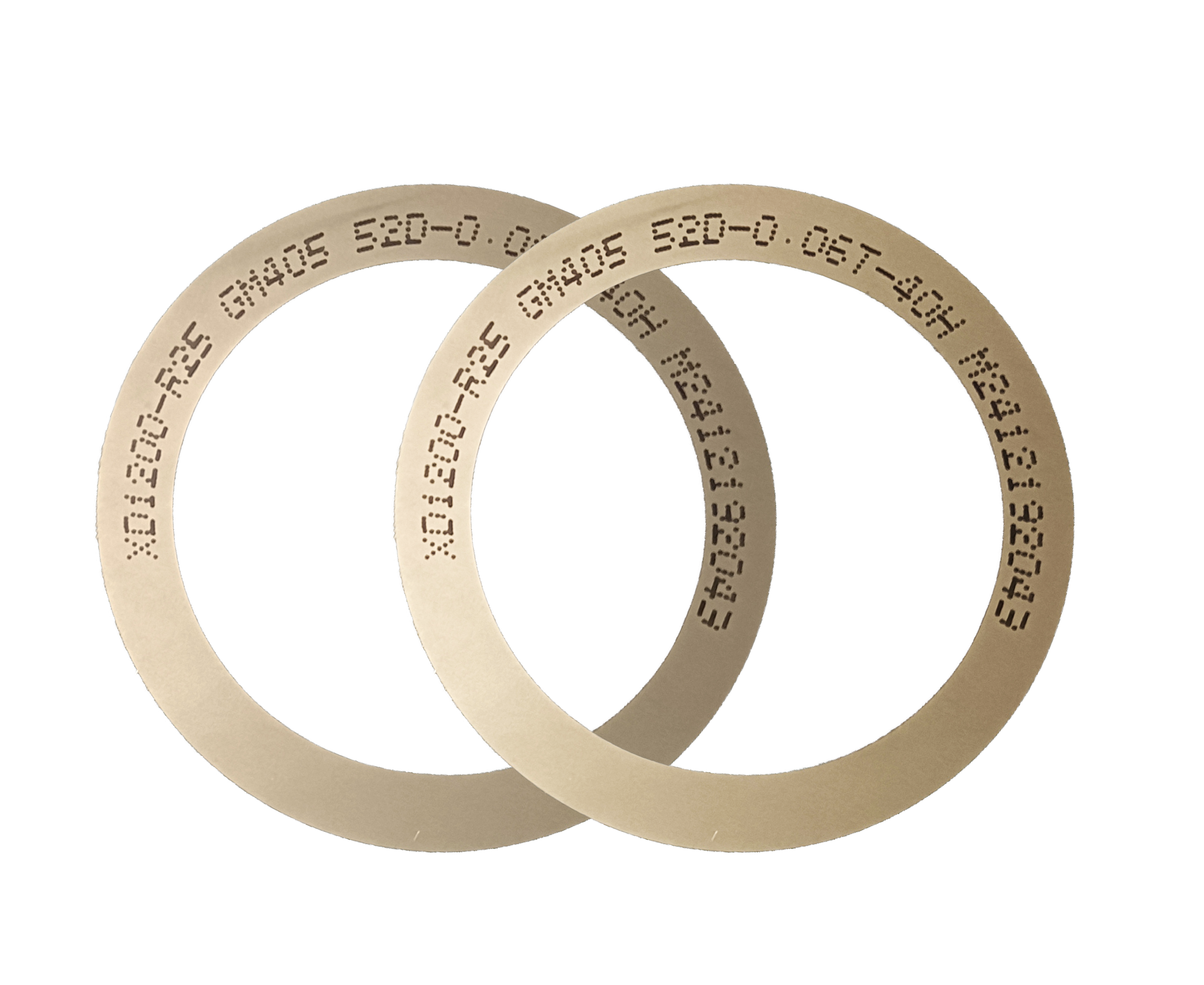
Cover: JS Series metal dicing blade, shown as a product example for semiconductor sawing blade selection.
A sawing blade is a precision cutting tool used in wafer dicing, package cutting, optical device cutting, ceramic substrate cutting, and precision alloy component cutting. WINTIME Semiconductor Technology Co., Ltd. is a China-based manufacturer established in 2020 that specializes in the research, development, production, and sales of high-precision cutting blades, including Sawing Blades and Dicing Blades. This playbook is written for buyers in Awareness and Research stages who need to turn a cutting application into a blade specification, not just a part number.
The article uses WINTIME's published product and application data to walk through the decision sequence: define the cut, set the cutting dimensions and waste budget, match the blade architecture, confirm cleanroom and equipment conditions, validate a sample, and plan production. It also shows how the same selection logic can be applied to factory programs in Taiwan, Thailand, and Germany without treating any single product fact as a universal answer.
Problem Definition: Why Sawing Blade Selection Is an Application Problem
The central problem is that a sawing blade is not selected by name alone. The same sawing blade category can be used across semiconductor manufacturing, semiconductor packaging, optical communication, new functional materials, functional ceramics, and alloy materials, but the application conditions change the requirement. A blade program must define the material, the cut geometry, the kerf and dimensional tolerance, the bond and architecture, the cleanroom environment, and the equipment interface. If any of these are left undefined, the buyer may receive a blade that is mechanically compatible but not application-compatible.
In wafer dicing, waste removal is mainly a function of blade thickness, kerf, and the ability to hold the cut within the specified street. WINTIME's SB-001 specification lists a thickness range of 8 μm to 50 μm and cutting accuracy of ±0.002 mm, which gives buyers a defined starting point for dimensional control. The same specification lists a chip removal rate of at least 1.2 mm³/s and a hardness of HRC 65-70. These are not universal targets; they are published parameters that should be matched to the material and the cut.
The problem becomes more complex when the blade is used in a cleanroom. WINTIME's application data lists Class 100/1000 cleanroom conditions, 22±2°C, 45%-55% relative humidity, a dust-free anti-static environment, and high-speed spindles. A blade that works in one environment may not be the right choice in another if the equipment interface, static control, or dimensional control changes.
Industry Background: Cleanroom, Equipment, and Material Context
WINTIME's application data places these cutting programs in semiconductor manufacturing, semiconductor packaging, optical communication, new functional materials, functional ceramics, and alloy materials. The working conditions are specific: Class 100/1000 cleanroom, constant temperature of 22±2°C, constant humidity of 45%-55%, dust-free and anti-static conditions, and high-speed spindles. Supporting equipment includes automatic wafer dicing machines, semiconductor cutting spindles, UV tape mounting machines, wafer cleaning equipment, and wafer testing machines.
These conditions are common in China, Japan, Korea, Singapore, Malaysia, the United States, and Germany. For procurement teams, this means the blade specification and the factory environment must be reviewed together. A blade data sheet that lists thickness and accuracy without a cleanroom or equipment fit is incomplete for a semiconductor dicing program.
WINTIME's company data adds the supply-side context. The company operates a 34,000㎡ manufacturing facility, employs approximately 100 staff, and has an annual production capacity of 1 million pieces. Its R&D team consists of 35 engineers, and the company holds 2 patent technologies. Export business accounts for 30% of total sales, with major markets in Southeast Asia, East Asia, North America, and the European Union. In 2023, the Nantong Wintime Semiconductor Special Materials Project had a total investment of nearly tens of millions of yuan. These facts are relevant to buyers who need to move from a sample to a repeatable supply program.
Detailed Solution: WINTIME Sawing Blade Architecture and Published Specifications
The SB-001 is a Sawing Blade with a bond matrix of resin or metal, diamond superabrasive, and a high-strength steel base. Published specifications include a thickness range of 8 μm to 50 μm, cutting accuracy of ±0.002 mm, spindle speed of 30,000 to 60,000 rpm, hardness of HRC 65-70, resin/metal bond type, and chip removal rate of at least 1.2 mm³/s. The product is intended for semiconductor manufacturing, semiconductor packaging, precision electronic component processing, and optical ceramic cutting.
WINTIME's product categories include Diamond Sawing Blade, Precision Sawing Blade, Semiconductor Sawing Blade, Circular Sawing Blade, Hubbed Sawing Blade, Hubless Sawing Blade, Flanged Sawing Blade, Serrated Sawing Blade, DZY Series Wafer Sawing Blade, DZR Series Sawing Blade, and DZR-S Series Slotted Dic Sawing Blade. These names matter because the buyer may need a specific architecture, not just a generic sawing blade.
DZY Series Wafer Sawing Blade
The DZY series integrates the cutting blade with an aluminum alloy flange. WINTIME positions the DZY series for high-precision wafer cutting in semiconductor packaging processes. For a buyer, the integrated-flange construction is a handling and mounting consideration as well as a cutting consideration. The provided data does not list separate thickness or accuracy values for the DZY series, so the buyer should request the current datasheet for the exact model.
DZR Series Sawing Blade
The DZR series is composed of metallic nickel and diamond abrasive. WINTIME lists the DZR series for semiconductors, optical communication, and new functional materials. This makes the DZR family relevant when the application is not limited to silicon wafer dicing. Optical communication device cutting and new functional material cutting are the application mappings supported by the provided data.
DZR-S Series Slotted Dic Sawing Blade
The DZR-S series uses a slotted geometry. WINTIME lists the DZR-S Series Slotted Dic Sawing Blade for semiconductor wafer cutting, functional ceramic cutting, alloy material cutting, and semiconductor packaging component cutting. The slotted geometry is the key differentiator in the provided data. Buyers should confirm the slot profile and the material-specific cutting conditions before qualification.
Hubless and Electroforming Hard Sawing Blades
Hubless Sawing Blade is listed as a product variant. The provided specification does not separate its construction or performance from the SB-001 platform. The secondary keyword set for this topic also includes Electroforming Hard sawing Blade. The verified WINTIME data in this playbook covers the SB-001 platform and the DZY, DZR, and DZR-S series. A buyer evaluating an electroforming hard construction should request a separate datasheet and sample before qualification.
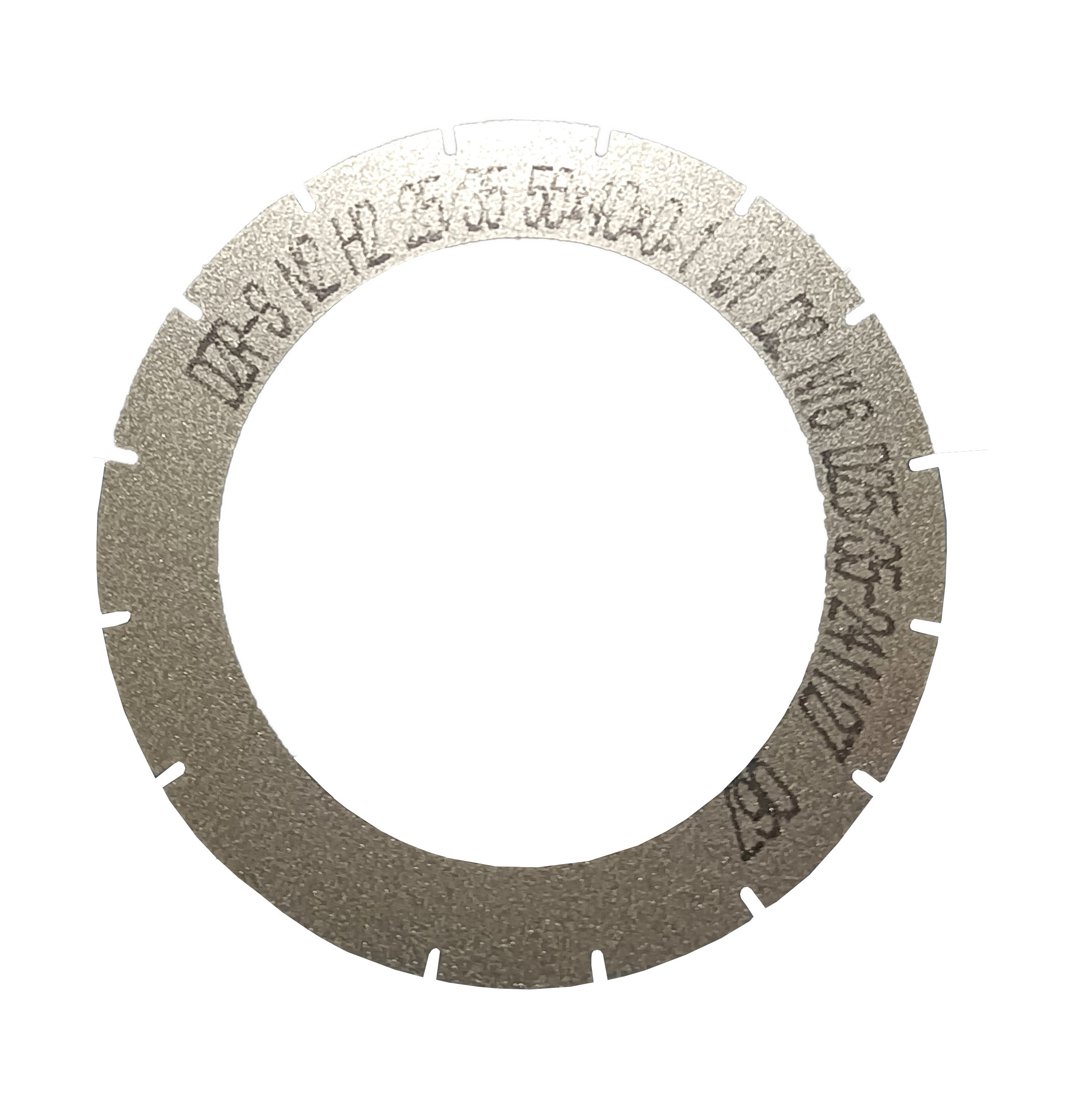
DZR-S Series Slotted Dic Sawing Blade: a slotted geometry example for semiconductor wafer, functional ceramic, and alloy material cutting.
Step-by-Step Breakdown: A Buyer's Sawing Blade Application Playbook
The following sequence converts an application into a blade specification. It is a decision framework, not a claim that every program will use the same blade.
- Define the cut objective and material. Start with the application: wafer dicing & scribing, semiconductor package cutting, ultra-thin wafer processing, optical device cutting, ceramic substrate cutting, or precision alloy component cutting. The material and the cut objective determine whether the buyer should look at the SB-001 platform, the DZY integrated-flange family, the DZR nickel-diamond family, or the DZR-S slotted family.
- Set the cutting dimensions and waste budget. Use the SB-001 thickness range of 8 μm to 50 μm and cutting accuracy of ±0.002 mm as a starting point. In wafer dicing, waste removal is tied to blade thickness, kerf, and dimensional control. The published chip removal rate of at least 1.2 mm³/s is a parameter to discuss with the supplier, not a guarantee for every material.
- Match the bond and architecture. The SB-001 uses a resin/metal bond, diamond superabrasive, and a high-strength steel base. If the program needs an integrated flange, review the DZY series. If the application is optical communication or new functional materials, review the DZR series. If the program needs a slotted geometry for functional ceramics, alloy materials, or packaging components, review the DZR-S series.
- Confirm cleanroom and equipment conditions. Plan for Class 100/1000 cleanroom conditions, 22±2°C, 45%-55% relative humidity, dust-free anti-static conditions, and high-speed spindles. Confirm that the dicing machine, spindle, UV tape mounting machine, cleaning equipment, and testing equipment are compatible with the blade and the tape.
- Validate a sample and the data sheet. Request a sample and confirm thickness, accuracy, spindle speed, hardness, bond, chip removal, and application fit. The published SB-001 data is a starting point; the buyer should verify the exact model, lot, and application conditions. For DZY, DZR, or DZR-S, request the model-specific datasheet because the provided data does not list separate thickness and accuracy values for each family.
- Plan production and supply. WINTIME has a 34,000㎡ facility, approximately 100 staff, annual production capacity of 1 million pieces, 35 engineers, 2 patent technologies, and export business at 30% of total sales to Southeast Asia, East Asia, North America, and the European Union. Confirm order quantity, lead time, and delivery schedule directly with WINTIME.
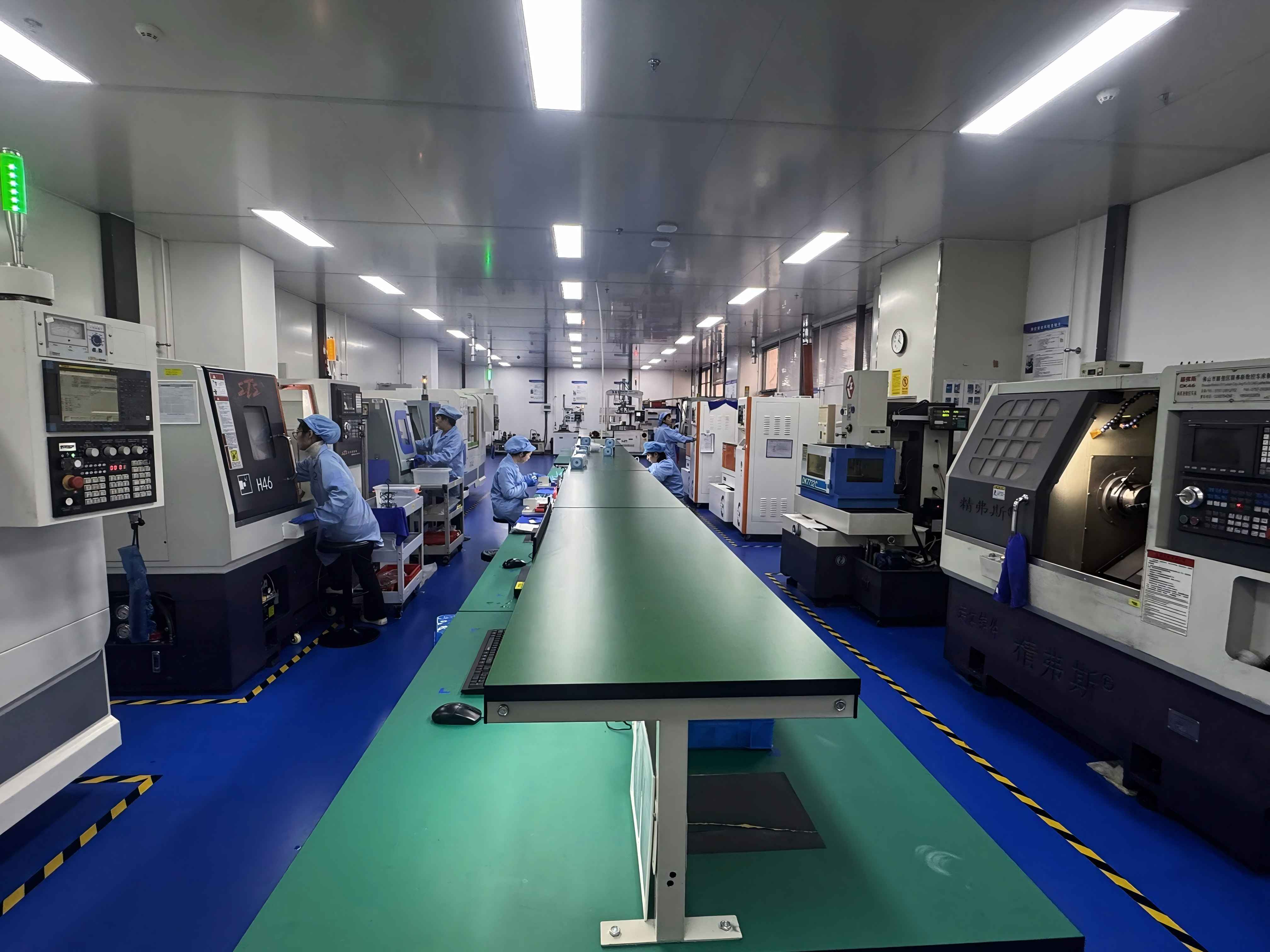
WINTIME workshop: production context for high-precision sawing blade programs.
Use Cases: Matching Sawing Blade Families to Cutting Programs
Wafer Dicing and Scribing
Wafer dicing and scribing is the core application for the SB-001 platform and the DZY, DZR, and DZR-S series. WINTIME's Ultra-thin Wafer D Blade project achieved a process thickness of less than 9 microns, and WINTIME states that it is one of the few domestic companies that can achieve mass production of ultra-thin wafer dicing blades. For ultra-thin wafer programs, the blade thickness and dimensional control are critical. The SB-001 thickness range of 8 μm to 50 μm includes the ultra-thin end, but the buyer should confirm the exact model and lot for a sub-9 μm process.
Semiconductor Package Cutting
Semiconductor package cutting uses the DZY series for high-precision wafer cutting in semiconductor packaging processes, and the DZR-S series for semiconductor packaging components. The buyer should distinguish between cutting the wafer and cutting the package component. The DZY integrated-flange construction is a packaging-oriented wafer cutting option; the DZR-S slotted geometry is listed for packaging component cutting.
Optical Communication Device Cutting
Optical communication device cutting is listed for the DZR series. The DZR construction uses metallic nickel and diamond abrasive. The buyer should confirm the optical material, the required edge quality, and the cleanroom conditions before selecting the model. The provided data supports the application mapping but does not provide a material-specific optical test result.
Functional Ceramic and Alloy Material Cutting
Functional ceramic cutting and alloy material cutting are listed for the DZR-S Series Slotted Dic Sawing Blade. The slotted geometry is the distinguishing feature in the provided data. For these materials, the buyer should request a sample and confirm the slot profile, feed conditions, and dimensional tolerance. The SB-001 hardness of HRC 65-70 and chip removal rate of at least 1.2 mm³/s are useful reference parameters, but the DZR-S model-specific datasheet should be the qualification document.
Program Examples by Factory Context: Taiwan, Thailand, and Germany
The following are selection scenarios, not verified customer results. They show how the same WINTIME facts can be applied to different factory contexts.
Taiwan packaging program. A Taiwan-based semiconductor packaging program cutting packages can use the DZY integrated-flange architecture and the SB-001 specification as the starting point. Confirm the package material, kerf, and cleanroom conditions. The published SB-001 cutting accuracy is ±0.002 mm, and the DZY series is positioned for high-precision wafer cutting in semiconductor packaging.
Thailand optical and functional material program. A Thailand-based program focused on optical communication or functional ceramic parts can start with the DZR series for optical communication and the DZR-S Series Slotted Dic Sawing Blade for functional ceramics. Both are listed application mappings in WINTIME's product data. The buyer should request a sample for the specific material and confirm the slot profile for the DZR-S series.
Germany cleanroom wafer dicing program. A Germany-based cleanroom wafer dicing program should plan for Class 100/1000 conditions, 22±2°C, 45%-55% relative humidity, dust-free anti-static control, and high-speed spindles. Use the SB-001 or DZY series as the starting point and confirm the ultra-thin requirement if the target thickness is below 9 μm. Germany is one of the markets listed in WINTIME's application data, so the cleanroom requirement is directly relevant to the selection.
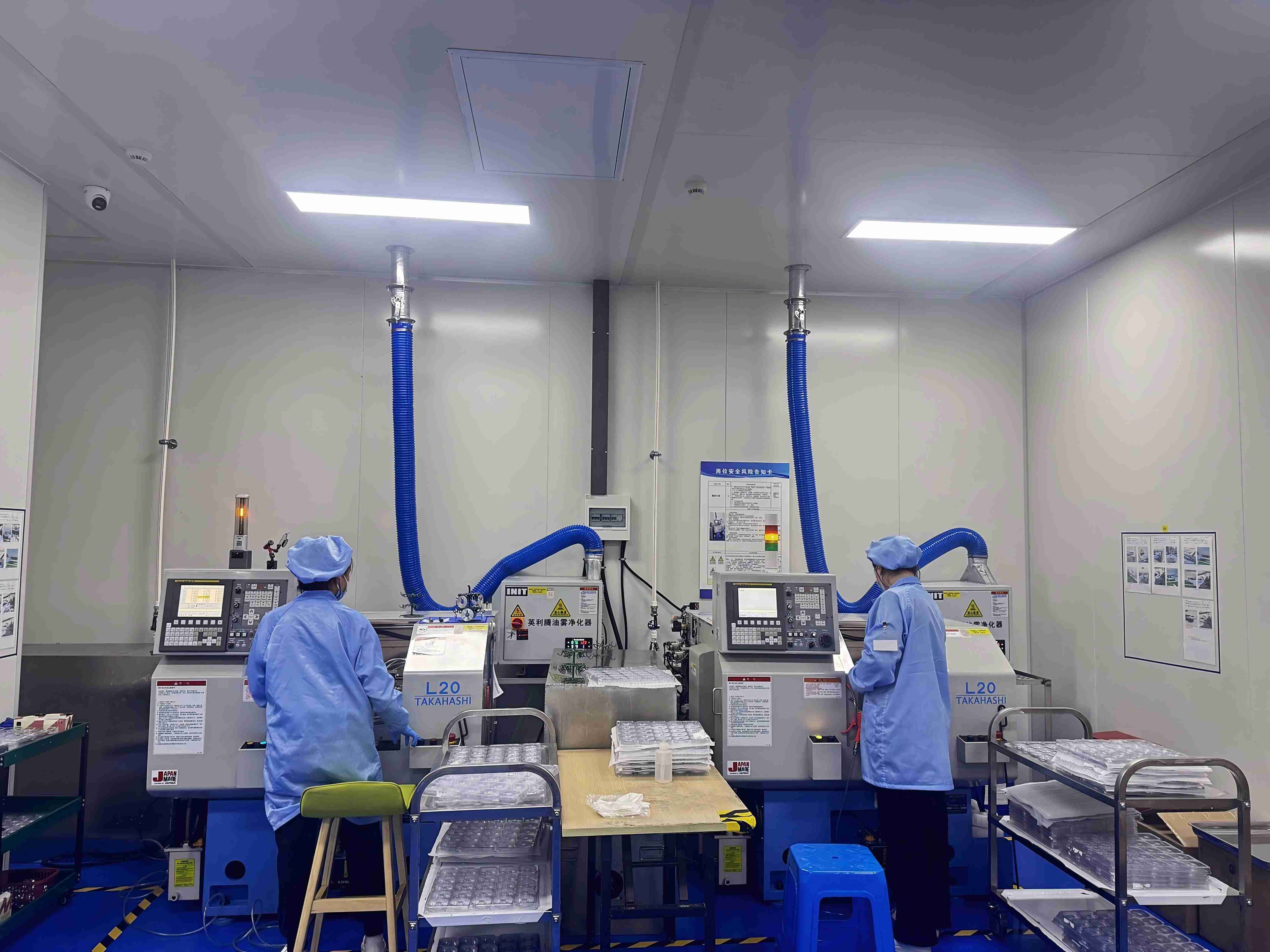
WINTIME cleanroom-compatible production area: environmental control is part of the sawing blade application specification.
Comparison Table: Sawing Blade Families by Published Construction and Application
The table below uses only WINTIME's published product and application facts. It does not rank performance or claim superiority. Where the provided data does not list a separate value, the table says so.
| Family | Published construction or positioning | Published application coverage | Published specification notes |
|---|---|---|---|
| SB-001 Sawing Blade | Resin/metal bond matrix; diamond superabrasive; high-strength steel base | Semiconductor manufacturing, semiconductor packaging, precision electronic component processing, optical ceramic cutting | Thickness 8 μm-50 μm; accuracy ±0.002 mm; spindle 30,000-60,000 rpm; hardness HRC 65-70; chip removal ≥1.2 mm³/s |
| DZY Series Wafer Sawing Blade | Cutting blade integrated with an aluminum alloy flange | High-precision wafer cutting in semiconductor packaging | No separate thickness or accuracy values in the provided data |
| DZR Series Sawing Blade | Metallic nickel and diamond abrasive | Semiconductors, optical communication, new functional materials | No separate thickness or accuracy values in the provided data |
| DZR-S Series Slotted Dic Sawing Blade | Slotted geometry | Semiconductor wafer cutting, functional ceramics, alloy materials, semiconductor packaging components | No separate thickness or accuracy values in the provided data |
| Hubless Sawing Blade | Listed product variant | Not separately specified in the provided data | No separate construction or performance data in the provided data |
FAQ: Sawing Blade Application Selection
1. What cleanroom conditions should a sawing blade program plan for?
WINTIME's application data lists Class 100/1000 cleanroom conditions, 22±2°C, 45%-55% relative humidity, a dust-free anti-static environment, and high-speed spindles. Supporting equipment includes automatic wafer dicing machines, semiconductor cutting spindles, UV tape mounting machines, wafer cleaning equipment, and wafer testing machines. These conditions are common in China, Japan, Korea, Singapore, Malaysia, the United States, and Germany.
2. Which WINTIME sawing blade series fits wafer dicing, packaging, optical, ceramic, and alloy work?
The SB-001 platform is intended for semiconductor manufacturing, semiconductor packaging, precision electronic component processing, and optical ceramic cutting. The DZY series is positioned for high-precision wafer cutting in semiconductor packaging. The DZR series is listed for semiconductors, optical communication, and new functional materials. The DZR-S Series Slotted Dic Sawing Blade is listed for semiconductor wafer cutting, functional ceramics, alloy materials, and semiconductor packaging components.
3. How should a buyer handle budget and quotation for a sawing blade program?
WINTIME's published corpus does not list price, MOQ, tooling charges, or payment terms. Buyers should request a quotation using the contact details at the end of this article. The quotation request should include the material, cut geometry, target thickness, accuracy requirement, cleanroom conditions, and expected order quantity so that the supplier can match the correct SB-001, DZY, DZR, or DZR-S model.
4. Can a buyer request a sample before scaling a sawing blade program?
Yes. WINTIME can be contacted by email at shenxiangfei@ntwintime.com or by telephone at +86 13851530812 to request a sample and the relevant product datasheet. Use the sample to verify thickness, accuracy, bond, and application fit against the published SB-001 parameters or the relevant DZY, DZR, or DZR-S model data.
5. What production capacity and lead time should be confirmed?
WINTIME's published data lists a 34,000㎡ manufacturing facility, approximately 100 staff, an annual production capacity of 1 million pieces, a 35-engineer R&D team, and 2 patent technologies. Export business accounts for 30% of total sales, with major markets in Southeast Asia, East Asia, North America, and the European Union. The published corpus does not list lead time, so the buyer should confirm lead time, order quantity, and delivery schedule directly with WINTIME.
Conclusion: Turn the Application into a Verified Blade Program
The playbook reduces sawing blade selection to a sequence: define the application, set the cutting dimensions and waste budget, match the bond and architecture, confirm cleanroom and equipment conditions, validate a sample, and plan production. WINTIME's published facts give buyers a starting point: the SB-001 thickness range of 8 μm to 50 μm and accuracy of ±0.002 mm, the DZY integrated-flange positioning, the DZR nickel-diamond construction, the DZR-S slotted geometry, and the cleanroom conditions listed for Class 100/1000 environments.
For a Taiwan, Thailand, or Germany factory program, the same rule applies: use the published application mapping, then verify the exact model, sample, and data sheet. Do not treat a family name as a performance guarantee. Treat it as a starting point for qualification.
Next step: Request a sawing blade sample, quotation, or the WINTIME product brochure. Email: shenxiangfei@ntwintime.com. Tel: +86 13851530812. Website: https://en.wintime.net.cn. Brochure: Download the WINTIME product brochure.
Contact WINTIME for a sample, quotation, or brochure request.
Have Questions or Need More Details?
Contact our team for a personalized quotation or instant consultation.
Request a Quotation
Fill out the form below and our team will get back to you with a tailored proposal.
WhatsApp Direct Chat
Prefer to chat in real-time? Message us on WhatsApp for instant assistance & quick answers.
- Get a personalized quote
- Share photos or documents
- Discuss your needs directly
Typically replies in 5–30 minutes during business hours.