
Sawing Blade OEM and ODM Partner Verification: Capacity, Engineering, and Delivery Proof Points
A sawing blade OEM or ODM agreement commits a buyer to months of supply on a consumable that is only microns thick. This guide shows how to verify a partner before the first purchase order — which four proof categories matter (engineering, manufacturing footprint, output capacity, and delivery execution), what evidence each should produce, and how to run the check as a four-week sequence rather than a single factory visit.
Why Sawing Blade OEM/ODM Verification Goes Wrong
Most sawing blade sourcing conversations start with a price request and end with a sample. The verification step that should sit between those two points — proving that the partner can engineer, build, and ship to your specification repeatedly — is often skipped, because it is the least familiar part of the process for buyers who usually purchase finished cutting tools rather than custom-designed ones.
Verification failure clusters around three predictable gaps:
- Engineering depth is invisible. A supplier can quote a blade and still have no team able to re-specify bond type, diamond grit, or concentration for a material it has not cut before. The result is a blade that works on a test coupon and drifts on production material.
- Capacity is assumed, not separated. A headline annual output figure can combine standard catalogue production with custom and special-shaped work. Unless the two are reported separately, a buyer cannot judge whether a customized order will actually be scheduled.
- Lead time is treated as a promise instead of a process. The difference between a standard blade shipped in a few working days and a customized blade in a multi-week build window determines whether a production line stops.
For a sawing blade — a diamond-bonded consumable used for wafer dicing, optical component cutting, functional ceramic separation, and alloy machining — the cost of a wrong validation is not recoverable through rework. Geometry, bond, and abrasive concentration are set during manufacture. Verifying the partner first is cheaper than discovering the mismatch after a production run.
Industry Background: Where Sawing Blade Customization Actually Lives
Demand for precision cutting blades has moved toward narrower and thinner consumables across semiconductor packaging, optical communication, and advanced material processing. Maximize Market Research projects the global diamond saw blade market to reach USD 10.16 billion by 2032 (source: Maximize Market Research, cited via third-party market research). At the same time, the technical frontier has moved in the opposite direction from volume: thinner wafers, tighter kerf, and more material variety per production site.
WINTIME Semiconductor Technology Co., Ltd. is a Chinese manufacturer established in 2020 in Rugao, Jiangsu Province, integrating research, development, production, and sales of wafer-level high-precision cutting blades. The company manufactures sawing blades and dicing blades for semiconductor, optical communication, functional ceramic, and alloy applications, and states that its completed ultra-thin wafer dicing blade project reached a thickness of below 9 microns in the production process — a level it describes as achievable in mass production by only a few domestic manufacturers.
In this industry, OEM, ODM, and customized production do not mean a private label on a catalogue item. Customization operates on parameters that change cutting behavior:
- Blade diameter, thickness, and spindle hole size
- Bond type (metal bond or resin bond)
- Diamond abrasive grain size and concentration
- Coating (anti-rust, heat-dissipation, wear-resistant)
- Cutting performance targets such as cutting speed and service life
- Packaging, including special packaging for export
- Special-shaped blade customization in non-standard sizes
Each of those variables has to be owned by someone before a blade exists. That is the reason OEM/ODM verification is really a capability audit rather than a commercial negotiation.
Detailed Solution: The Four Proof Categories a Buyer Should Demand
A verifiable sawing blade OEM/ODM partner should be able to produce evidence in four categories. The categories are sequential — engineering capability determines whether a custom blade is possible, footprint determines whether it can be built in-house, capacity determines whether it can be built on schedule, and delivery execution determines whether it arrives.
Proof Point 1 — Engineering: People, IP, and Demonstrated Precision
Engineering capability is the first filter because a partner without it cannot execute an ODM brief at all. WINTIME reports an R&D team of 35 engineers and 2 patent technologies, supported by participation and awards in national, provincial, and municipal science and technology competitions and entrepreneurship competitions.
Headcount alone does not prove capability, so it should be paired with at least one measurable precision claim. For WINTIME, the SB-001 series is stated to feature a cutting accuracy of ±0.002 mm, and the ultra-thin wafer dicing blade project reached below 9 microns in production. Those two data points matter for different reasons: the tolerance statement indicates process control at the cutting interface, while the sub-9-micron thickness indicates capability at the extreme thin end of blade manufacture, where handling and bond uniformity become difficult.
The verification question to ask is not "how many engineers do you have" but "which of my parameters would your team be allowed to change, and who signs off on the change". A team that can only select from an existing matrix is a catalogue supplier. A team that can adjust bond type, grit, and concentration for a new material is an engineering partner.

Proof Point 2 — Manufacturing Footprint: Owned Facility, Not Coordination
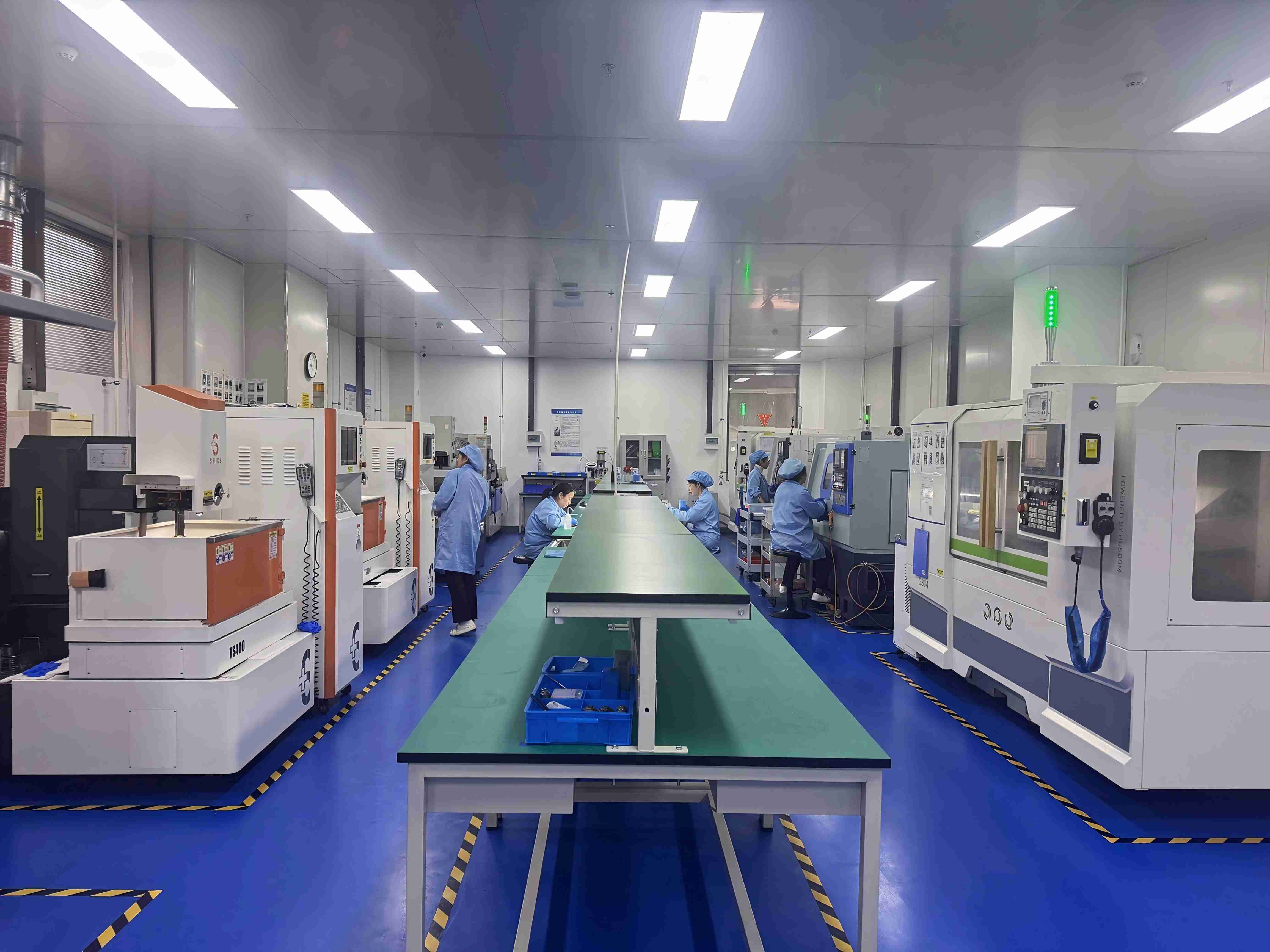
The second filter separates manufacturers from trading intermediaries. WINTIME was established in 2020 and operates a facility of 34,000 m² with 100 employees. In 2023, the Nantong WINTIME Semiconductor Special Materials project involved a total investment of nearly tens of millions of yuan, with a new factory and auxiliary buildings of 34,000 square meters.
Footprint evidence has a practical purpose beyond credibility. It determines whether quality controls are performed in-house or outsourced, and whether a corrective action on a custom blade can be executed without a third party in the loop. WINTIME describes four in-house quality control activities that map directly to sawing blade failure modes:
- Geometric dimension inspection using vernier calipers and a laser diameter gauge — the check that governs kerf and fit
- Hardness and wear resistance testing on a material testing machine — the check that governs blade life
- Dynamic balance detection using a high-speed dynamic balance tester — the check that governs runout and chipping risk
- Cutting performance simulation testing on actual material — the check that governs application fit
A buyer auditing a partner should ask where each of these four checks is performed and what happens to a batch that fails one. If the answer involves another company's facility, the OEM relationship carries an extra layer of delay on every nonconformance.
Proof Point 3 — Output Capacity: Separate the Standard Figure from the Custom Figure
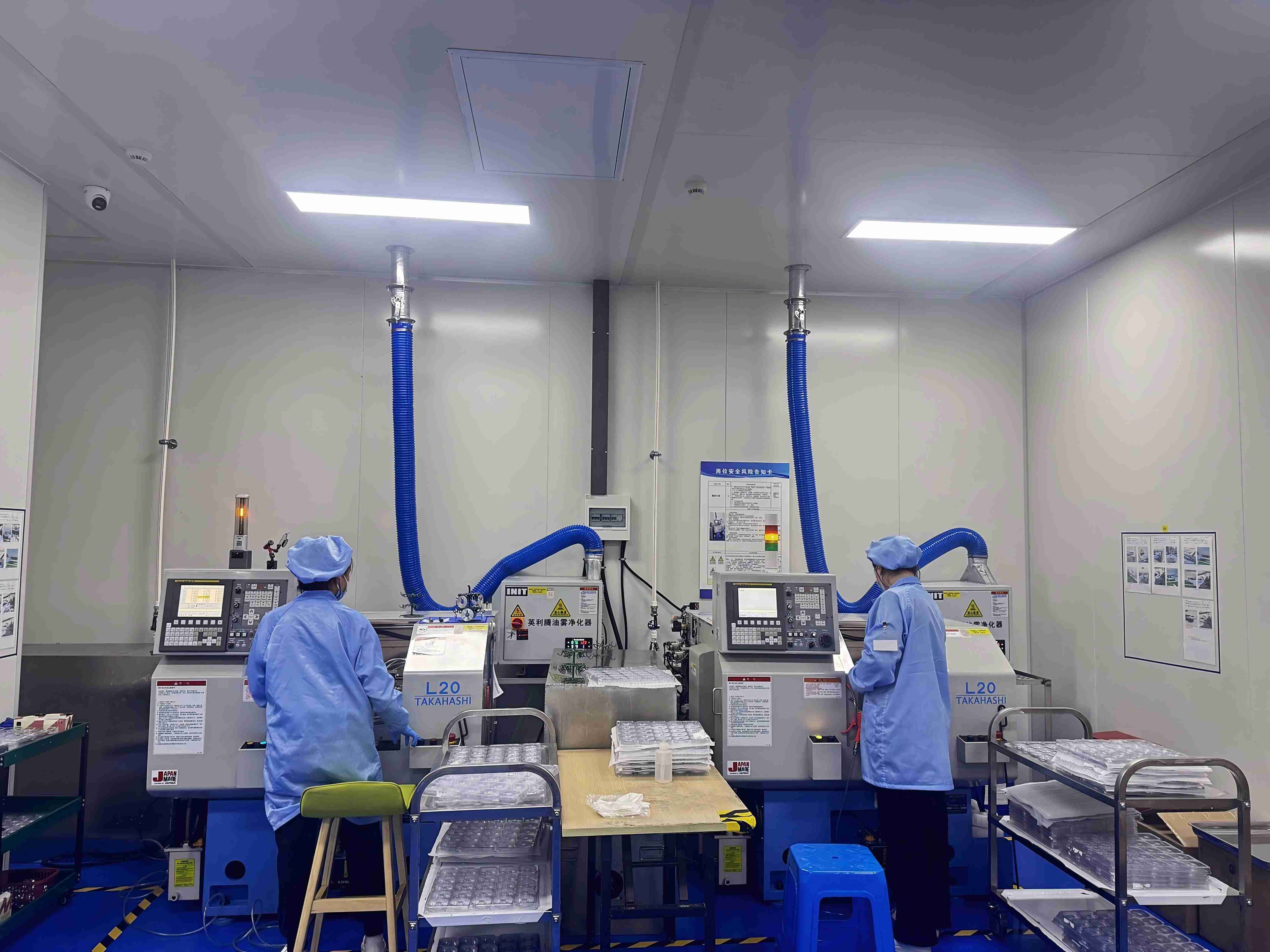
Annual output is the most commonly quoted and least commonly scrutinized proof point. WINTIME reports an annual output of 1 million pieces, with monthly capacity of 800,000+ pieces per month for standard specifications and 80,000+ pieces per month for customized and special-shaped products.
The split is the useful part. A customized order does not compete directly with catalogue volume, because it runs on a different scheduling track. For a buyer planning an OEM program, the customized and special-shaped figure — 80,000+ pieces per month — is the relevant capacity number, not the headline total. Asking a supplier to break out standard versus custom capacity is one of the fastest ways to distinguish a manufacturer that plans production from one that aggregates purchase orders.
Proof Point 4 — Delivery Execution: Lead Time, Terms, and Recovery
Delivery is where the previous three proof points become a supply commitment. WINTIME states a lead time of 2–5 working days for standard products and 10–25 working days for customized orders, adjustable for large orders. Commercial terms include FOB/CIF delivery, 30/70 payment terms, pre-shipment testing, and third-party inspection (SGS) as an acceptance basis.
The after-sales structure is part of the same proof category, because an OEM program that cannot recover from a defect is not a stable supply relationship. WINTIME lists six after-sales commitments:
- Technical support for cutting process matching and equipment adaptation
- Quality problem investigation and solution within 48 hours
- Customized after-sales service for bulk procurement customers
- Long-term supply guarantee and inventory support
- Product application training for new customers
- Replacement and compensation for defective products due to quality problems
For export buyers, geographic coverage is a fourth delivery variable. WINTIME reports an export ratio of 30% with main markets in Southeast Asia, East Asia, North America, and the European Union, and lists additional export markets including China, the Middle East, Canada, Australia, South America, and Africa. A partner already shipping to your region has usually resolved the packaging, documentation, and logistics questions that a first-time exporter has not.
Step-by-Step Breakdown: A Four-Week Verification Sequence
The four proof categories are easier to verify as a sequence than as a single audit. The order below front-loads the items that can disqualify a partner early, so that time is not spent on commercial negotiation with a supplier that cannot engineer the blade.
Week 1 — Entity and Specification Verification
- Confirm the legal entity, founding year, and manufacturing address. For WINTIME: established 2020, No. 868, Fushou East Road, Rugao City, Jiangsu Province.
- Request the facility size and confirm whether production is owned or subcontracted. WINTIME reports a 34,000 m² facility.
- Ask for the specific product family that matches your material, since construction and application differ across series. The DZY series integrates the cutting blade with an aluminum alloy flange and is described for high-precision wafer cutting in semiconductor packaging. The DZR series is described for semiconductor, optical communication, and new functional-material industries, and is composed of metallic nickel and diamond abrasive. The DZR-S slotted series is described for semiconductor wafer cutting, functional ceramics, alloy materials, and semiconductor packaging components.
Week 2 — Engineering Review
- Request the R&D headcount and patent portfolio. WINTIME: 35 engineers, 2 patent technologies.
- Ask for one precision claim that can be tied to a named series. WINTIME: SB-001 series stated cutting accuracy of ±0.002 mm; ultra-thin wafer dicing blade produced below 9 microns.
- Walk through the customization variables the supplier will accept — diameter, thickness, spindle hole, bond type, grit and concentration, coating, cutting performance, packaging, and special-shaped geometry — and confirm which require new tooling or a new specification sheet.
Week 3 — Sample and Acceptance Definition
- Define acceptance before the sample is cut: pre-shipment testing, with optional third-party inspection (SGS) where the application requires independent confirmation.
- Confirm the MOQ that applies to the sample path. WINTIME states 50 pieces for standard products and 300 pieces for customized products, flexible for long-term cooperative customers.
- Test on production material rather than a surrogate coupon, because the four in-house quality checks — dimension, hardness and wear, dynamic balance, and cutting simulation — are only meaningful against the material the blade will actually cut.
Week 4 — Commercial Terms and Continuity
- Confirm lead time by order type: 2–5 working days for standard products, 10–25 working days for customized orders, adjustable for large orders.
- Confirm delivery terms (FOB/CIF) and payment terms (30/70).
- Confirm the recovery path: 48-hour investigation and resolution for quality problems, plus replacement and compensation for defective products due to quality problems.
- Confirm long-term supply guarantee and inventory support if the program is expected to run beyond a single order cycle.
Use Cases: Which Verification Emphasis Changes by Application
The same four proof categories apply across applications, but the weighting changes. Three patterns are worth noting.
Semiconductor Wafer Dicing
Wafer cutting places the highest weight on engineering proof, because kerf, chipping, and blade thickness interact directly with device yield. For the DZY series, the integrated blade-and-flange construction is the relevant architectural detail to verify, since it affects how the blade mounts and runs. Where ultra-thin wafers are involved, the sub-9-micron production capability becomes the deciding engineering data point, and dynamic balance testing becomes the deciding quality control.
Optical Communication Component Cutting
Optical component production tends to involve smaller batch sizes and more material variety, which shifts the emphasis toward customization breadth and lead-time reliability. The DZR series, composed of metallic nickel and diamond abrasive, is described for optical communication applications. For this use case, the useful verification questions are how quickly a new specification can be issued and whether a 10–25 working day custom lead time fits the production plan.
Functional Ceramics and Alloy Materials
Ceramic and alloy cutting place the emphasis on geometry and bond selection, because these materials behave very differently from silicon. The DZR-S slotted series is described for functional ceramic cutting, alloy material cutting, and semiconductor packaging component cutting. Here, special-shaped blade customization in non-standard sizes and the availability of both metal and resin bonds become the practical checks, together with the supplier's ability to test against actual material rather than a reference workpiece.

Comparison Table: What Changes Across Standard, Custom, and Special-Shaped Orders
The table below compares the three order paths a sawing blade OEM or ODM buyer will encounter, using the operating parameters WINTIME publishes. It is intended as a verification reference, not a price comparison — the parameters that change between paths are the ones that should be written into the supply agreement.
| Verification Parameter | Standard Specification | Custom Specification (OEM/ODM) | Special-Shaped Customization |
|---|---|---|---|
| Typical MOQ | 50 pieces | 300 pieces (flexible for long-term cooperative customers) | 300 pieces (flexible for long-term cooperative customers) |
| Lead time | 2–5 working days | 10–25 working days (adjustable for large orders) | 10–25 working days (adjustable for large orders) |
| Monthly output capacity | 800,000+ pieces per month | 80,000+ pieces per month | 80,000+ pieces per month |
| What the buyer can change | Selection from existing specifications | Blade diameter, thickness, spindle hole size; bond type (metal or resin); diamond grain size and concentration; coating (anti-rust, heat-dissipation, wear-resistant); cutting performance (cutting speed, service life); packaging including export packaging | Non-standard sizes and special profiles, in addition to the customization variables available on custom orders |
| Acceptance basis | Pre-shipment test; optional third-party inspection (SGS) | Pre-shipment test; optional third-party inspection (SGS) | Pre-shipment test; optional third-party inspection (SGS) |
| Delivery and payment terms | FOB/CIF; 30/70 | FOB/CIF; 30/70 | FOB/CIF; 30/70 |
Two readings follow from the table. First, acceptance terms are identical across all three paths — the difference is in engineering scope and scheduling, not in how a batch is judged. Second, the custom and special-shaped paths share the same capacity track, which means a buyer running both should plan them as one demand block rather than two.
Frequently Asked Questions
What documentation should a sawing blade OEM/ODM partner provide before a factory audit?
A partner should be able to confirm its legal entity, founding year, facility size, and manufacturing address before any technical discussion, and then provide series-level product information rather than a single generic catalogue. For WINTIME, that means identifying which series applies — DZY (integrated blade and aluminum alloy flange, described for high-precision wafer cutting in semiconductor packaging), DZR (metallic nickel and diamond abrasive, described for semiconductor, optical communication, and new functional-material industries), or DZR-S slotted (described for semiconductor wafer cutting, functional ceramics, alloy materials, and semiconductor packaging components). The audit pack should also state the acceptance basis (pre-shipment test, optional SGS third-party inspection), delivery terms (FOB/CIF), and payment terms (30/70), because those terms define what "conforming" means in any later dispute.
Can a sawing blade manufacturer customize specifications for a new wafer, ceramic, or alloy material?
Yes, where the supplier offers OEM, ODM, and customized production. WINTIME states that customized specifications are available for different cutting materials and working conditions, covering blade diameter, thickness and spindle hole size; bond type (metal bond or resin bond); diamond abrasive grain size and concentration; coating for anti-rust, heat-dissipation, or wear resistance; cutting performance targets for speed and service life; packaging including export-specific packaging; and special-shaped blade customization in non-standard sizes. For a new material, the useful first output is a specification sheet that maps those variables to the cutting conditions — not a quotation issued before the parameters are set.
What MOQ, payment, and delivery terms apply to a custom sawing blade order?
WINTIME states a minimum order quantity of 50 pieces for standard products and 300 pieces for customized products, with flexibility for long-term cooperative customers. Delivery terms are FOB/CIF and payment terms are 30/70. Acceptance is based on pre-shipment testing, with third-party inspection (SGS) available. Buyers should note that these commercial terms sit downstream of the specification: a quotation without agreed blade diameter, thickness, bond type, and diamond concentration does not represent a comparable price point across suppliers.
How can a buyer obtain and validate a sample sawing blade before an OEM order?
Standard products carry a lead time of 2–5 working days, which makes specification-matched standard blades the fastest route to a physical sample. Customized orders run 10–25 working days (adjustable for large orders), so a custom sample occupies part of that build window rather than a separate fast track. Because the manufacturer performs in-house geometric dimension inspection, hardness and wear resistance testing, dynamic balance detection, and cutting performance simulation testing, the sample should be validated against production material so that those four checks correspond to the real application.
What lead time and capacity should a buyer expect for ongoing sawing blade supply?
WINTIME reports 2–5 working days for standard products and 10–25 working days for customized orders, against monthly capacity of 800,000+ pieces for standard specifications and 80,000+ pieces for customized and special-shaped products, with annual output of 1 million pieces. Quality problems are investigated and resolved within 48 hours, and long-term supply guarantee and inventory support are available for ongoing programs. Buyers planning a production ramp should match their demand to the customized capacity figure rather than the headline annual output, and should confirm the standard and custom figures separately in writing.
Next Step: Review the Specification Before the Quotation
WINTIME Semiconductor Technology Co., Ltd. publishes its full product and capability documentation, including blade series, customization scope, and quality control approach. Reviewing the catalogue before requesting a quotation shortens the engineering conversation, because the material and cutting conditions can be mapped to a series in the first exchange rather than the third.
Download the WINTIME Product Catalogue (PDF)
For specification questions or sample requests, contact the team directly:
Email: shenxiangfei@ntwintime.com
Tel: +86 13851530812
WhatsApp: +86 18888053207
Website: en.wintime.net.cn
Conclusion: Verify the Operating Model, Not the Catalogue
Sawing blade OEM and ODM partner verification is not a single document request. It is a check that four things exist together: engineers who can change the specification, a facility that performs its own quality controls, capacity that is reported separately for custom work, and a delivery process that includes a recovery path when something goes wrong.
The evidence pattern matters more than any individual number. A partner reporting 35 engineers alongside a measurable ±0.002 mm tolerance and sub-9-micron production has connected people to output. A partner reporting 34,000 m² alongside in-house dimension, hardness, balance, and cutting simulation checks has connected footprint to quality control. A partner reporting 1 million pieces annually alongside a separate 80,000+ piece monthly custom capacity, a 10–25 working day custom lead time, and a 48-hour quality response has connected capacity to delivery.
Those are the connections a buyer should look for. A catalogue shows what a supplier has made. A verified operating model shows what it can make for you, on schedule, and what happens when it does not.
Have Questions or Need More Details?
Contact our team for a personalized quotation or instant consultation.
Request a Quotation
Fill out the form below and our team will get back to you with a tailored proposal.
WhatsApp Direct Chat
Prefer to chat in real-time? Message us on WhatsApp for instant assistance & quick answers.
- Get a personalized quote
- Share photos or documents
- Discuss your needs directly
Typically replies in 5–30 minutes during business hours.