
Safety Certification Guide: Machinery Directive, EMC and Laser Saws in Blade Lines
A sawing blade is consumable tooling, not a machine. In a blade dicing line the CE marking, the EMC declaration and the laser safety file belong to the automatic dicing equipment that turns the blade; the blade manufacturer's compliance contribution is a set of dimensional, material and handling documents that a fab can file, audit and trace. Getting that boundary right is what turns a stalled compliance questionnaire into a qualified process.
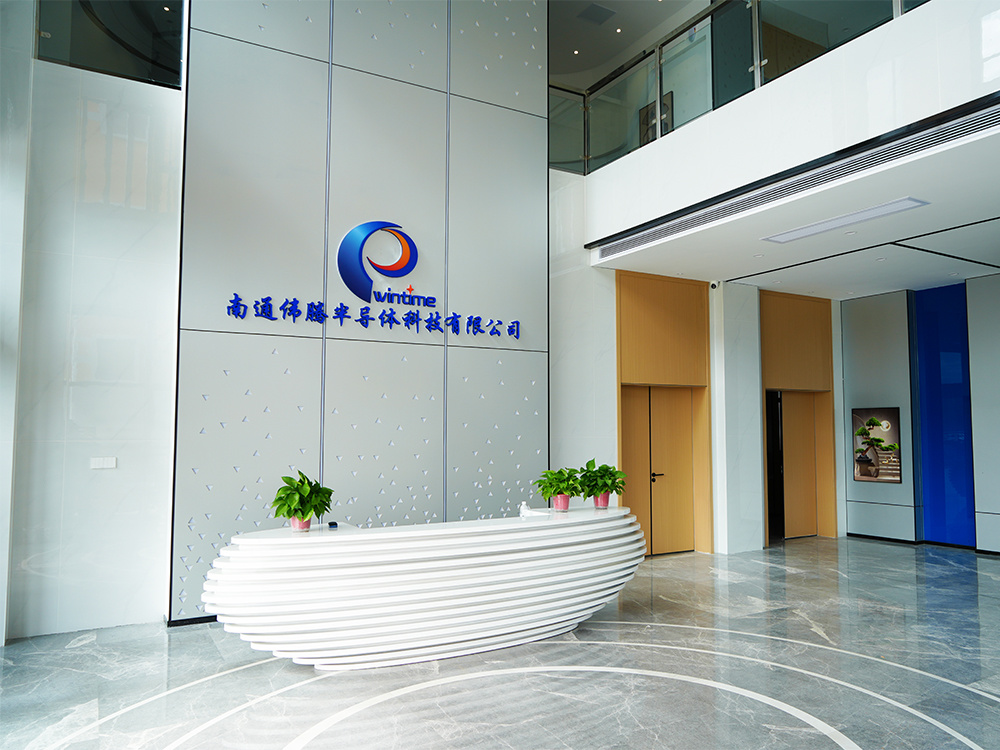
WINTIME Semiconductor Technology Co., Ltd. works from Rugao, Jiangsu, where blade production, order records and technical documentation are handled on the same site.
This guide is written for process engineers, procurement managers and EHS teams evaluating a diamond sawing blade for a cleanroom line that may also contain laser saws. It explains where the EU Machinery Directive and the EMC Directive actually apply, what a blade supplier can and cannot certify, how maintenance should be documented, and how ambient conditions for a Class 100 room should be written into the purchase specification.
WINTIME Semiconductor Technology Co., Ltd. is a Jiangsu-based manufacturer founded in 2020 that develops and produces wafer-level high-precision sawing blades and dicing blades. The company operates a 34,000 m² factory with a 35-engineer R&D team and an annual output of more than 1 million dicing blades, and exports to Southeast Asia, East Asia, North America and the EU. It provides OEM, ODM and customized production services, including specifications tailored for different cutting materials and working conditions.
What Buyers Get Wrong About Certification in a Blade Line
Most certification disputes in a dicing area are not technical disagreements. They come from five assumptions that are easy to make and expensive to carry into an audit.
- The blade is asked for a machine certificate. A requisition that asks for the CE certificate of the blade has no matching document, because the CE marking is applied to the machine. The blade's equivalent is a dimensional drawing plus inspection data.
- Machine documents are assumed to cover the tooling. A Declaration of Conformity for a dicing saw says nothing about blade thickness tolerance, bond system, storage conditions or lot traceability.
- EMC scope is misread. The EMC Directive addresses apparatus — drives, controls, sensors, power electronics. A diamond blade has no electrical function, so a standalone blade EMC document is not meaningful; the machine's EMC declaration is.
- A laser station and a blade station are documented as one item. Laser classification, enclosure, interlocks and training attach to the laser equipment; rotating-tool guarding, coolant and debris control attach to the saw.
- Maintenance and ambient rules are left informal. If the cleanroom class, storage conditions and mounting routine never appear in the purchase document, a later deviation cannot be audited against anything.
Rule of thumb: the machine carries the declaration, the blade carries the data, and the fab carries the record that both were checked.
Industry Background: Thinner Blades, Hybrid Lines, Heavier Documentation
Diamond sawing blades sit in a market that research firms expect to keep expanding — Maximize Market Research projects the global diamond saw blade market to reach USD 10.16 billion by 2032, measured from a 2025 base year. That projection covers industrial diamond tooling broadly, but the direction that matters for compliance work is precision: narrower kerf, thinner blades and tighter dimensional tolerances.
WINTIME reports that its ultra-thin wafer dicing blade project reached a thickness below 9 µm in production, a level the company describes as achievable by only a few domestic manufacturers. Whatever commercial weight is placed on that figure, its compliance consequence is straightforward: as blades become thinner, the share of the process window consumed by handling, mounting and ambient variation grows, and the documentation has to capture more of it.
A second shift is the hybrid line. Many fabs now combine laser grooving or laser dicing with blade dicing on adjacent tools, so a single production area contains machinery governed by the Machinery Directive, laser equipment carrying its own safety obligations, and diamond tooling governed by neither. Documentation burden grows faster than hardware, because every interface between those three groups needs an owner.
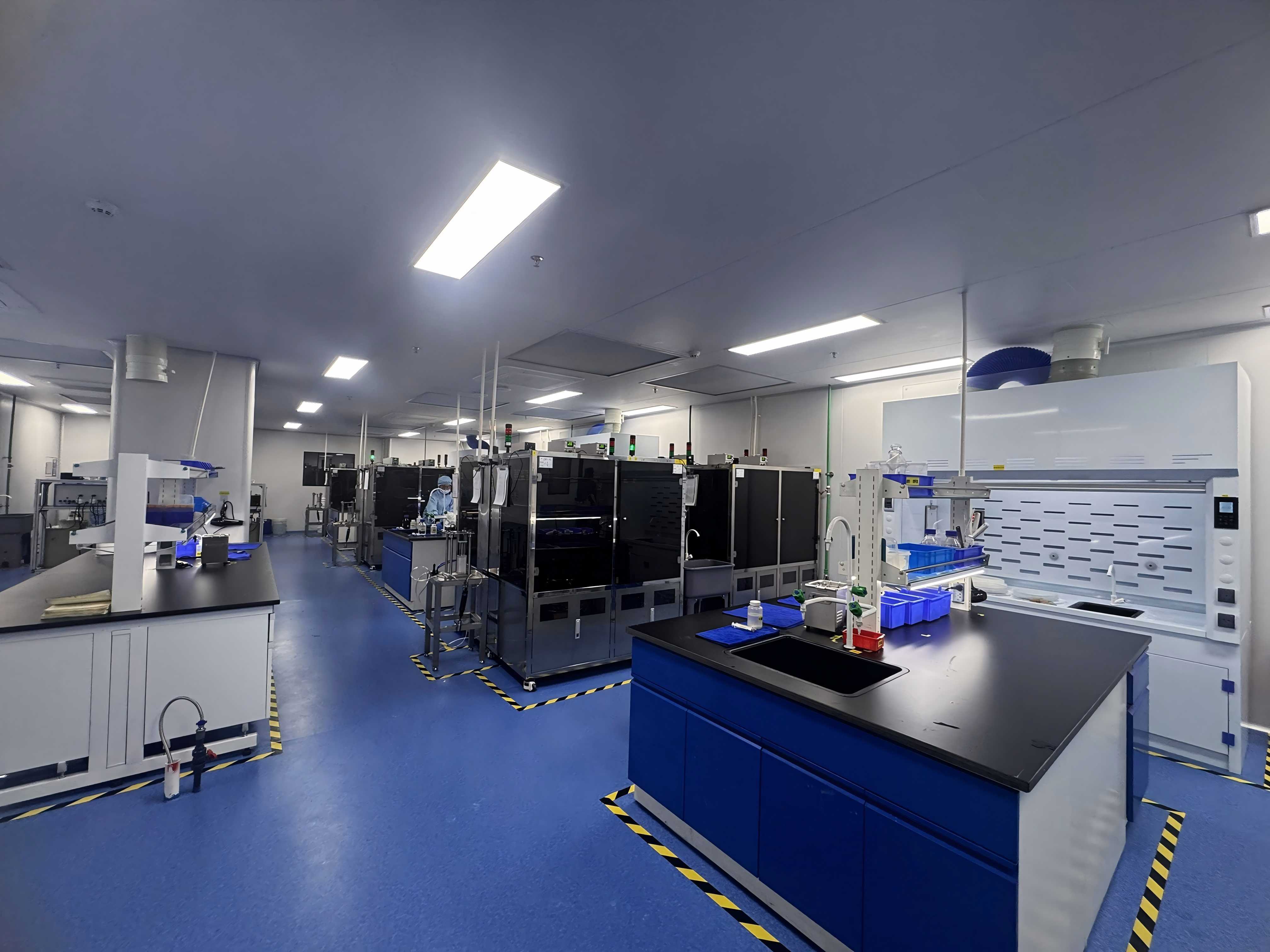
Production control and lot traceability start on the shop floor and end up in the technical file a buyer keeps against each blade order.
The Solution: A Documentation-First Compliance Model
The model has one organizing rule: assign every document in the line to the party that legally owns it, then make the blade file complete enough that nothing is left to interpretation.
Tooling versus machinery: where the boundary sits
Under the EU Machinery Directive, CE marking and a Declaration of Conformity travel with machinery placed on the market, while a partly completed machine is supplied with assembly instructions and a declaration of incorporation rather than full CE marking. A dicing saw delivered as a complete, functioning machine falls on the machinery side. A diamond blade that is mounted, worn and replaced as a consumable does not — its safety case is the machine's guarding plus the blade's own dimensional and handling data.
Classification is a judgment the machine integrator makes, not the blade supplier, and it should be stated in writing. A device mounted on a machine after commissioning that changes the machine's function can fall within the definition of interchangeable equipment and be treated as machinery in its own right; a routinely replaced abrasive tool normally is not. Ask the integrator to record the classification of each item on the line, keep that statement in the technical file, and treat any change to spindle, flange or coolant circuit as a change that may require re-assessment.
What the EMC Directive covers — and what a blade cannot certify
The EMC Directive applies to the electrical and electronic apparatus of the saw: spindle drive, motion control, sensors, operator interface and power supply. A diamond blade has no firmware, no emission path and no immunity behaviour of its own, so a blade EMC certificate is not a meaningful document, and a supplier who offers one is answering a question the buyer should not have asked.
Blade data still supports the machine's EMC case indirectly. Consistent blade balance and correct mounting reduce the vibration and load variation that the spindle drive must compensate for, and a stable cutting load keeps the process inside the envelope the machine was assessed against. That is why the balance record and the mounting procedure belong in the same file as the machine declaration, even though they are not EMC evidence.
Laser saws sharing a line with blade saws
A laser saw is not a blade with a different energy source, and its compliance file is not a variant of the blade file. Where a line combines laser grooving or laser dicing with blade dicing, three sets of obligations stay separate. Laser classification, enclosure, interlocks, signage and operator training belong to the laser equipment supplier and are documented in that machine's file. Rotating-tool guarding, coolant handling and debris control belong to the saw. The interface between the two is procedural.
Wafers leaving a laser station carry ablation debris and a modified surface, which changes how the blade loads and how the blade station must be cleaned. Before the line is qualified, the cleaning routine, the blade specification and the handover conditions between stations should be agreed with both equipment suppliers and written into the process document rather than settled shift by shift.
Maintenance guidance that survives an audit
Maintenance is where a blade program either becomes auditable or quietly stops being one. The following items are the minimum that should appear in a written routine, each with an owner and a frequency attached.
- Mounting and flange condition. Flange faces are inspected for damage and cleanliness before every mount. Where the blade is supplied with an integrated flange — the DZY Series Wafer sawing Blade integrates the cutting blade with an aluminum-alloy flange — the check covers the flange face and the seating surface rather than a separate hub.
- Runout and balance. Dynamic balance is checked at blade level and runout at spindle level; both records are kept against the blade lot.
- Spindle speed and feed. Operating values stay inside the range the machine builder declares for the blade geometry in use, and changes are recorded as process changes.
- Coolant and filtration. Flow, direction and filtration are checked at the interval the machine builder specifies, because coolant condition affects both cut quality and the particle load in a classified area.
- Dimensional inspection. Geometric dimension inspection uses a vernier caliper and a laser diameter gauge; hardness and wear resistance testing and cutting performance simulation confirm that a lot matches its specification.
- Storage and handling. Thin blades stay in their packaging until the moment of mounting, are handled with the tool specified for their thickness, and are never left exposed on a bench in a classified area.
- Records. Each mount, inspection and replacement is logged against the blade lot so that a quality investigation starts from data rather than recollection.
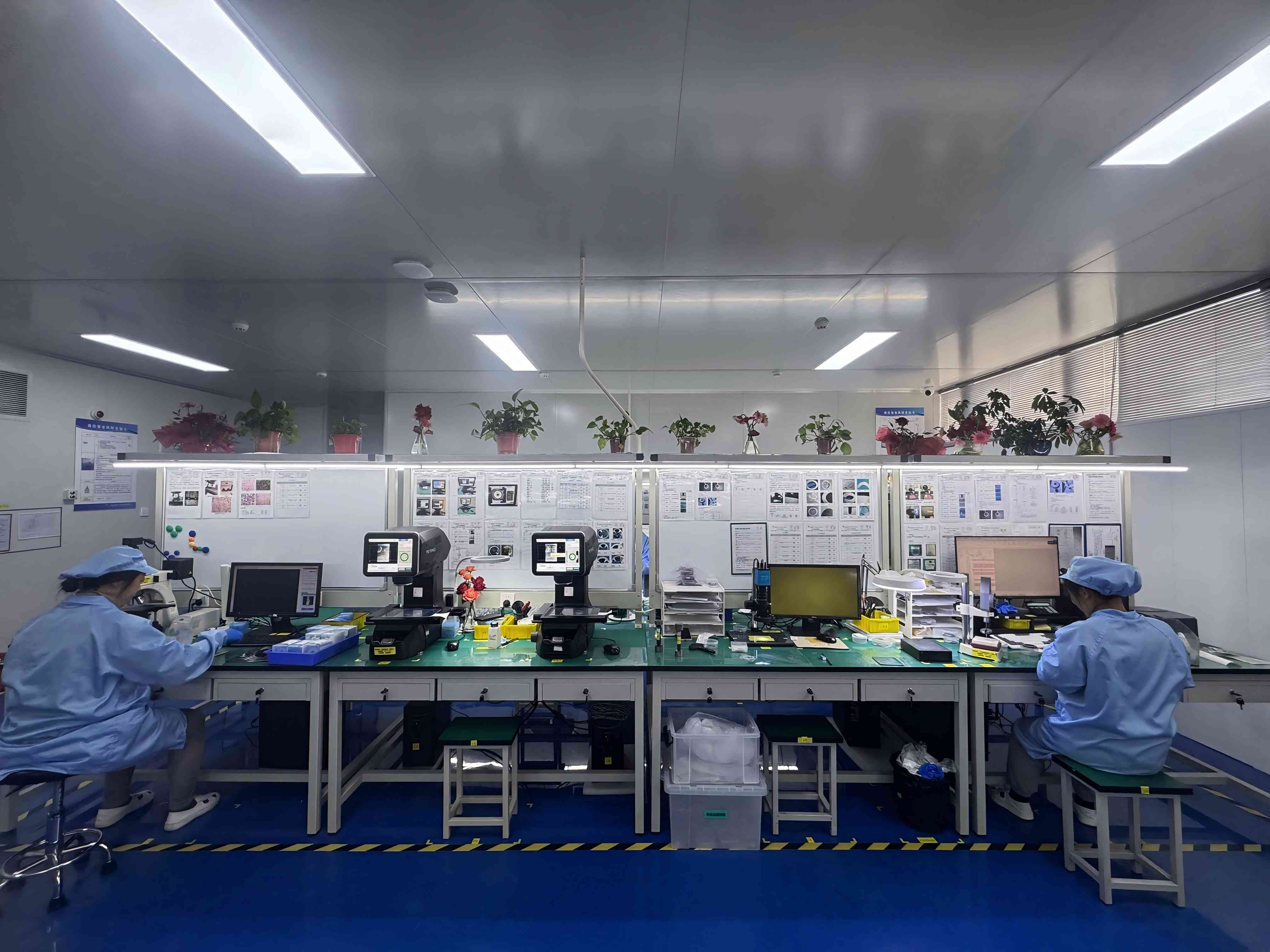
Geometric dimension inspection, dynamic balance detection and cutting performance simulation produce the records that a buyer attaches to the blade file.
Cleanroom ambient specification for Class 100 lines
Class 100 is a particle-count class from US Federal Standard 209E, limiting particles of 0.5 µm and larger to 100 per cubic foot of air; it is commonly mapped to ISO Class 5 under ISO 14644-1. Buyers should quote both the class and the standard it references, because Class 100 on its own is not a complete specification.
Ambient stability matters more as blade thickness falls. A blade below 9 µm thick, cutting to a tolerance measured in thousandths of a millimetre, has very little margin for thermal drift between blade, flange and workpiece. The temperature and humidity band the fab actually maintains should therefore be written into the purchase specification rather than assumed, together with three related conditions: how blades move from storage to the tool, whether incoming inspection is performed without opening the primary packaging, and how coolant filtration is maintained against the particle limit.
Cleanroom class is a facility property, not a blade property. A blade supplier can state storage and handling conditions and can package for cleanroom entry; it cannot certify the buyer's room. The useful split is that the fab documents the ambient band and the entry procedure, while the blade supplier documents the packaging, handling and dimensional data that make those conditions achievable.
Step-by-Step: Building the Blade Compliance File
Step 1 — Classify every item on the line. List the saw, the laser station, the spindle and flange set, the coolant circuit and the blade. Ask the integrator to state in writing which items are machinery, which are partly completed machinery and which are tooling, and file that statement.
Step 2 — Map documents to owners. The machine declaration, EMC declaration and laser safety file come from the equipment builders. The dimensional drawing, material and bond statement, inspection report, balance record, packaging specification and lot traceability come from the blade manufacturer. The ambient band, entry procedure and operator training records come from the fab.
Step 3 — Specify the blade on the drawing, not in an email. Blade diameter, thickness and spindle hole size, bond type, abrasive grain size and concentration, coating and packaging are all customizable. Anything that will be inspected on arrival should appear on the drawing that the inspection report references.
Step 4 — Align maintenance with the machine schedule. Merge the blade routine into the saw's preventive maintenance plan so that flange inspection, runout check and coolant service happen on one schedule with one record.
Step 5 — Write the ambient clause. State the cleanroom class and the standard it references, the temperature and humidity band, the storage-to-tool transfer procedure and the incoming inspection rules in the purchase document.
Step 6 — Qualify by trial. Run a trial against the material actually in production. Acceptance criteria combine pre-shipment testing with third-party inspection (SGS), and the trial report is filed with the drawing and the inspection data.
Step 7 — Keep the file alive. Any change to blade specification, spindle, flange or coolant circuit is recorded as a change, together with the documents it invalidates and the re-qualification it requires.
Drawings, material statements and inspection reports are compiled per order so that a compliance file can be assembled from a single document set.
Use Cases: Where This Model Pays Off
Semiconductor wafer dicing
Wafer dicing carries the tightest documentation expectations, because the Semiconductor Wafer sawing Blade runs in a classified area against a workpiece with high value per square millimetre. WINTIME describes the DZY Series Wafer sawing Blade as intended for high-precision wafer cutting in semiconductor packaging processes, and reports that its ultra-thin wafer dicing blade family reaches thicknesses below 9 µm. For these blades the file should hold the dimensional drawing, the inspection report and the mounting routine, with the ambient clause attached.
Optical communication device cutting
Optical communication components bring a different mix: small features, mixed materials and frequent specification changes. WINTIME states that DZR Series sawing Blade products, composed of metallic nickel and diamond abrasive, are used in semiconductors, optical communication and new functional materials. Documentation priorities shift toward material statements and change records, because the same tool may be re-specified several times during a product ramp.
Functional ceramics and alloy materials
Functional Ceramic sawing Blade and Alloy Material sawing Blade applications are where slotted geometry enters the picture. WINTIME states that DZR-S Series Slotted sawing Blade products are used for semiconductor wafer cutting, functional ceramic cutting, alloy material cutting and semiconductor packaging component cutting. The slot profile is a specification that must be drawn and inspected; it cannot be inferred from a general blade description.
Special mounting and construction requirements
Where a tool imposes a non-standard mount or a different construction logic, customization covers blade diameter, thickness and spindle hole size; bond type (metal bond or resin bond); diamond abrasive grain size and concentration; coating for anti-rust, heat dissipation or wear resistance; cutting performance targets; and special-shaped non-standard sizes — the route by which Hubless sawing Blade and Electroforming Hard sawing Blade configurations are specified. Each choice changes what the drawing and the inspection report must contain.
Comparison Tables
Two tables carry most of the weight in a compliance discussion. The first assigns regulatory status and document ownership across a blade line; the second maps the blade families a buyer is likely to evaluate against the construction and application statements the manufacturer publishes, together with the documents to request for each.
| Item in the blade line | How it is normally treated | Document owner | What the buyer should hold |
|---|---|---|---|
| Automatic dicing saw | Machinery; CE marking and Declaration of Conformity apply, and the EMC Directive applies to its electrical and electronic apparatus | Equipment builder | Declaration of Conformity, CE marking, EMC declaration, safety instructions, risk assessment summary |
| Laser saw or laser grooving station | Machinery with additional laser-specific safety obligations handled by the integrator | Equipment builder | Laser safety information, guarding and interlock description, operating instructions, training requirements |
| Sawing blade (diamond, hubless, slotted, electroforming hard) | Consumable tooling mounted on the machine; not separately CE marked as machinery | Blade manufacturer | Dimensional drawing, material and bond statement, inspection report, balance record, packaging and storage conditions, lot traceability |
| Spindle, flange and coolant circuit | Part of the machine; modification may require re-assessment | Equipment builder / line integrator | Change-control record and re-assessment note |
| Cleanroom ambient conditions | Facility property | Fab / facility owner | Ambient band, particle class with referenced standard, entry procedure |
Table 1 — Regulatory status and document ownership across a blade dicing line.
| Blade family | Published construction or application statement | Documents to request before line entry |
|---|---|---|
| DZY Series Wafer sawing Blade | Blade integrated with an aluminum-alloy flange; described as intended for high-precision wafer cutting in semiconductor packaging processes | Drawing with flange dimensions, flange material statement, runout and balance record, mounting routine |
| DZR Series sawing Blade | Composed of metallic nickel and diamond abrasive; described as used in semiconductors, optical communication and new functional materials | Bond and abrasive statement, dimensional inspection report, storage conditions |
| DZR-S Series Slotted sawing Blade | Slotted geometry; described as used for semiconductor wafers, functional ceramics, alloy materials and semiconductor packaging components | Slot profile drawing, dimensional inspection report, application note |
| Ultra-thin wafer dicing blade | Thickness below 9 µm, described by the company as mass-produced | Thickness and tolerance data, handling and packaging specification |
| SB-001 series | Cutting accuracy of ±0.002 mm | Accuracy verification record and inspection method |
Table 2 — Company-reported statements; confirm against the current datasheet before qualification.
Frequently Asked Questions
Does a sawing blade need its own CE marking under the Machinery Directive?
Not in the normal case. In a dicing line the Sawing Blade is consumable tooling mounted on the machine. CE marking and the Declaration of Conformity under the EU Machinery Directive are issued for the automatic dicing equipment, and the EMC Directive applies to the electrical and electronic apparatus of that equipment. The blade manufacturer supplies dimensional drawings, material and bond statements, inspection records and handling conditions instead. The machine integrator should confirm the classification in writing, because a device mounted on a machine after commissioning that changes the machine's function can fall inside the machinery definition, while a routinely replaced abrasive tool normally does not.
Can blade specifications be customized to a specific saw, material and cleanroom?
Yes. OEM, ODM and customized production are available, with specifications tailored for different cutting materials and working conditions. Customizable parameters cover blade diameter, thickness and spindle hole size; bond type, metal bond or resin bond; diamond abrasive grain size and concentration; coating for anti-rust, heat dissipation or wear resistance; cutting performance targets; export packaging; and special-shaped non-standard sizes, which is the route for hubless and electroforming hard configurations. Quality control covers geometric dimension inspection, hardness and wear resistance testing, dynamic balance detection and cutting performance simulation.
What drives cost and minimum order quantity on a compliance-ready blade order?
Cost and minimum quantity follow the specification route, not the paperwork route. Standard specifications and customized items carry different minimum order quantities, and the applicable minimum is confirmed on the quotation; small-batch trial orders can be adjusted flexibly, with a price adjustment that reflects customization complexity. Documentary work — drawing approval, material statement, inspection report, export packaging — should be agreed before the quotation is fixed, so it is priced once rather than added later. Delivery terms are FOB or CIF, with 30/70 payment terms.
How does a sample or trial order work before line qualification?
A trial is the normal route. Standard products ship in 2–5 working days and customized orders in 10–25 working days, adjustable for large orders. Acceptance criteria combine a pre-shipment test with third-party inspection (SGS). A useful qualification pack contains the dimensional drawing, the inspection report for the delivered lot and a cutting performance simulation matched to the material. Requesting the sample and the datasheet together avoids qualifying a blade against a document set you cannot audit later.
What lead time and supply support should be planned for production blades?
Standard products run at 2–5 working days and customized orders at 10–25 working days, adjustable for large orders. Long-term supply guarantee and inventory support are part of the after-sales scope, quality problems are investigated and resolved within 48 hours, replacement or compensation is provided for defective products caused by quality problems, and product application training is available for new customers. To start a sample request, quotation or technical file review, contact WINTIME Semiconductor Technology Co., Ltd. at shenxiangfei@ntwintime.com or +86 13851530812, or download the company catalogue below.
Conclusion
The compliance question in a blade line is not whether the blade is certified, but who owns which document. Once the saw carries the Machinery Directive declaration and the EMC declaration, the laser station carries its own safety file, and the blade carries dimensional, material and handling data, the remaining work is procedural: a maintenance routine with records, an ambient clause that states the cleanroom class and the band behind it, and a trial that closes the loop.
Companies that build the file this way spend less time answering questionnaires at the next audit and more time running the process. The blade is a consumable — the documentation around it is not disposable.
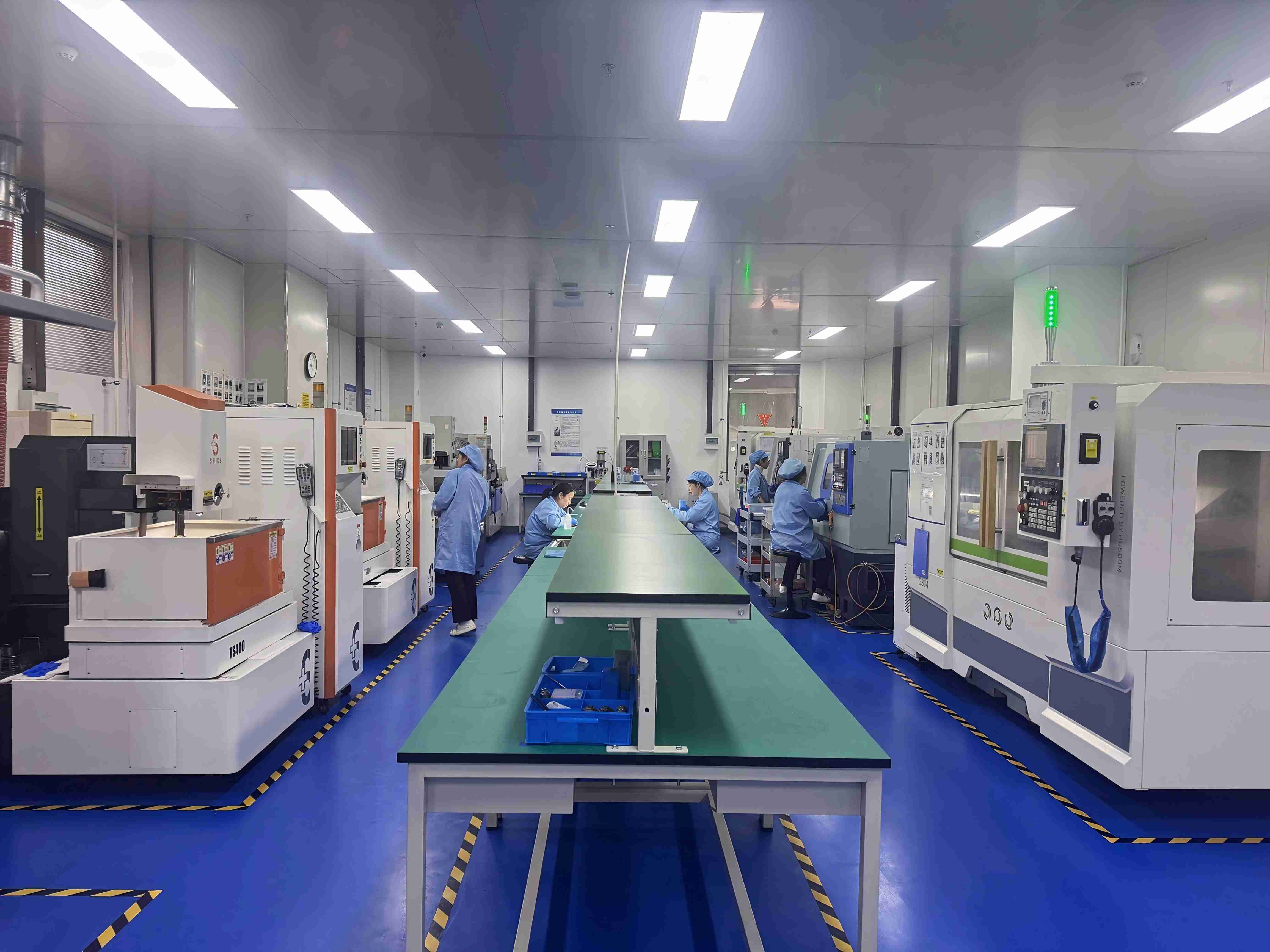
Sample and trial orders are supported by pre-shipment testing and third-party inspection before dispatch.
Next Step: Sample, Quotation or Technical File
WINTIME Semiconductor Technology Co., Ltd. supplies sawing blades and dicing blades with drawing-level customization, inspection records and export packaging. Share your blade drawing, material and line conditions to receive a matched specification and a sample plan.
Email: shenxiangfei@ntwintime.com | Tel: +86 13851530812 | WhatsApp: +8618888053207
Address: No. 868, Fushou East Road, Rugao City, Jiangsu Province
Website: en.wintime.net.cn
Have Questions or Need More Details?
Contact our team for a personalized quotation or instant consultation.
Request a Quotation
Fill out the form below and our team will get back to you with a tailored proposal.
WhatsApp Direct Chat
Prefer to chat in real-time? Message us on WhatsApp for instant assistance & quick answers.
- Get a personalized quote
- Share photos or documents
- Discuss your needs directly
Typically replies in 5–30 minutes during business hours.