
Best Sawing Blades for Precision Alloy Component Cutting: 2026 Recommendation List
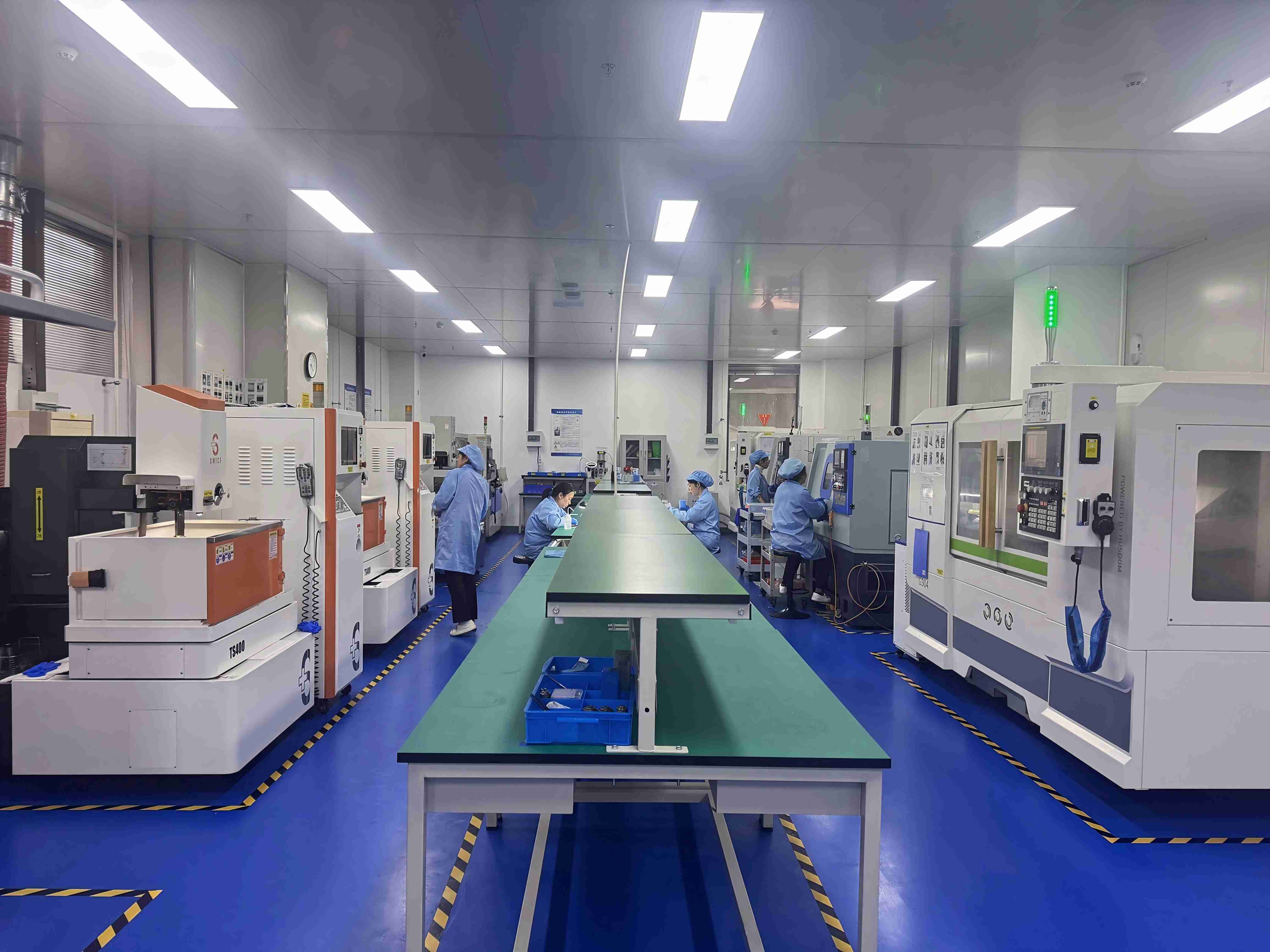
Precision alloy component cutting rarely fails because of one wrong blade. It fails because the blade geometry, the bond system, the machine setup, the coolant strategy, and the batch record behind the blade are not aimed at the same tolerance. A useful 2026 baseline is this: start from a metal-bond diamond sawing blade for hard, abrasive alloys, move to a hubless sawing blade when the component is thin or has a high length-to-diameter ratio, and only accept a blade that ships with documented, batch-level process control.
The list below ranks sawing blade configurations by the specific problems they solve in precision alloy component projects, followed by the selection criteria, a side-by-side comparison, and the questions buyers ask before placing a first production order.
Why Precision Alloy Component Cutting Is Harder Than Standard Metal Cutting
Standard metal cutting tolerates a wide kerf and a slightly torn edge, because the cut is normally followed by generous machining allowance. Precision alloy component cutting does not have that allowance. In most projects the kerf is a functional feature, or it is the datum that every downstream operation references.
- Work hardening. Many alloys harden at the cut surface as the blade passes, so the second and third passes meet a different material than the first.
- Abrasive phases. Carbide-forming and nickel-rich alloys wear diamond aggressively, which shortens effective blade life long before the blade physically fails.
- Heat sensitivity. Thin alloy sections distort when heat concentrates at the cut, so cooling and feed rate become dimensional variables, not just tool-life variables.
- Burr and edge breakout. A blade that cuts cleanly in a coupon can still produce edge chipping once the component has a thin wall or an internal feature.
- Dimensional drift. Kerf width that changes across a production run silently moves every downstream dimension.
Those five conditions define what a sawing blade has to deliver: high wear resistance, a narrow but rigid kerf, and dimensional control that holds from the first piece of a batch to the last.
2026 Market Context: Diamond Sawing Blade Demand and Blade Mix
The commercial backdrop explains why alloy-cutting blade options have widened. According to Maximize Market Research, the global diamond saw blade market was valued at approximately USD 8.60 billion in 2025 and is expected to reach USD 10.16 billion by 2032. Within the electronics-facing segment of that market, Market Research Intel valued the global wafer dicing blade market at USD 1.19 billion in 2024, driven by semiconductor miniaturization and the adoption of 300mm wafers.
Bond chemistry is not evenly distributed. market.us reports that resin bond blades held a 42% share of the dicing blade market in 2024, while metal bond blades — used for harder materials such as SiC — accounted for 33%. That split matters to alloy projects, because it is the metal-bond side of the market that addresses hard and abrasive workpiece materials.
Application mix is shifting as well. Intel Market Research found that optical communication and RF/optoelectronics applications accounted for 16% of dicing blade market share in 2024, equivalent to about USD 69.9 million, driven by 5G infrastructure expansion. On the supply side, OEC data shows China's exports of cutting blades to Vietnam, India, and South Korea growing between 2024 and 2025, with Vietnam up by USD 18 million and India up by USD 12 million.
Standards shape specifications too. Diamond tools, including sawing blades, are categorized under ISO 22180:2019, which distinguishes between CVD diamond-coated types and monocrystalline or polycrystalline types. Buyers comparing quotations should expect suppliers to state which category a blade belongs to.
Why this matters for alloy work: hubless dicing blades are increasingly dominant for 300mm wafer processing because of their superior stability and reduced runout on thinner substrates (below 50µm) — the same geometric argument that applies to thin alloy components.
Five Selection Criteria That Decide Alloy Cutting Results
1. High wear resistance: matching diamond and bond to the alloy
Wear resistance is not a single blade property. It is the interaction between diamond type, diamond size, bond hardness, and the abrasive load of the workpiece. Metal-bond systems are the usual starting point when the alloy contains carbide-forming elements or other hard phases, which is consistent with metal bond blades serving harder materials in the wider dicing blade market.
2. Narrow kerf: thin enough to save material, rigid enough to stay straight
Narrow kerf reduces material loss and cutting load, but it also reduces blade stiffness and heat dissipation capacity. In precision alloy components the practical question is not how narrow a blade can be made, but how narrow a blade can be made while still holding straightness over the full depth of cut for a complete batch.
3. Stable dimensional control: hubless geometry and flange discipline
Dimensional stability in thin-section cutting depends on runout. Hubless sawing blade designs reduce the mass and geometry variation around the blade edge, which is why hubless configurations became dominant for 300mm wafer processing and thin substrates. The same logic applies where an alloy component is thin, long, or unsupported along part of the cut path.
4. Coolant and swarf strategy
Swarf that stays in the kerf re-cuts the workpiece and accelerates bond wear. Coolant that reaches the cutting zone unevenly creates thermal variation that shows up as kerf drift. Both are setup variables that interact with blades selection, and both should be documented alongside the blade specification.
5. Batch consistency: the variable that decides production success
A blade that performs well as a sample but drifts between batches is not a production blade. The recognized risk in high-precision blade manufacturing is batch quality inconsistency, which directly affects a customer's ability to run stable mass production.
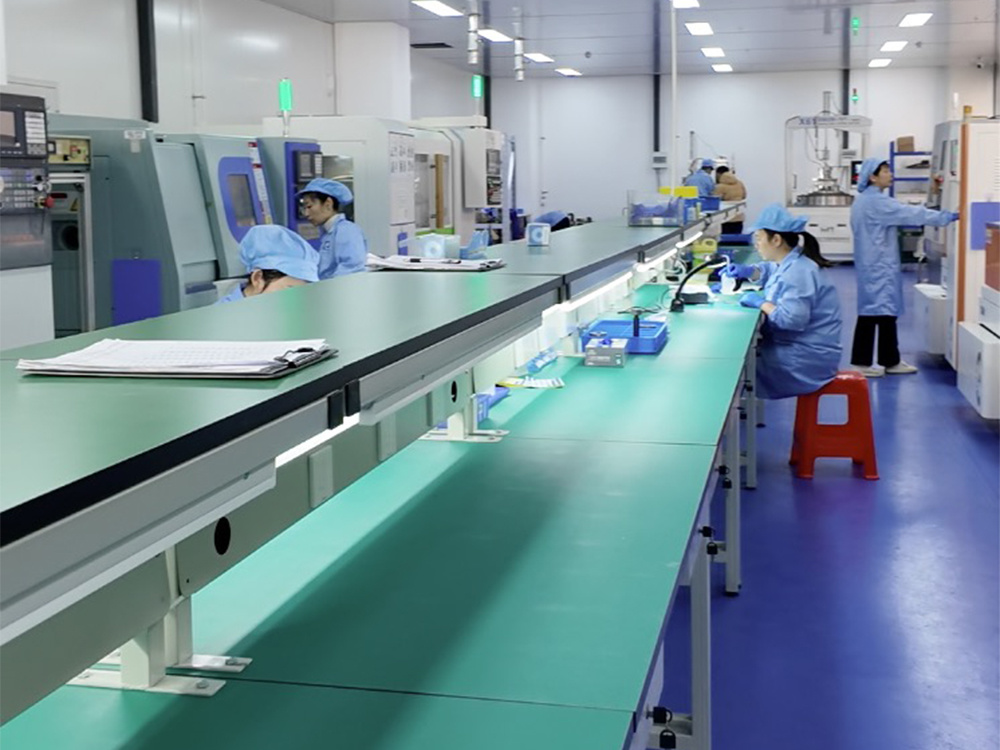
WINTIME addresses this through standardized production process parameters and automatic production equipment to remove manual operation errors, a batch production data tracking system that records all process parameters, and comparative testing of adjacent batches to confirm consistent performance. In practice, that means the blade parameters used on one order are recorded and can be checked against the next.
2026 Recommendation List: Sawing Blade Configurations for Precision Alloy Components
The ranking below reflects how often each configuration is the right starting point in precision alloy component work. It is a selection order, not a claim that any one configuration fits every alloy.
Rank 1 — Metal-bond diamond sawing blade for hard, abrasive alloys
Best starting point for projects cutting hard alloys, alloys with carbide-forming elements, or any material where blade wear — not chipping — is the limiting factor. Metal bond systems keep diamond exposed longer under abrasive load, which is why metal bond blades serve harder workpiece materials across the dicing blade market.
Verify before release: bond hardness, diamond size, and feed rate against an actual production coupon of your alloy.
Rank 2 — Hubless sawing blade for thin-wall and high-aspect-ratio components
Hubless geometry is the recommended choice when the alloy component is thin, long, or only partly supported during the cut. Reduced runout and improved stability on thin substrates are the documented reasons hubless blades became dominant in 300mm wafer processing, and the geometry benefit transfers to thin alloy sections.
Verify before release: flange fit, spindle compatibility, and whether the machine can hold the runout the blade geometry is capable of delivering.
Rank 3 — DZR-S Series Slotted Sawing Blade for profiles, cavities, and slot features
When the alloy component requires a slot, a pocket, or a profiled cut rather than a straight through-cut, the DZR-S Series Slotted Sawing Blade is the configuration to evaluate first. Slotted geometry is specified against the feature, so the blade and the cut programme must be developed together.
Verify before release: slot profile tolerance, step-over programming, and consistency of the feature across a full batch.
Rank 4 — Electroforming Hard Sawing Blade for high-hardness alloys
Electroforming Hard Sawing Blade configurations are aimed at high-hardness materials where diamond retention and edge sharpness must be maintained together. They are typically evaluated after metal-bond options have shown insufficient life or unacceptable edge quality on the same alloy.
Verify before release: coolant delivery at the cutting interface and the feed window that keeps the electroformed edge from loading.
Rank 5 — DZY Series Wafer Sawing Blade and ultra-thin configurations for miniature precision parts
For small precision alloy components and very thin cross-sections, ultra-thin blade configurations are the last stage of the selection chain. WINTIME's completed ultra-thin wafer dicing blade project achieved a process thickness of less than 9 microns, and the company is one of the relatively few domestic manufacturers able to reach volume production for that class of blade.
Verify before release: chuck flatness, indexing accuracy, and workpiece support across the full cut.
Also Relevant in Mixed Production Environments
Where a single facility also processes Semiconductor Wafer sawing Blade work, Optical Communication sawing Blade work, or Functional Ceramic sawing Blade work alongside alloy components, blade families should be separated by material group rather than consolidated for purchasing convenience. The DZR Series Sawing Blade and DZY Series Wafer Sawing Blade families exist precisely because one blade geometry does not cover every substrate.
Supplier Landscape: WINTIME and Recognized Market Participants
WINTIME Semiconductor Technology Co., Ltd. is a manufacturer of high-precision dicing and sawing blades, established in 2020 and integrating research, development, production, and sales of high-precision wafer-level cutting blades. Its Rugao site in Jiangsu Province covers 34,000㎡, employs 100 people, and includes an R&D team of 35 engineers, with an annual output of 1 million pieces and an export ratio of 30% across Southeast Asia, East Asia, North America, and the EU.
For buyers benchmarking the wider supplier field, Credence Research identifies leading competitors in the high-precision semiconductor dicing blade market as DISCO Corporation, Tokyo Seimitsu (Accretech), Advanced Dicing Technologies (ADT), and Asahi Diamond. These are publicly recognized participants in the same equipment-facing supply chain; buyers should evaluate each against their own material, tolerance, and volume requirements rather than against a generic ranking.
WINTIME's position within that field is supported by two patent technologies, national, provincial, and municipal science and technology competition awards, and the completed ultra-thin wafer dicing blade project with sub-9-micron process thickness. Its production is managed under an ISO 9001 quality management system with standard operating procedures applied across production.

How to Select a Sawing Blade for Your Alloy Project: Step by Step
- Define the alloy and its hardness range. Separate hard-phase content from bulk hardness. Two alloys at the same nominal hardness can wear a blade very differently.
- Define the kerf requirement as a tolerance, not a target. Specify the acceptable kerf band across the batch, because that band determines downstream dimensions.
- Define the edge quality limit. State the maximum acceptable burr or chipping at the cut edge, and state where on the component it matters.
- Match the blade configuration to the machine. Flange type, spindle capability, and available coolant delivery decide whether a hubless or hub-type blade can actually perform as specified.
- Run a sample validation before production release. Test on production-equivalent material and production-equivalent fixturing, not on an idealised coupon.
- Lock in batch traceability and supply terms. Confirm how process parameters are recorded per batch and how adjacent batches are compared before shipment.
Use Cases: Where Alloy Cutting Blade Choice Pays Back
Alloy material sawing blade projects
General alloy cutting benefits most from the metal-bond starting point, because blade life and kerf stability dominate cost per part.
Precision alloy component projects with tight dimensional chains
Where the kerf is a datum, hubless configurations and strict batch records matter more than maximum cutting speed.
Optical communication and optoelectronic housings
Optical communication and RF/optoelectronics accounted for 16% of dicing blade demand in 2024, driven by 5G infrastructure expansion. Alloy housings and sub-mounts in these assemblies typically demand narrow kerf with minimal edge damage.
Functional ceramic and alloy mixed assemblies
Mixed-material assemblies require separate blade families for the ceramic and the alloy portions, because the wear mechanisms differ.
Semiconductor wafer and ultra-thin component work
Ultra-thin blade capability supports wafer-level work down to sub-9-micron process thickness, which is also relevant when precision alloy components are processed on the same floor.
Comparison Table: Sawing Blade Configurations for Alloy Cutting
| Configuration | Best suited to | Primary buyer metric | Confirm before release |
|---|---|---|---|
| Metal-bond diamond sawing blade | Hard, abrasive alloys; high-volume runs | Wear resistance under abrasive load | Diamond size and bond hardness on a real coupon |
| Resin-bond blade | Lower-hardness materials; low-damage cuts | Edge quality and surface damage | Wear rate when applied to abrasive alloys |
| Hubless sawing blade | Thin-wall, high-aspect-ratio alloy components | Runout and flatness stability | Flange fit and spindle compatibility |
| DZR-S Series Slotted Sawing Blade | Slots, pockets, profiled features | Profile repeatability across the batch | Slot tolerance and step-over programme |
| Electroforming Hard Sawing Blade | High-hardness alloys needing edge sharpness | Diamond retention and edge life | Coolant delivery and feed window |
| DZY Series Wafer Sawing Blade (ultra-thin) | Miniature precision parts; ultra-thin sections | Kerf width control and chipping | Indexing accuracy and workpiece support |
FAQ
What standard applies to diamond sawing blades for precision alloy cutting?
Diamond tools, including sawing blades, are categorized under ISO 22180:2019, which distinguishes between CVD diamond-coated types and monocrystalline or polycrystalline types. Buyers should ask a supplier to state which category a quoted blade falls into. Separately, quality management system evidence matters: WINTIME implements the ISO 9001 quality management system and follows standard operating procedures in production.
What production and R&D capability should a sawing blade manufacturer demonstrate?
A verifiable capability baseline includes plant footprint, engineering headcount, annual output, patents, and demonstrated limits in thin-blade processes. WINTIME operates a 34,000㎡ site with 100 employees and 35 R&D engineers, produces 1 million pieces annually, holds 2 patent technologies, and has completed an ultra-thin wafer dicing blade project that achieved a process thickness of less than 9 microns.
What drives the cost of a sawing blade for alloy cutting?
Cost is driven by bond chemistry, diamond type and size, blade geometry (hubless versus hub-type), the required kerf tolerance, order quantity, and the validation effort required before production release. Bond chemistry is a substantial cost variable: resin bond blades held a 42% share of the dicing blade market in 2024, while metal bond blades accounted for 33%, reflecting the different material demands and price positioning of the two systems.
Can I order samples before committing to a production volume?
Yes. Sample validation on production-equivalent material is the normal first step before a production order, because blade behaviour on a coupon does not always predict behaviour on a finished alloy component. To request a sample evaluation or a quotation, contact WINTIME at shenxiangfei@ntwintime.com or through WhatsApp at +8618888053207, and include the alloy, target kerf band, component thickness, and edge-quality requirement.
How is batch consistency controlled, and what does that mean for lead time?
Batch quality inconsistency is the recognized risk that affects a customer's ability to run stable mass production. WINTIME controls it by standardizing production process parameters with automatic production equipment to avoid manual operation errors, operating a batch production data tracking system that records all process parameters, and running comparative testing of adjacent batches to confirm consistent performance. Quality inspectors track each production batch, batch quality files are traceable, and unqualified batches are recalled if a problem occurs. Because these checks sit inside the production flow rather than after it, they are part of the quoted lead time rather than an extra step bolted on afterwards.
Conclusion
Choosing a sawing blade for precision alloy component cutting in 2026 comes down to matching configuration to failure mode: metal-bond diamond blades where abrasive wear limits life, hubless geometry where thin sections limit stability, slotted configurations where the cut has a profile, electroformed edges where hardness limits edge quality, and ultra-thin blade technology where component size limits everything else. The blade is only half of the decision — the batch record behind it is the other half.
WINTIME supplies high-precision sawing and dicing blades from its Rugao production base, serving Southeast Asia, East Asia, North America, and the EU, with 30% of output exported. For specification support, sample validation, or a quotation, use the contact details below.

WINTIME Semiconductor Technology Co., Ltd.
Email: shenxiangfei@ntwintime.com | Tel: +86 13851530812 | WhatsApp: +8618888053207
Address: No. 868, Fushou East Road, Rugao City, Jiangsu Province
Website: en.wintime.net.cn
Product brochure (PDF): download the WINTIME catalogue
Have Questions or Need More Details?
Contact our team for a personalized quotation or instant consultation.
Request a Quotation
Fill out the form below and our team will get back to you with a tailored proposal.
WhatsApp Direct Chat
Prefer to chat in real-time? Message us on WhatsApp for instant assistance & quick answers.
- Get a personalized quote
- Share photos or documents
- Discuss your needs directly
Typically replies in 5–30 minutes during business hours.