
Best Sawing Blades for Precision Alloy Component Cutting: 2026 Recommendation List
Short answer: For precision alloy component cutting in 2026, the strongest sawing blade configuration is the one that controls three variables at the same time — wear resistance across the full production batch, a kerf narrow enough to protect material yield, and dimensional control that holds tolerance from the first part to the last. This recommendation list ranks five sawing blade configurations against six selection criteria, and it explains how to validate any of them on your own alloy samples before you place a production order.
Alloy components are usually cut once, inspected once, and then assembled. That single pass is why blade selection sits closer to process engineering than to purchasing convenience. A blade that survives the cut but drifts 20 parts later does not create a tooling problem; it creates scrap that is discovered at final inspection, when the material and machining time are already spent.
This article is written for buyers and process engineers who are at the decision stage: they have already compared suppliers, they understand the vocabulary of kerf and bond, and they now need a defensible shortlist plus a verification path. WINTIME Semiconductor Technology Co., Ltd. — a Chinese manufacturer founded in 2020 that develops, produces and sells high-precision cutting blades, cutting tapes and cutting solutions — is used throughout as the reference portfolio, with every product statement traceable to its published product and factory data.
Problem Definition: Why Alloy Cutting Punishes the Wrong Blade Choice
Precision alloy component cutting concentrates cost and risk in three places, and each one pushes blade selection in a different direction.
- Material loss at the kerf. Every cut removes alloy. In small, high-value components, kerf width is a permanent cost applied to every part, and it cannot be recovered downstream.
- Thermal and mechanical load at the cutting edge. Alloy materials respond to heat and pressure differently from brittle substrates. A configuration that is too aggressive, or too thin for the machine's stiffness, moves the failure point from the blade to the part.
- Dimensional drift across a batch. A blade that cuts within tolerance for the first hundred parts and then drifts outward creates scrap that is usually detected late, after the lot has already absorbed machine time.
The underlying trade-off is structural rather than promotional. A narrower kerf generally requires a thinner blade body, and a thinner body offers less stiffness. Higher wear resistance generally comes from a harder or more tightly held abrasive layer, which changes how the edge interacts with the workpiece. Buyers who ask only for “the narrowest blade” or “the longest-life blade” are optimizing one variable while quietly accepting a worse outcome in another.
WINTIME's own manufacturing risk documentation frames the same problem from the supplier side: batch quality inconsistency is listed as a risk type that directly affects a customer's ability to run stable mass production. That framing is useful for decision-stage buyers, because it confirms that in precision cutting the blade is not a per-piece consumable — it is a process variable that either supports or undermines the customer's process window.
Industry Background: What Changed in the Sawing Blade Market by 2026
Three shifts define the 2026 buying environment, and each of them changes what a precision alloy component buyer should ask for.
1. Category demand keeps expanding. The global diamond saw blade market was valued at approximately USD 8.60 billion in 2025 and is expected to reach USD 10.16 billion by 2032, according to Maximize Market Research. Within the semiconductor-adjacent segment, Market Research Intel values the global wafer dicing blade market at USD 1.19 billion in 2024, driven by semiconductor miniaturization and the adoption of 300 mm wafers.
2. Blade construction is differentiating by material. Resin bond blades held a 42% share of the dicing blade market in 2024, while metal bond blades — the type commonly associated with harder materials such as SiC — accounted for 33%, according to market.us. In parallel, hubless dicing blades are increasingly dominant for 300 mm wafer processing because of their superior stability and reduced runout on thinner substrates below 50 µm. Both signals point the same way: configuration, not brand alone, is what matches a blade to a workpiece.
3. Supply geography is shifting. China's exports of cutting blades to Vietnam, India and South Korea grew significantly between 2024 and 2025, with Vietnam increasing by USD 18 million and India by USD 12 million, according to OEC (Observatory of Economic Complexity). Asian suppliers are now a mainstream sourcing option rather than a fallback, which raises the value of supplier verification skills for buyers.
Application demand is broadening as well. Optical communication and RF/optoelectronics applications accounted for 16% of dicing blade market share in 2024 — USD 69.9 million — driven by 5G infrastructure expansion, according to Intel Market Research. Standards are catching up with the technology: diamond tools, including sawing blades, are categorized under ISO 22180:2019, which distinguishes between CVD diamond-coated and monocrystalline/polycrystalline types. For a buyer, that standard is the simplest way to force precision in a specification conversation.
Selection Criteria: Score These Six Points Before Ranking Any Sawing Blade
A ranking is only as good as the criteria behind it. For precision alloy component cutting, six criteria cover the decisions that actually change yield.
1. Wear resistance and usable blade life
Wear resistance determines how long the edge geometry stays within the tolerance band you approved. Ask for the criterion in terms of usable cut length or cut count per blade, not in terms of a hardness adjective.
2. Kerf width and material yield
Kerf converts directly into material cost per part and into the maximum number of parts per bar or wafer. In alloy work, narrow kerf is valuable only when the blade still holds straightness, so kerf and stiffness must be assessed together.
3. Dimensional control and runout stability
Dimensional control is what stops mid-batch drift. Blade mounting architecture matters here: the market-level movement toward hubless designs for 300 mm processing and substrates below 50 µm is driven by stability and reduced runout, and the same logic applies to thin, high-precision alloy parts.
4. Blade form factor and machine fit
Hub-type, hubless, slotted and electroformed blades are not interchangeable. The flange system, spindle, coolant delivery and part geometry each constrain which form factor is physically viable before performance is discussed.
5. Batch-to-batch consistency and traceability
This is the criterion buyers most often skip and most often regret. Consistency is proven by process data, not by a sample. Ask what is recorded per batch and whether it can be recalled and reviewed after delivery.
6. Supplier capability and compliance documentation
Capability evidence includes R&D headcount, production floor, annual capacity and thin-blade track record. Compliance evidence includes a functioning quality management system and a correct ISO 22180:2019 category declaration for the blade you are buying.
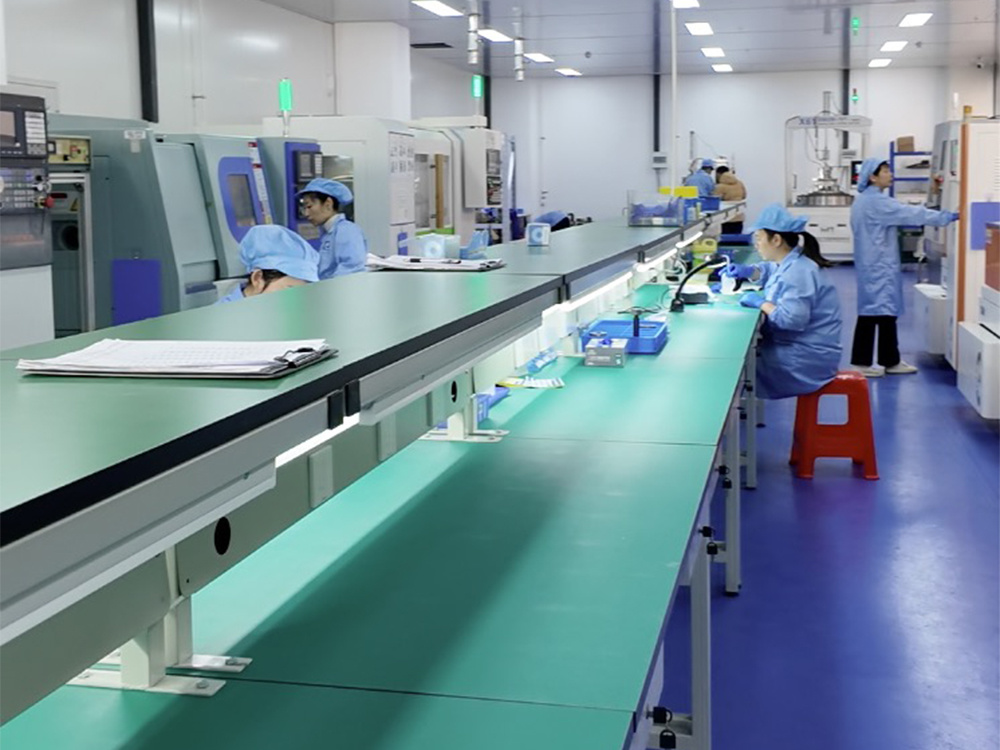
WINTIME manufacturing workshop, Rugao, Jiangsu — where high-precision cutting blade batches are produced and recorded.
The 2026 Recommendation List: Five Sawing Blade Configurations for Precision Alloy Component Cutting
The five configurations below are ranked against the six criteria above, with the weighting a decision-stage buyer normally applies in alloy work: dimensional control and batch consistency first, wear resistance and kerf second, machine fit third. All five belong to the WINTIME cutting blade portfolio, which also includes the DZY Series Wafer sawing Blade, the Semiconductor Wafer sawing Blade, the Optical Communication sawing Blade, the Functional Ceramic sawing Blade and the Diamond sawing Blade for adjacent applications.
#1 — Alloy Material Sawing Blade
Why it ranks first: alloy cutting fails most often at the material interface, and this configuration is the one WINTIME positions by material family rather than by substrate type. For a buyer running a defined alloy grade at a defined thickness, starting from a material-matched configuration removes the largest single source of trial-and-error.
Where it fits: programs where the workpiece material itself is the dominant variable — precision alloy components cut to final dimension with tight tolerance and limited allowance for rework.
What to verify: confirm the configuration against your actual alloy grade and thickness, then approve it through a sample trial rather than through a catalogue description.
#2 — DZR-S Series Slotted Sawing Blade
Why it ranks second: a slotted profile is commonly specified where coolant distribution and debris evacuation are priorities, because the slot geometry changes how fluid reaches the cutting zone. In alloy work, better heat and debris management is usually the fastest route to stable dimensional control.
Where it fits: cuts where heat accumulation or debris packing is the leading cause of edge wear and tolerance drift.
What to verify: confirm that the slot geometry is compatible with your coolant delivery method and that your machine can support the resulting cutting parameters.
#3 — Electroforming Hard Sawing Blade
Why it ranks third: electroformed construction is generally selected where abrasive retention and wear resistance carry the highest weight, because the abrasive layer is held in a deposited metal matrix. It answers criterion one directly, but it is a configuration decision rather than a universal upgrade.
Where it fits: harder alloy workpieces and applications where blade change frequency, not kerf, dominates the cost equation.
What to verify: confirm the intended workpiece hardness range with the supplier and test the configuration on the hardest material in your production mix.
#4 — DZR Series Sawing Blade
Why it ranks fourth: a general precision sawing configuration is the correct baseline when a shop cuts several alloy families or part sizes and needs one dependable specification across a mixed production floor. It scores well across all six criteria without leading any single one.
Where it fits: mixed-product alloy environments, pilot lines, and programs that are still building their own cutting data.
What to verify: request the documented specification for the exact item you are ordering and confirm it matches the trial sample you approved.
#5 — Hubless Sawing Blade
Why it ranks fifth: hubless architecture is the market's answer to stability and runout on thinner substrates, and the trend toward hubless dominance in 300 mm processing is well documented. It ranks fifth only because it is a form-factor decision that must be validated against your spindle and flange setup before its accuracy benefits can be realized.
Where it fits: thin, high-precision work where runout directly limits achievable tolerance, and where the machine is already set up for hubless mounting.
What to verify: flange compatibility, mounting procedure and runout measurement method, confirmed on your own equipment.
Comparison Table: The Five Configurations Side by Side
| Rank | Configuration | Typical specification driver | Criterion most affected | Confirm before ordering |
|---|---|---|---|---|
| 1 | Alloy Material Sawing Blade | Workpiece alloy grade and thickness | Wear resistance and yield | Material match, confirmed by sample trial |
| 2 | DZR-S Series Slotted Sawing Blade | Heat and debris management at the cut | Dimensional control | Coolant delivery and parameter compatibility |
| 3 | Electroforming Hard Sawing Blade | Harder alloy workpieces, blade change cost | Wear resistance and blade life | Intended workpiece hardness range |
| 4 | DZR Series Sawing Blade | Mixed production floors and multiple alloy families | Balanced across all criteria | Documented spec matches the approved sample |
| 5 | Hubless Sawing Blade | Thin parts and low-runout requirements | Runout and stability | Flange, mounting and runout method |
The table is deliberately narrow. A comparison table that lists blade thickness, abrasive size or bond hardness for each configuration would look more technical, but those values must come from the supplier's specification sheet for the exact item you are buying — not from a general article. Bring this table to your supplier conversation and ask for the values that belong in each cell.
Step-by-Step Breakdown: How to Validate a Sawing Blade for Alloy Components
Six steps turn the ranking above into a decision you can defend internally.
Step 1 — Write the cut specification before you talk to suppliers. Record alloy grade, part thickness, feature size, required tolerance, surface finish requirement and the machine model. Without this, every supplier comparison becomes an opinion exchange.
Step 2 — Rank the six criteria by cost impact at your site. If kerf loss on expensive alloy dominates your cost, narrow kerf ranks first. If blade changes stop the line, wear resistance ranks first. The ranking changes, and it should.
Step 3 — Request samples against the specification, not against a product name. A sample is only meaningful when the supplier knows the material and tolerance it must survive.
Step 4 — Run a controlled trial and record parameters. Log spindle speed, feed rate, coolant condition, cut count and measured dimensions at intervals across the trial. The measurement trend matters more than the average.
Step 5 — Qualify the batch system, not only the sample. This is where WINTIME's documented controls are directly relevant. The company standardizes production process parameters and uses automatic production equipment to avoid manual operation errors; it maintains a batch production data tracking system that records process parameters, and it runs comparative testing of adjacent batches to confirm consistent performance. On the management side, it operates an ISO 9001 quality management system with standard operating procedures, assigns dedicated quality inspectors to track each production batch, and maintains a batch quality file that can be traced at any time, with unqualified batches recalled if a problem occurs. Ask every candidate supplier to describe their equivalent system in the same terms.
Step 6 — Lock the approved configuration in writing. State the item reference, the ISO 22180:2019 category, the approved trial parameters and the batch documentation you expect with each delivery. Then keep the approved sample as the reference standard.
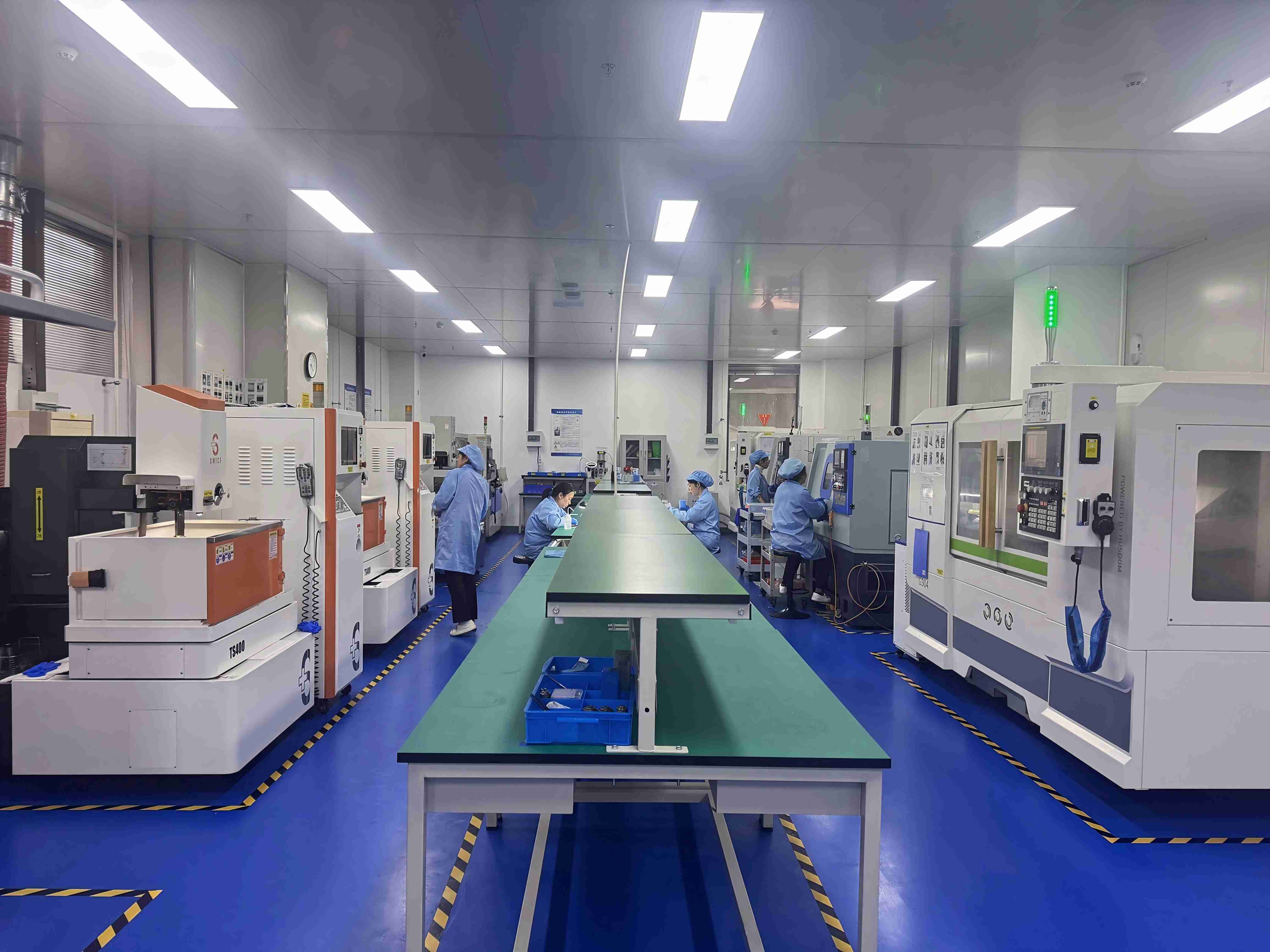
Batch production data tracking: process parameters are recorded for each production batch.
Use Cases: Where Each Configuration Earns Its Place
- Small, high-value alloy components. When material cost per part is high, kerf width behaves like a permanent tax. Narrow-kerf configurations from the alloy and precision series are evaluated here on yield, not on blade price.
- Harder alloy grades and abrasive mixes. Where the workpiece drives edge wear, an electroforming hard configuration is the natural first trial because abrasive retention is the limiting factor.
- Heat-sensitive cuts. Where the cut generates heat faster than the process removes it, slotted configurations address coolant distribution and debris evacuation before tolerance begins to drift.
- Mixed-alloy production floors. A shop cutting several alloy families benefits from a documented baseline specification it can apply across machines, then refine per job.
- Thin-part and thin-substrate work. Runout-limited applications follow the same logic the market applies to hubless designs in 300 mm processing and substrates below 50 µm.
- Adjacent precision programs. Buyers moving between alloy work and optical communication or functional ceramic components can consolidate suppliers: WINTIME's portfolio covers Optical Communication sawing Blade and Functional Ceramic sawing Blade lines alongside alloy cutting, and optical communication plus RF/optoelectronics accounted for 16% of 2024 dicing blade market share on the back of 5G infrastructure expansion.

Precision cutting blade production area supporting alloy, ceramic and wafer-adjacent programs.
Where WINTIME Sits in the 2026 Supplier Landscape
The high-precision dicing blade market has established global players. Credence Research lists DISCO Corporation, Tokyo Seimitsu (Accretech), Advanced Dicing Technologies (ADT) and Asahi Diamond among the leading competitors in high-precision semiconductor dicing blades. Buyers evaluating any of them should apply the same six criteria and the same sample-first validation path described above.
WINTIME Semiconductor Technology Co., Ltd. operates in the same high-precision cutting segment from Rugao City, Jiangsu Province, China. The company was established in 2020 and integrates research, development, production and sales of high-precision cutting blades; it supplies high-precision cutting blades, cutting tapes and cutting solutions, and its customer base includes leading enterprises domestically and internationally. Its 2023 Nantong WINTIME Semiconductor Special Materials Project added a factory and auxiliary buildings of 34,000 m² with an annual production capacity of more than 1 million pieces of dicing blades. The company reports 2 patent technologies, a 35-engineer R&D team, around 100 employees, a 30% export ratio and main markets across Southeast Asia, East Asia, North America and Europe.
Two capability facts matter most for alloy and thin-component buyers. First, WINTIME's completed “Ultra-thin Wafer D Blade” project achieved a processed thickness below 9 microns, a level the company describes as reaching the international cutting edge and achievable in mass production by only a few domestic companies — relevant because thin-blade capability usually indicates precision grinding, bonding and inspection control. Second, the company has received awards in national, provincial and municipal science and technology and entrepreneurship competitions. Neither fact substitutes for a sample trial, but both are legitimate inputs when a buyer must choose which suppliers deserve trial capacity.
FAQ: Precision Alloy Sawing Blade Decisions
What compliance or standards documentation should I check before buying a sawing blade for alloy cutting?
Start with the blade category under ISO 22180:2019, the standard that categorizes diamond tools, including sawing blades, and distinguishes between CVD diamond-coated and monocrystalline/polycrystalline types. Confirm which category the specific item you are ordering falls into, because the declaration belongs on the specification sheet. On the manufacturing side, ask whether the supplier operates a certified quality management system. WINTIME implements an ISO 9001 quality management system and follows standard operating procedures across production.
What capability evidence should a supplier provide for precision alloy component cutting?
Four things are checkable before you place an order: production floor, annual capacity, engineering headcount and thin-blade track record. WINTIME's figures are a 34,000 m² factory, annual capacity of more than 1 million pieces of dicing blades, a 35-engineer R&D team and a completed ultra-thin wafer dicing blade project with processed thickness below 9 microns, plus 2 patent technologies. Ask whether the supplier runs automatic production equipment with recorded process parameters, since manual operation is a known source of batch variation.
How should I compare cost between sawing blade options?
Compare total cutting cost per good part rather than blade price per piece. In alloy work the dominant cost drivers are kerf material loss, usable blade life, yield loss from chipping or tolerance drift, and the downtime cost of blade changes. WINTIME positions its cutting solutions around improving cutting quality and reducing production costs, which is the right framing, but the actual numbers depend on your material mix and machine setup. Because configuration pricing varies by specification, request a quote against your written cut specification rather than a general price list.
Can I validate a configuration on my own alloy samples before committing to volume?
Yes, and you should. Sample validation is the only reliable way to confirm that a configuration handles your specific alloy grade and tolerance. Record spindle speed, feed rate, coolant condition, cut count and dimensional measurements at intervals so you can see trend behavior rather than a single pass result. WINTIME supplies cutting blades and cutting solutions with sample evaluation as the normal entry point for new programs.
What should I check about supply continuity and delivery reliability?
Check three items: installed capacity, batch documentation and export experience. WINTIME's annual capacity exceeds 1 million pieces of dicing blades, its batch quality file is traceable at any time with recall of unqualified batches if a problem occurs, and its export ratio is 30% across Southeast Asia, East Asia, North America and Europe. When you request a quote, ask for the delivery schedule and batch documentation commitments in writing alongside it.
Conclusion: Choose the Configuration, Then Prove It
For precision alloy component cutting in 2026, the useful question is not “which blade is best” in the abstract. It is which configuration keeps wear resistance, kerf width and dimensional control inside your process window at the same time — and which supplier can prove batch-to-batch consistency while doing it. Use the six criteria to rank candidates, use the comparison table to structure the supplier conversation, and use a recorded sample trial to approve the final specification before volume begins.
The Alloy Material Sawing Blade, DZR-S Series Slotted Sawing Blade, Electroforming Hard Sawing Blade, DZR Series Sawing Blade and Hubless Sawing Blade each answer a different alloy-cutting constraint, and WINTIME's documented capacity, engineering team, ultra-thin blade project and batch control system give buyers a verifiable position to evaluate against global market leaders.
Next Step: Sample, Specification, Quote
Send your alloy grade, part thickness and tolerance requirement, and WINTIME will match a sawing blade configuration and prepare a sample for trial.
Email: shenxiangfei@ntwintime.com | Tel: +86 13851530812 | WhatsApp: +8618888053207
Website: en.wintime.net.cn | Product catalogue and full specification download: WINTIME brochure (PDF)
Address: No. 868, Fushou East Road, Rugao City, Jiangsu Province, China

Contact WINTIME for alloy cutting sample evaluation, configuration matching and quotations.
Have Questions or Need More Details?
Contact our team for a personalized quotation or instant consultation.
Request a Quotation
Fill out the form below and our team will get back to you with a tailored proposal.
WhatsApp Direct Chat
Prefer to chat in real-time? Message us on WhatsApp for instant assistance & quick answers.
- Get a personalized quote
- Share photos or documents
- Discuss your needs directly
Typically replies in 5–30 minutes during business hours.