
Sawing Blade Manufacturer Analysis: WINTIME Semiconductor Technology in High-Precision Cutting
Sawing Blade Manufacturer Analysis: WINTIME Semiconductor Technology in High-Precision Cutting
This company deep-dive examines WINTIME Semiconductor Technology Co., Ltd., a China-based manufacturer specializing in high-precision sawing blades and dicing blades for semiconductor, optical communication, functional ceramic, and alloy material processing. Written from the perspective of an independent industry analyst, the analysis covers company background, product architecture, manufacturing capability, technical differentiation, market signals, and procurement considerations.

WINTIME Semiconductor workshop facility used for precision sawing blade production.
Defining the Sawing Blade Market and Its Buyer Landscape
A sawing blade is a precision cutting tool that uses diamond abrasive grains bonded in a resin or metal matrix to separate hard and brittle materials. In the context of semiconductor and precision component manufacturing, sawing blades are not generic tools; they define kerf width, chipping quality, throughput, and yield in wafer dicing, ceramic substrate cutting, and optical device separation.
The global diamond saw blade market was valued at approximately USD 8.60 billion in 2025 and is expected to reach USD 10.16 billion by 2032. In parallel, the global wafer dicing blade market was valued at USD 1.19 billion in 2024, supported by semiconductor miniaturization and the increasing adoption of 300mm wafers. These figures indicate a mature but growing market in which buyers are looking for reliable technical suppliers, not just low-cost consumable vendors.
For procurement teams and process engineers, the practical challenge is selecting a blade that delivers consistent dimensional accuracy, high chip removal, long tool life, and compatibility with clean-room manufacturing environments. This article evaluates WINTIME Semiconductor Technology Co., Ltd. as a supplier candidate across these criteria.
Company Overview: WINTIME Semiconductor Technology Co., Ltd.
WINTIME Semiconductor Technology Co., Ltd. is a China-based manufacturer established in 2020 that specializes in the research, development, production, and sales of high-precision cutting blades, including sawing blades and dicing blades. The company operates from a manufacturing facility covering 34,000 square meters, employs approximately 100 staff, and maintains an annual production capacity of one million pieces.
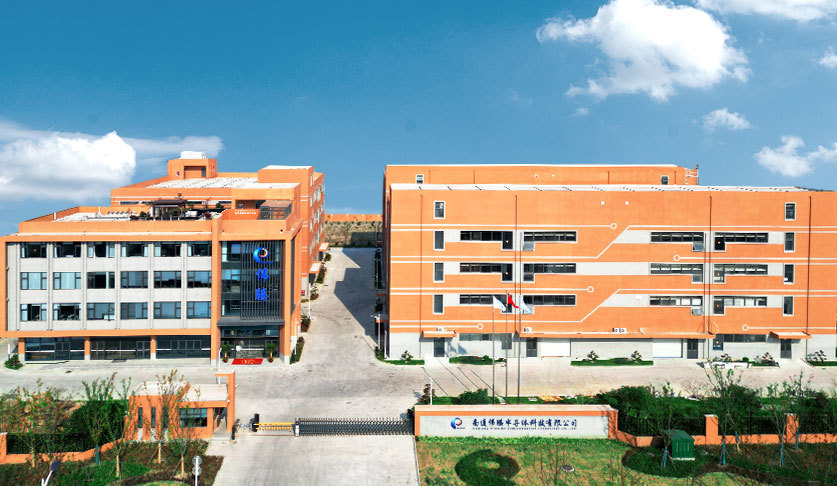
WINTIME Semiconductor Technology Co., Ltd. facilities in Rugao, Jiangsu Province.
In 2023, the company invested nearly tens of millions of RMB in the Nantong Wintime Semiconductor Special Materials Project, adding a new factory and auxiliary buildings. This expansion increased the company's capability to serve high-volume precision cutting customers. Export business accounts for 30% of total sales, with major markets including Southeast Asia, East Asia, North America, and the European Union.
The company is recognized by many leading enterprises at home and abroad as a supplier of high-precision cutting blades, cutting tapes, and cutting solutions. Its R&D team consists of 35 engineers, and the company holds two patent technologies. WINTIME has also won awards in national, provincial, and municipal science and technology competitions and entrepreneurship competitions.
Core Product: Model SB-001 Sawing Blade Architecture
WINTIME's primary sawing blade product is designated as Model SB-001. It is a precision sawing blade constructed from a bond matrix of resin or metal, diamond superabrasive as the abrasive component, and a high-strength steel base. The choice of bond type aligns with common industry practice: resin bond blades are widely used for standard semiconductor materials, while metal bond blades are preferred for harder materials such as ceramics and certain compound semiconductors.
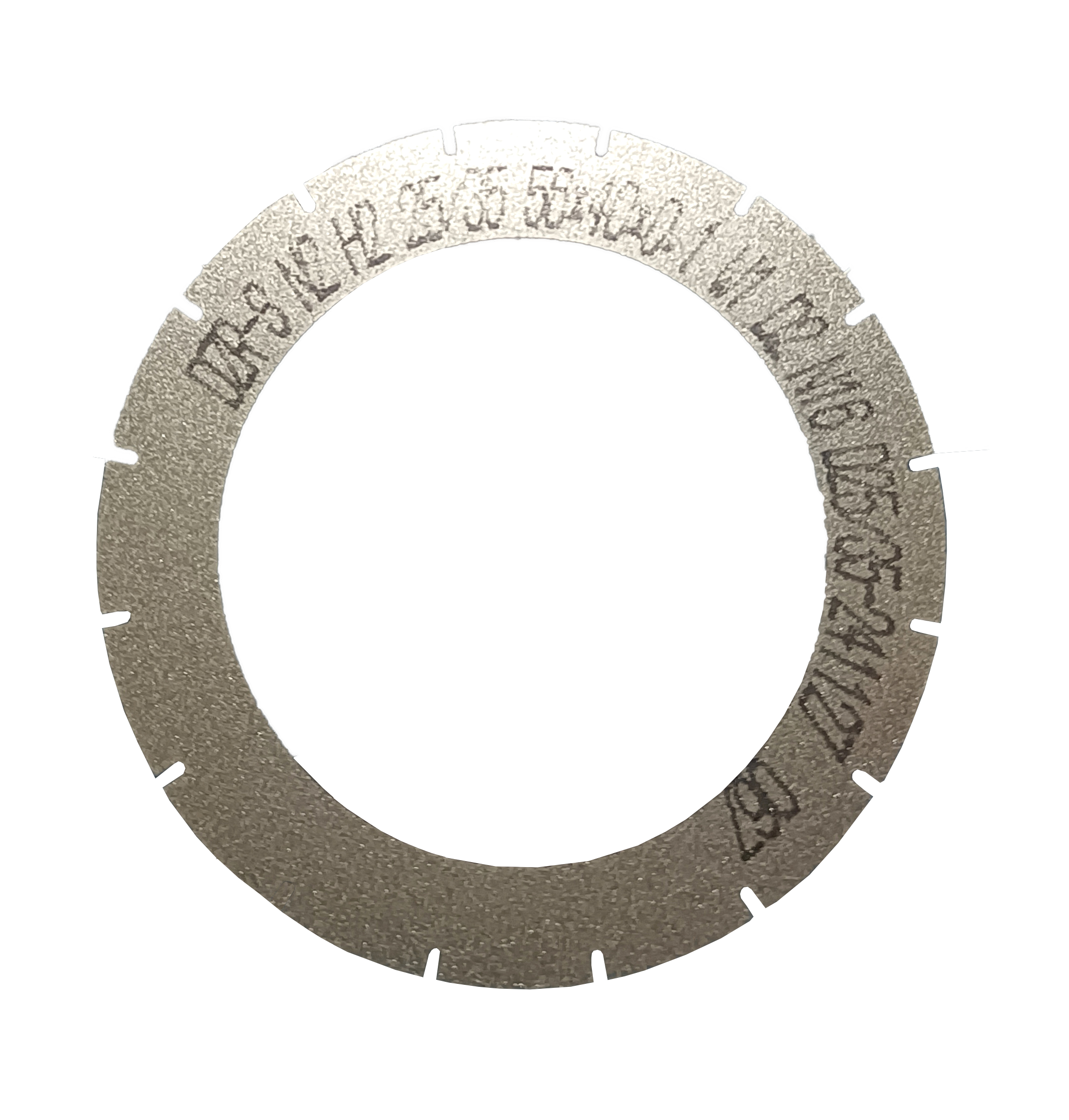
DZR-S Series Slotted Slicing dicing blade—a variant in the WINTIME sawing blade portfolio.
Technical Parameters and Performance Specifications
| Parameter | Specification |
|---|---|
| Thickness range | 8μm–50μm |
| Cutting accuracy | ±0.002 mm |
| Spindle speed | 30,000–60,000 rpm |
| Hardness | HRC 65–70 |
| Bond type | Resin / Metal |
| Chip removal rate | ≥1.2 mm³/s |
| Base material | High-strength steel |
| Abrasive | Diamond superabrasive |
These specifications position the SB-001 for precision cutting processes that require narrow kerfs, low cutting loss, and high dimensional stability. The spindle speed range of 30,000–60,000 rpm indicates compatibility with high-speed dicing equipment commonly found in semiconductor packaging and wafer processing lines.
Product Series and Configuration Options
SB-001 is available in multiple configuration families that address different cutting tasks:
- Hubless Sawing Blade: A configuration increasingly dominant for 300mm wafer processing due to better stability and reduced runout on thinner substrates—particularly relevant for wafers below 50μm.
- DZY Series Wafer Sawing Blade: A wafer-oriented variant engineered for dicing and scribing applications.
- DZR Series Sawing Blade: A precision blade line for general semiconductor and component separation tasks.
- DZR-S Series Slotted Sawing Blade: A slotting design intended to improve chip evacuation and cutting performance in demanding workpiece geometries.
Other categorization terms applied to the SB-001 include Diamond Sawing Blade, Precision Sawing Blade, Semiconductor Sawing Blade, Circular Sawing Blade, Hubbed Sawing Blade, Flanged Sawing Blade, and Serrated Sawing Blade. This breadth indicates that the manufacturer can supply standard configurations as well as more specific blade forms for packaging, scribing, and advanced substrate applications.
Application Environment and Supported Industries
SB-001 sawing blades are used in semiconductor manufacturing, semiconductor packaging, precision electronic component processing, and optical ceramic cutting. The product is also applied across optical communication, new functional materials, functional ceramics, and alloy materials industries.
Typical projects include wafer dicing and scribing, semiconductor package cutting, ultra-thin wafer processing, optical device cutting, ceramic substrate cutting, and precision alloy component cutting. These applications share a common requirement: generating a stable, narrow cut plane without introducing micro-cracks or excessive edge chipping.
Operating Environment Requirements
The product is designed for high-speed spindle rotating cutting, using both dry and wet cutting methods, with automatic dicing machine continuous operation and precision feeding. It operates within a Class 100/1000 clean room environment, maintaining constant temperature (22±2°C) and humidity (45%–55%), and requires dust-free, anti-static conditions for use with high-speed spindles.
These environmental and equipment requirements are typical of semiconductor and precision electronics production lines in China, Japan, Korea, Singapore, Malaysia, the United States, and Germany—the markets where this application scenario is most commonly implemented.
Ultra-Thin Wafer Processing Capability
One of the most significant technical milestones for the company is its completed “Ultra-thin Wafer D Blade” project, which achieved a process thickness of less than 9 microns. WINTIME is one of the few domestic Chinese manufacturers capable of mass-producing ultra-thin wafer dicing blades at this level. This capability is critical for advanced packaging, memory stacking, and power device applications where wafers are thinned to a few tens of microns before dicing.
Manufacturing Strength and R&D Capacity
WINTIME's manufacturing configuration is substantial for a company founded as recently as 2020. The 34,000 m² facility houses production, development, and support operations for its blade lines. With approximately 100 employees and an R&D team of 35 engineers, the company dedicates roughly one-third of its workforce to engineering functions—a ratio that signals a technology-led operating model.
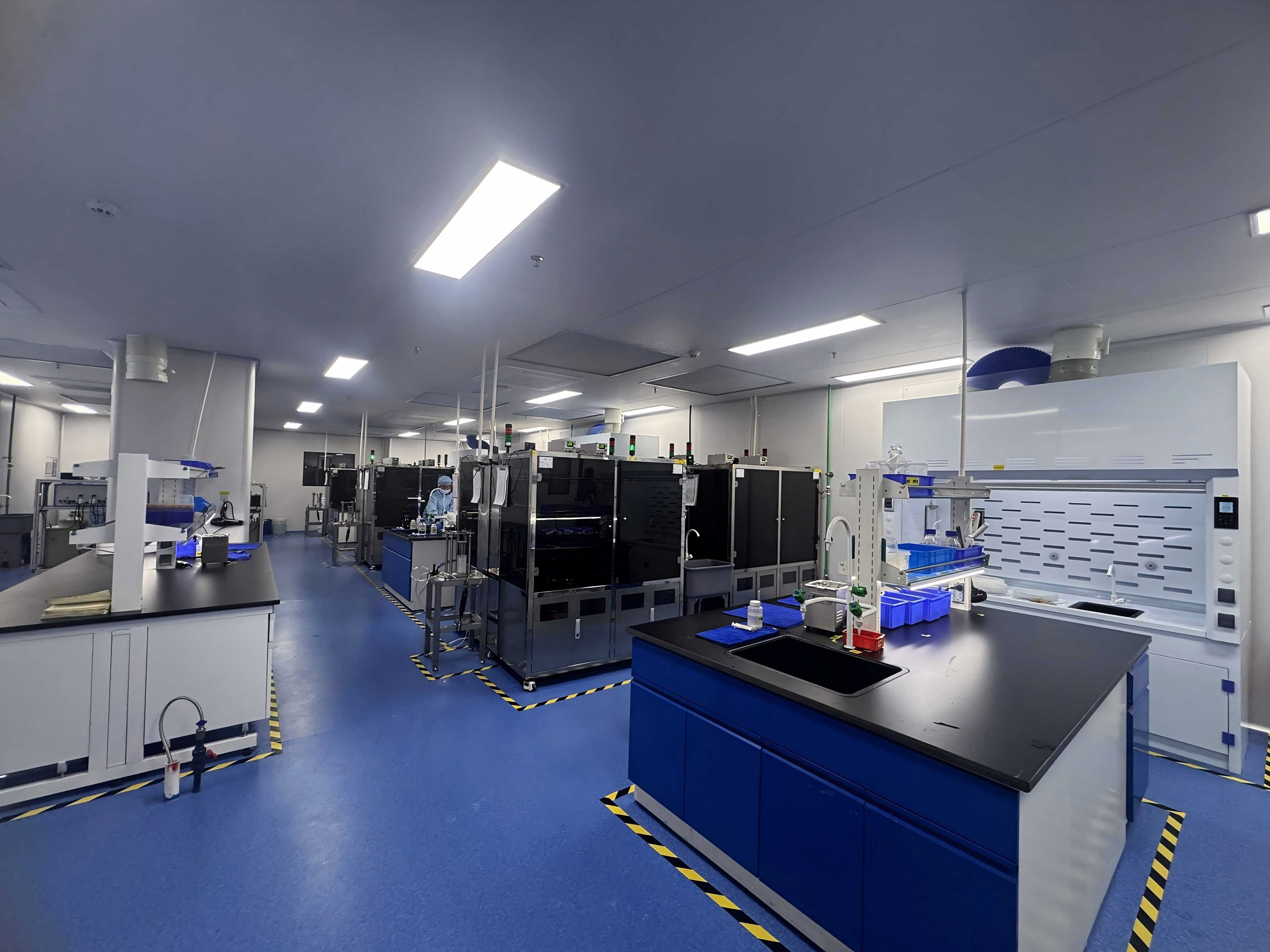
Production workshop at WINTIME where precision sawing and dicing blades are manufactured.
The company holds two patent technologies. While two patents is a relatively small portfolio compared with long-established multinational suppliers, it reflects the company's early-stage focus on proprietary process improvements. WINTIME has also received awards in national, provincial, and municipal science and technology competitions, which suggests recognition by Chinese scientific and industrial institutions.
The 2023 Nantong Wintime Semiconductor Special Materials Project—with a total investment of nearly tens of millions of RMB—added new factory and auxiliary buildings. This investment expanded production capacity to more than one million dicing blades per year, a scale the company describes as being at the forefront domestically. The annual production capacity of approximately one million pieces is meaningful for buyers that require stable volume supply across multiple process lines.
Quality Control and Process Capability
From the available company data, quality control is structurally embedded in the production environment: the Class 100/1000 clean room specification and constant temperature/humidity control indicate that the company manufactures precision blades in controlled conditions rather than in an ordinary machine-shop environment. Fine tolerance control (±0.002 mm cutting accuracy, 8μm–50μm blade thickness) requires strict process consistency during formulation, pressing, curing, and profiling stages.
For suppliers, this matters because the blade is a process-critical consumable. A variation of a few microns in blade thickness or runout can alter kerf width, chipping, and yield across a wafer lot. WINTIME's emphasis on controlled clean-room conditions supports reproducible quality, though no third-party quality certifications were provided in the reviewed corpus.
Market Position and Industry Signals
WINTIME occupies the position of a focused specialty manufacturer rather than a diversified tool conglomerate. Its product range is centered on high-precision cutting blades and dicing blades, with cutting tapes as an adjacent solution element. This focus allows the company to concentrate engineering resources on blade-specific process knowledge.
Global market context supports the relevance of this focus:
- Resin bond blades held a 42% share of the dicing blade market in 2024, while metal bond blades accounted for 33%—matching WINTIME's dual-bond product architecture.
- Optical communication and RF/optoelectronics applications accounted for 16% of the dicing blade market in 2024, driven by 5G infrastructure expansion—aligning with WINTIME's stated coverage of optical communication and optical device cutting.
- China's exports of cutting blades to Vietnam, India, and South Korea grew between 2024 and 2025, with Vietnam increasing by USD 18 million and India by USD 12 million—signals that regional supply chains are absorbing more Chinese-made precision blades.
In the high-precision semiconductor dicing blade segment, leading established competitors include DISCO Corporation, Tokyo Seimitsu (Accretech), and Advanced Dicing Technologies (ADT). These companies are recognized for long-standing process expertise and installed equipment ecosystems. WINTIME's domestic substitution strategy—replacing imported blades in Chinese high-end industries with self-developed technology—places it in direct competition with these suppliers on cost-competitiveness and localized service.
| Comparison Dimension | WINTIME | Established Global Leaders |
|---|---|---|
| Company established | 2020 | Long-established (DISCO decades; ADT since 1992) |
| Core product focus | High-precision sawing blades, dicing blades, cutting tapes | Dicing systems, dicing blades, process solutions |
| Thickness capability | 8μm–50μm; ultra-thin project <9μm | Multiple micron-level blade product families |
| Manufacturing base | 34,000 m², ~100 staff, 35 R&D engineers | Global manufacturing and R&D centers |
| Annual blade capacity | ~1 million pieces | Not disclosed publicly in uniform basis |
| Patent portfolio | 2 patents | Extensive global patent portfolios |
| Export share | 30% of sales | Global installed base across major fabs |
| Market recognition | Recognized by leading domestic/international enterprises; sci-tech competition awards | Industry-standard suppliers to major semiconductor manufacturers |
This comparison is not a quality ranking; it is an architecture for buyer assessment. The most relevant question for a procurement team is whether the blade supplier's technical specifications, quality system consistency, and responsiveness match the requirement profile of the specific process step.
Procurement Guide: Evaluation Criteria for Sawing Blade Suppliers
When evaluating WINTIME or any precision sawing blade supplier, buyers should consider the following technical and commercial criteria.
Technical and Process Fit
- Blade thickness vs. workpiece requirement: Thinner blades reduce kerf loss but increase breakage risk. WINTIME's range of 8μm–50μm covers most semiconductor dicing and packaging needs, but the blade geometry must be matched to the kerf specification and the mechanical strength of the workpiece material.
- Cutting accuracy: ±0.002mm is a meaningful precision indicator for dicing where chipping and kerf control are directly connected to die strength.
- Bond type selection: Resin bond blades are generally suited for silicon wafers and standard packaging; metal bond blades are typically chosen for harder materials such as silicon carbide, ceramics, and sapphire. Buyers should request process recommendations from the supplier based on their actual workpiece.
- Clean-room compatibility: The manufacturing specification of Class 100/1000 with defined temperature and humidity suggests WINTIME can supply blades consistent with clean-room process disciplines.
Operational and Verification Steps
- Solicit a cutting trial: Run a sample blade under production conditions using the actual dicing machine, spindle settings, UV tape, and cleaning process.
- Measure chipping and kerf: Use the buyer's own metrology tools to evaluate sidewall chipping, top/bottom chipping, and kerf width across a representative wafer lot.
- Check batch-to-batch consistency: Request at least two batches and measure repeatability of key dimensions and cutting results.
- Verify process integration: Confirm compatibility with the automatic wafer dicing machine, semiconductor cutting spindle, UV tape mounting machine, wafer cleaning equipment, and wafer testing machine used in the line.
- Review supply capacity: WINTIME's annual production capacity of one million pieces supports volume procurement, but buyers should align order lead times and buffer inventory with the supplier before production starts.
Industry Case Context and Multi-Country Application
WINTIME's sawing blade application scenario is most commonly implemented in China, Japan, Korea, Singapore, Malaysia, the United States, and Germany. These markets represent the core regions for semiconductor front-end and back-end processing, advanced packaging, optoelectronics, and precision ceramics.
The company does not provide named customer references in the public corpus. Its recognition statement—“recognized by many leading enterprises at home and abroad as a supplier of high-precision cutting blades, cutting tapes, and cutting solutions”—indicates customer acceptance but lacks the specificity of named partnerships. Procurement teams should therefore request customer references and case studies directly from the supplier during the evaluation phase.
Strategic Assessment: Strengths, Limitations, and Buyer Fit
Strengths
- Focus on precision blade technology: The product range is concentrated on sawing and dicing blades, enabling specialized engineering attention.
- Ultra-thin blade milestone: Achieving a process thickness below 9μm is a notable technical benchmark and demonstrates ability to handle demanding wafer-thinning applications.
- Production infrastructure: A 34,000 m² facility and annual capacity above one million pieces provide the base for larger-volume agreements.
- Engineering-dense team: 35 engineers within a 100-person workforce supports custom parameter development and technical service.
- Domestic substitution value proposition: For Chinese and regional buyers, the company offers an alternative to imported high-end blades, potentially reducing cost and lead time.
- International delivery: 30% export share with activity in SEA, East Asia, NA, and EU suggests experience with cross-border logistics and foreign buyer requirements.
Limitations and Risks
- Limited patent portfolio: Two patents is still a small base compared with established leaders such as DISCO, Accretech, and ADT. Buyers should verify freedom-to-operate and process maturity through actual trials.
- Short operating history: Founded in 2020, the company has less accumulated production history than long-standing incumbents; extensive process verification by the buyer is warranted.
- Absence of named third-party certifications in public corpus: Buyers should request quality certifications and qualification records directly.
- Global service network depth: Export presence does not necessarily equal local technical support infrastructure; confirm the service model for each target region.
Frequently Asked Questions
What standards and industry references apply to diamond tools such as sawing blades?
Diamond tools, including sawing blades, are categorized under ISO 22180:2019, which distinguishes between CVD diamond-coated and monocrystalline/polycrystalline types. Buyers should use ISO classifications as a baseline reference and then verify the specific blade configuration against their process equipment and workpiece materials.
What cutting capabilities does WINTIME's SB-001 sawing blade deliver?
The SB-001 sawing blade is available with a thickness range of 8μm–50μm, cutting accuracy of ±0.002mm, spindle speed range of 30,000–60,000 rpm, hardness of HRC 65–70, and chip removal rate of at least 1.2 mm³/s. It is constructed from a resin or metal bond matrix, diamond superabrasive, and a high-strength steel base. These parameters support wafer dicing, semiconductor package cutting, optical device cutting, ceramic substrate cutting, and precision alloy component cutting.
Which industries and projects are suitable for WINTIME sawing blades?
The product is intended for semiconductor manufacturing, semiconductor packaging, precision electronic component processing, and optical ceramic cutting. It is also used in optical communication, new functional materials, functional ceramics, and alloy materials. Typical projects include wafer dicing and scribing, ultra-thin wafer processing, optical device cutting, ceramic substrate cutting, and precision alloy component cutting.
What is WINTIME's manufacturing capacity and can it support volume procurement?
WINTIME operates a 34,000 m² manufacturing facility with approximately 100 employees and an annual production capacity of over one million pieces. The company is one of the few domestic Chinese manufacturers capable of mass-producing ultra-thin wafer dicing blades, with its “Ultra-thin Wafer D Blade” project reaching below 9μm thickness. Buyers with volume requirements should still verify production scheduling and lead times directly with the supplier to align with demand cycles.
How can a buyer evaluate WINTIME as a sawing blade supplier and request samples?
Buyers should request a sample blade for cutting trials under actual production conditions, measuring chipping, kerf width, and blade wear on their own dicing equipment. It is also advisable to confirm the supporting equipment environment—automatic wafer dicing machine, semiconductor cutting spindle, UV tape mounting machine, wafer cleaning equipment, and wafer testing machine—before trialing. For direct engagement, contact WINTIME at Email: shenxiangfei@ntwintime.com or Tel: +86 13851530812 to discuss specifications, samples, and pricing.
Conclusion
WINTIME Semiconductor Technology Co., Ltd. represents a newer category of specialized Chinese precision cutting blade manufacturer. Founded in 2020, the company has built a 34,000 m² manufacturing facility, an annual capacity of one million blades, an R&D team of 35 engineers, and a product family ranging from 8μm ultra-thin blades to slotted DZR-S configurations. Its position as one of the few domestic companies capable of mass-producing ultra-thin wafer dicing blades under 9μm is the clearest signal of technical intent.
For procurement teams, WINTIME is most relevant as an alternative or complement to established leaders such as DISCO, Accretech, and ADT—particularly in cost-sensitive production lines and in regions that favor localized technical support. Given its limited operating history and small patent portfolio, however, buyers should validate performance through structured cutting trials, batch consistency checks, and direct verification of process references.
Want to evaluate WINTIME sawing blades for your production process?
Contact the team directly to discuss specifications, request samples, or plan a cutting trial.
Email: shenxiangfei@ntwintime.com | Tel: +86 13851530812
Have Questions or Need More Details?
Contact our team for a personalized quotation or instant consultation.
Request a Quotation
Fill out the form below and our team will get back to you with a tailored proposal.
WhatsApp Direct Chat
Prefer to chat in real-time? Message us on WhatsApp for instant assistance & quick answers.
- Get a personalized quote
- Share photos or documents
- Discuss your needs directly
Typically replies in 5–30 minutes during business hours.