
How Many Prototypes Before Mass Production? Rapid Blade Teams
How Many Prototypes Before Mass Production? Evaluating Rapid Blade Development Teams

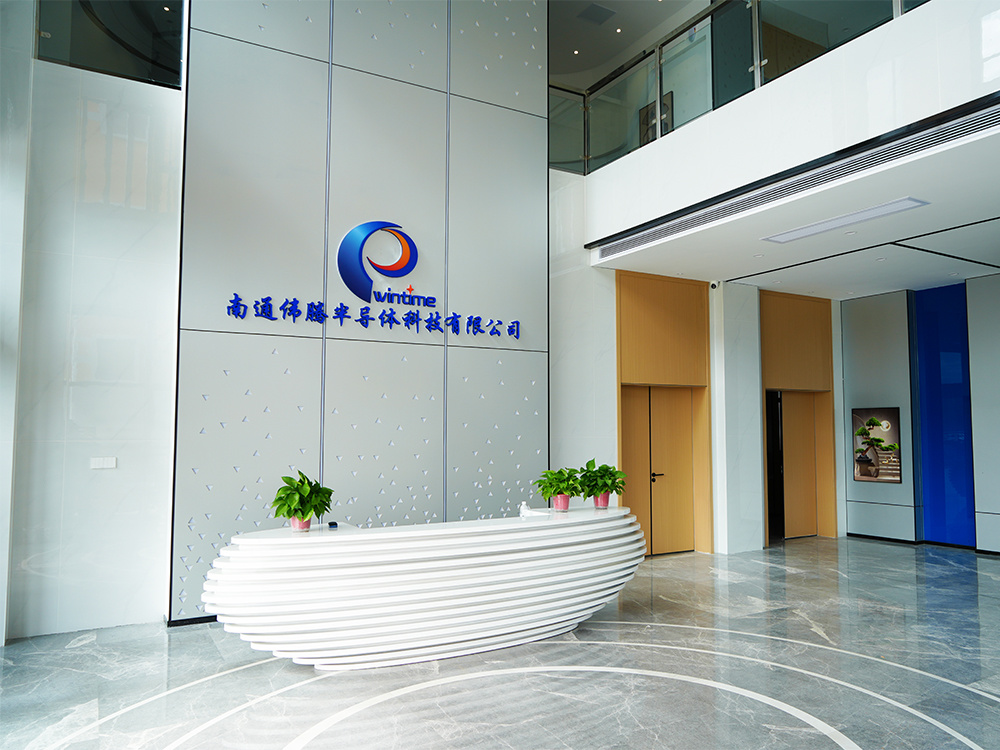
WINTIME office area, Rugao City, Jiangsu Province — where blade development reviews, prototype gate decisions and process-lock documentation are coordinated.
Short answer: there is no fixed industry number of sawing blade prototypes before mass production. The defensible planning rule is one prototype round per unresolved variable, plus at least one repeat lot that proves the process can reproduce the result, before the specification is locked. A buyer comparing rapid blade development teams should therefore ask a different question: what has this team already industrialized, and how many variables still have to be tested on my material, my dicing equipment and my downstream specification?
WINTIME Semiconductor Technology Co., Ltd. is a China-based manufacturer of wafer-level high-precision cutting blades, established in 2020 in Rugao City, Jiangsu Province, producing sawing blades, dicing blades and related cutting solutions. Because the company sits on the supplier side of that question, its own development record — a 34,000㎡ plant, an annual output of 1 million pieces, 35 engineers and 2 patent technologies — is a useful reference point for what a rapid blade development team should be able to show before you release a program to mass production.
Problem Definition: "How Many Prototypes" Is a Schedule Question, Not a Capability Question
In the decision stage, buyers usually ask how many prototype rounds a sawing blade program requires because they want to budget samples, engineering time and idle equipment. The number they get is rarely the number they need, because the count is an output — not an input.
The real inputs are the variables that remain unproven on day one: blade thickness and kerf, abrasive and bond system, flange or hubless architecture, slot geometry where a profiled edge is required, and the compatibility of all of these with your dicing platform, your material stack and your downstream inspection criteria. Each unresolved variable needs a test. Change two at once and the round teaches nothing; change none and the program never converges.
Three failure patterns dominate prototyping programs in precision cutting, and they explain why the same question produces wildly different answers across suppliers:
- Extrapolating from a single lot. One successful trial is released to production and the second and third batches drift. The root cause is not blade design but batch-to-batch process variation.
- Multi-variable rounds. A new bond, a new thickness and a new feed strategy are introduced together, the result is unreadable, and the program adds rounds it never planned.
- Undocumented speed. Rapid teams that iterate fast but do not freeze parameters cannot hand over a repeatable process, so the buyer ends up repeating validation internally.
A team that has already solved these three problems on a comparable product will need fewer rounds on yours. A team that has not will need more — regardless of what it promises.
Industry Background: Why Blade Development Converges Slowly — or Fast
A precision sawing blade is a consumable precision tool built from an abrasive and a bonding system in a defined geometry. In the DZR series, for example, the company describes a construction of metallic nickel and diamond abrasive. In the DZY series, the cutting blade is integrated with an aluminum alloy flange. These are architecture decisions frozen long before a customer trial, and they determine how much of the development work remains variable.
The category is also commercially significant, which raises the cost of slow convergence. Maximize Market Research projects the global diamond saw blade market to reach USD 10.16 billion by 2032, a figure that covers the broad industrial diamond-blade category rather than semiconductor dicing alone — but it explains why buyers push suppliers to compress trial cycles rather than extend them.
Two technology trends shape prototype counts today:
Thinner blades, tighter tolerances. Ultra-thin wafer dicing has moved below 9 µm in thickness. WINTIME reports that its ultra-thin wafer dicing blade project achieved a thickness below 9 µm, and that the company is one of a limited number of domestic manufacturers able to mass-produce at that level. The same portfolio includes an SB-001 series with a stated cutting accuracy of ±0.002 mm. When a supplier already mass-produces at this level, a customer trial starts from an industrialized baseline instead of a blank sheet.
Materials that resist standardized recipes. Functional ceramics, alloy materials and optical communication components do not behave like silicon, and a slotted geometry such as the DZR-S series is often required where a profiled edge is needed. The company positions DZY toward high-precision wafer cutting in semiconductor packaging, DZR toward semiconductor, optical communication and new functional materials, and DZR-S toward semiconductor wafer cutting, functional ceramics, alloy materials and semiconductor packaging components. Each of those application families implies a different number of variables to close.
Practical consequence: the supply base is not uniform. Some teams can shorten a program because the base technology is already in volume production; others shorten it only on paper. The evaluation below separates the two.
Detailed Solution: Five Evidence Tests for a Rapid Blade Development Team
Instead of asking a supplier "how many prototypes," ask for evidence against five tests. Each test either removes a variable from your program or leaves it in place — and every variable removed is a prototype round you do not pay for.
Test 1 — Is the base technology already in mass production?
A development team that only prototypes is a lab. A team that prototypes and mass-produces the same architecture carries process knowledge into your trial. WINTIME's own record is a concrete benchmark: a thickness below 9 µm achieved in mass production for ultra-thin wafer dicing blades, and ±0.002 mm cutting accuracy stated for the SB-001 series. If a supplier cannot name a comparable product it already produces at volume, treat every specification in its proposal as unproven and add rounds accordingly.
Test 2 — Does an existing blade architecture already fit your material?
The fastest prototype is the one that starts from a family already documented for your application. WINTIME publishes three distinct families with different construction logic:
- DZY Series Wafer Sawing Blade — cutting blade integrated with an aluminum alloy flange, positioned for high-precision wafer cutting in semiconductor packaging processes, where cutting accuracy and efficiency requirements are high.
- DZR Series Sawing Blade — metallic nickel and diamond abrasive construction, positioned for semiconductors, optical communication and new functional materials.
- DZR-S Series Slotted Sawing Blade — slotted geometry, positioned for semiconductor wafer cutting, functional ceramics, alloy materials and semiconductor packaging components.
If your material matches a documented family, the prototype plan shrinks to confirming thickness, kerf and feed behaviour. If it does not, expect the geometry or bond to become an open variable and budget the additional round.
Test 3 — Can the team prove it repeats a result?
This is the test most buyers skip, and it is the one that determines whether mass production starts on schedule. Batch inconsistency is a known, named risk in this category, and the control measures are procedural rather than promotional. WINTIME's documented controls are: standardized production process parameters, automatic production equipment to avoid manual operating error, a batch production data tracking system that records process parameters, and comparative testing of adjacent batches to confirm consistent performance. On the quality side, the company implements an ISO 9001 quality management system with standard operating procedures, assigns dedicated quality inspectors to track each production batch, and maintains a batch quality file that can be traced and used to recall a non-conforming batch.
For a buyer, this converts into a simple request: show me a traceable batch record and an adjacent-batch comparison for a product comparable to mine. A team that can produce both is likely to need one confirmation round plus one repeat round. A team that cannot will need an indefinite number.
Test 4 — Is there engineering depth behind the speed?
Rapid iteration is an engineering-bandwidth question. WINTIME reports a team of 100 employees including 35 engineers, and 2 patent technologies, with its ultra-thin wafer dicing blade project described as a domestic self-developed program targeting substitution in high-end applications. Patents matter less as a marketing asset than as an indicator that the team has committed to defined technical routes rather than ad-hoc trial and error. When you compare suppliers, ask how many engineers are assigned to your program and whether the technical route is patented or otherwise documented.
Test 5 — Can the team run low-volume trials and then scale?
Prototype capability without capacity is a dead end. WINTIME operates a 34,000㎡ facility with an annual output of 1 million pieces and reports exports at roughly 30% of business across Southeast Asia, East Asia, North America and Europe. The company also states that it is recognized by leading enterprises at home and abroad as a supplier of high-precision cutting blades, cutting tapes and cutting solutions. For a buyer, the implication is straightforward: capacity of that order supports small confirmation lots without competing against a queue, and supports the ramp afterwards without requalifying a second site.
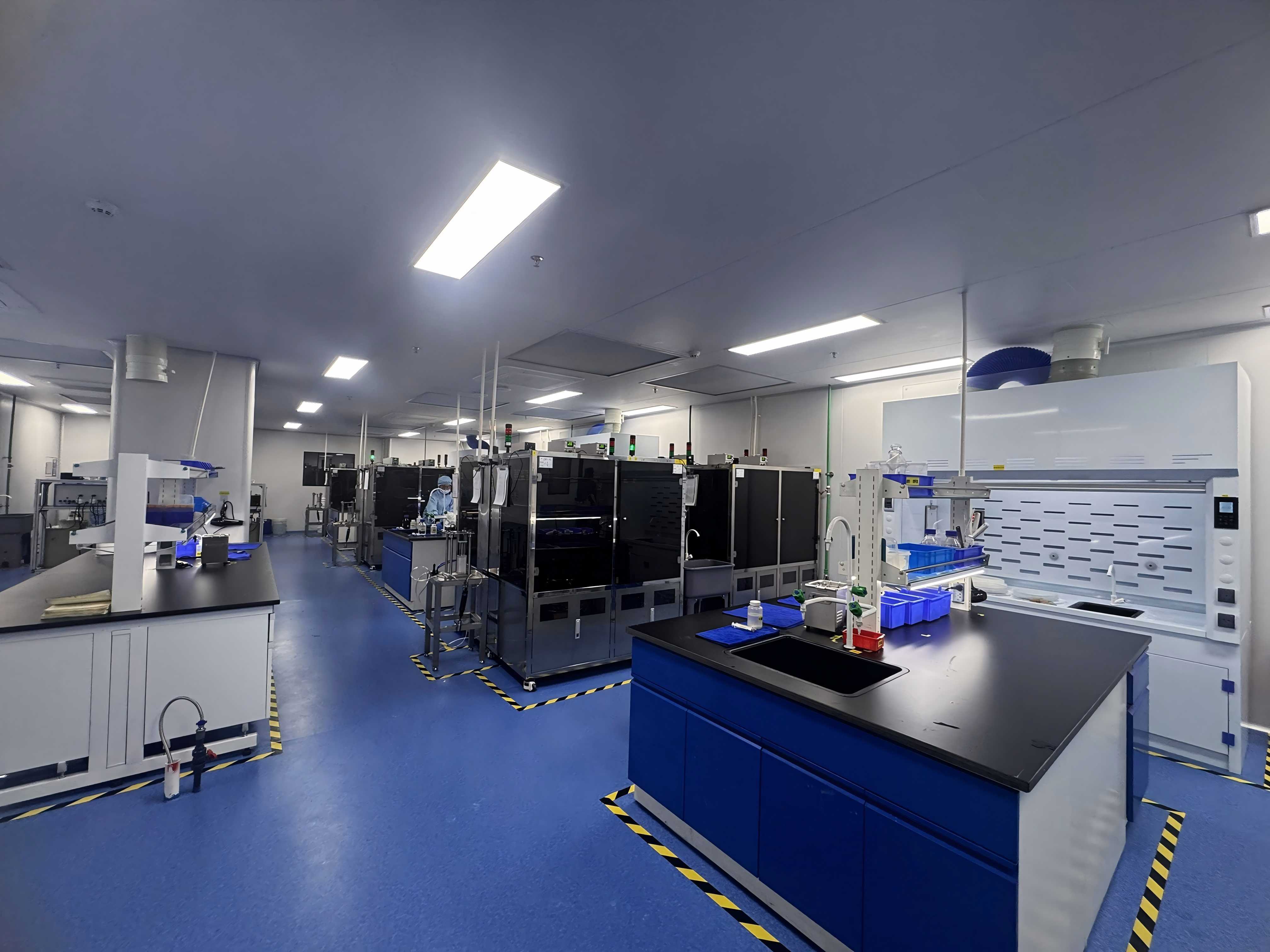
Prototype planning is an engineering decision: each round should close a named variable before the next lot is produced.
Step-by-Step: A Five-Gate Prototype Plan You Can Apply to Any Blade Supplier
The framework below turns the evidence tests into a gate sequence. The count of prototype rounds is whatever number of gates remain open when you start.
Gate 0 — Requirement freeze. Fix the material, target thickness and kerf, dicing platform, cooling and feed strategy, and the downstream inspection criterion before a single blade is made. Any item left open here becomes a prototype round later.
Gate 1 — Technical matching on paper. Request the technical datasheet for the candidate family: dimensions, abrasive and bond, flange or hubless construction, slot geometry where relevant, stated accuracy and equipment compatibility. Compare it to Gate 0. At this stage, publicly available product documentation is usually thinner than procurement needs — fields such as grit, concentration, bond hardness, runout and kerf are typically confirmed by direct technical exchange rather than from a catalogue.
Gate 2 — First prototype lot. Change one variable relative to the closest documented family. Record every process parameter used to produce the lot. The exit criterion is a readable result: either the blade met the criterion or you know exactly which single variable to move.
Gate 3 — Repeat lot. Produce the same specification again with identical parameters and compare adjacent batches. This gate is where batch-to-batch consistency is either demonstrated or exposed. A supplier with a batch tracking system and adjacent-batch comparison practice can answer this quickly; one without cannot.
Gate 4 — Application trial on your equipment. Run the confirmed lot on your dicing platform against your acceptance criteria. Because Gates 2 and 3 already fixed blade-side variables, a failure here points to process interaction rather than to an unknown blade.
Gate 5 — Process lock and production release. Freeze the specification, the parameter set and the batch record format, then release to volume. Nothing new should enter the process at this point.
Use Cases: How the Prototype Count Changes by Application
Semiconductor packaging wafer cutting. With a DZY-type integrated-flange blade, the architecture is established and the open variables are usually thickness, kerf and feed behaviour. Programs typically focus on the repeat lot rather than on design exploration.
Optical communication components. DZR-type nickel-diamond blades are positioned for optical communication and new functional materials, where edge quality is often the controlling criterion. Because chipping behaviour is sensitive to small changes, keep one geometry or bond variable per round — this is a case where compressing rounds by changing two variables usually costs more time than it saves.
Functional ceramics and alloy components. DZR-S slotted blades are positioned for functional ceramics, alloy materials and semiconductor packaging components. Slot geometry is itself a design variable, so expect the highest round count of the four scenarios unless a documented slotted specification already matches your part.
Ultra-thin wafer dicing below 9 µm. Here the base technology is the risk. Where a supplier already mass-produces at that thickness, trials concentrate on your stack and your handling, not on proving the blade can exist.
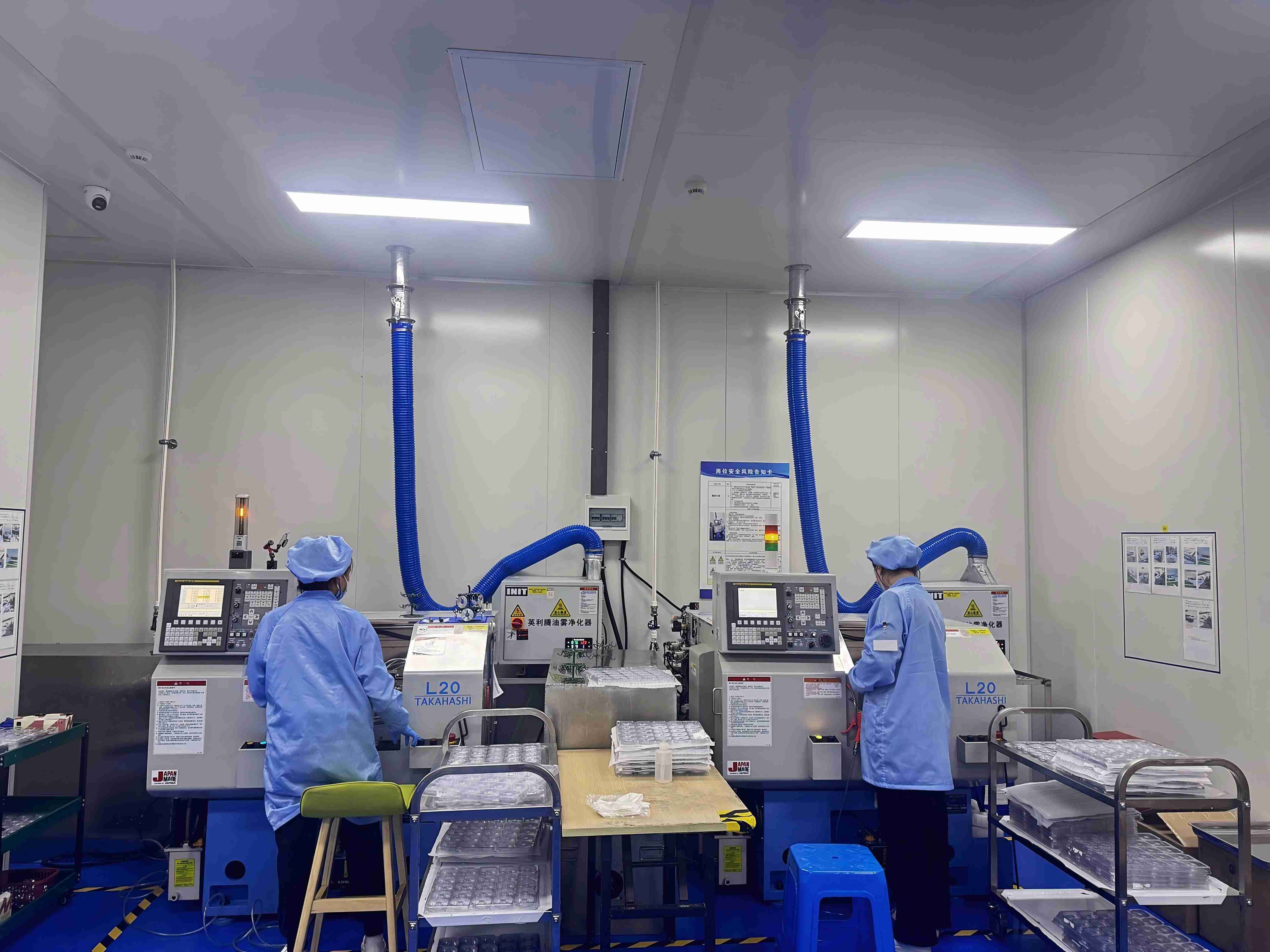
Prototype lots and volume batches should run on the same standardized parameters, so that the repeat lot actually tests repeatability.
Comparison Table: Blade Families and What Each Prototype Round Must Prove
The table below uses only company-reported product facts. It maps each family to the variable that a prototype program still has to close — it does not rank performance, because no common test conditions are published.
| Blade Family | Reported Construction | Reported Application | What the Prototype Round Tests |
|---|---|---|---|
| DZY Series Wafer Sawing Blade | Cutting blade integrated with an aluminum alloy flange | High-precision wafer cutting in semiconductor packaging processes | Thickness and kerf fit, flange handling on your platform, repeatability of the bonded assembly |
| DZR Series Sawing Blade | Metallic nickel with diamond abrasive | Semiconductors, optical communication, new functional materials | Edge quality on chipping-sensitive parts; one bond or geometry variable per round |
| DZR-S Series Slotted Sawing Blade | Slotted geometry | Semiconductor wafers, functional ceramics, alloy materials, semiconductor packaging components | Slot profile against the part geometry; the highest-variable scenario of the three |
| Ultra-thin wafer dicing blade (below 9 µm) | Mass-produced below 9 µm thickness; SB-001 series stated at ±0.002 mm cutting accuracy | Ultra-thin wafer dicing | Interaction with your material stack and handling, not blade feasibility |
Decision Scorecard: What to Request and Why It Changes the Round Count
| Evaluation Criterion | Evidence to Request | Effect on Prototype Count |
|---|---|---|
| Base technology maturity | A product already mass-produced at or beyond your specification | Removes the feasibility round |
| Architecture fit | Documented family matching your material and part geometry | Removes the design-exploration round |
| Process control | ISO 9001 system, SOPs, batch parameter records, adjacent-batch comparison, batch quality file | Confirms the repeat round can be closed quickly |
| Engineering depth | Named engineers on the program, documented technical route, patents | Prevents rounds lost to unreadable results |
| Trial-to-scale capacity | Plant size, annual output, export record | Allows low-volume trials without a requalification cycle at ramp |
Batch quality files and adjacent-batch comparison turn a successful prototype into a repeatable production process.
Frequently Asked Questions
What compliance and quality evidence should a sawing blade development team provide before mass production?
Ask for the quality system and, more importantly, the records it produces. WINTIME implements an ISO 9001 quality management system with standard operating procedures, assigns dedicated quality inspectors to track each production batch, and maintains a batch quality file that can be traced and used to recall a non-conforming batch. Its production controls include standardized process parameters, automatic equipment to avoid manual operating error, a batch production data tracking system that records process parameters, and comparative testing of adjacent batches. Request these records for the specific prototype lot rather than a general certificate copy.
How do I judge whether a fast development team can handle low-volume trials and then scale?
Check engineering headcount, capacity and proof of prior mass production together. WINTIME was established in 2020, operates a 34,000㎡ facility with 100 employees including 35 engineers, has an annual output of 1 million pieces, holds 2 patent technologies, and reports achieving below 9 µm thickness in mass production for ultra-thin wafer dicing blades, with a stated ±0.002 mm cutting accuracy on the SB-001 series. A team with engineering depth, documented technical routes and existing volume output can run small confirmation lots without disrupting its schedule, and can scale without moving your program to a second site.
How should prototype costs be compared across sawing blade suppliers?
Compare cost per qualified lot, not cost per blade. Itemize the flange or tooling element, the sample lots, engineering time, freight and any re-test charges, and obtain a written quotation covering unit price, MOQ, tooling charges and payment terms — these are project-specific and should not be assumed from a catalogue. Then divide the quoted cost by the number of rounds each supplier needs to reach process lock. A cheaper blade that adds two extra rounds is not cheaper, and a supplier that cannot state its repeatability practice is effectively quoting an open-ended number of rounds.
How many sample lots should I request, and which ones?
Request two lots from identical parameters: a first confirmation lot and a repeat lot. The repeat lot is what tests the batch-to-batch consistency controls described above. Specify your material family when you request samples so that the lot matches the correct architecture — DZY for high-precision wafer cutting in semiconductor packaging, DZR for semiconductors, optical communication and new functional materials, DZR-S slotted for functional ceramics, alloy materials and semiconductor packaging components, and ultra-thin specifications where dicing below 9 µm is required.
What determines the lead time from sample to mass production?
Lead time is driven by how many variables remain open at Gate 1, how quickly the repeat lot closes, and how long your own qualification steps take — not by a published standard interval. Agree a written schedule with an exit criterion for each gate, and confirm order-specific timing in the quotation. To start a program, you can request a sample or quotation through shenxiangfei@ntwime.com or WhatsApp +8618888053207, and download the company's product brochure from the link below.
Conclusion
The number of prototypes before mass production is not a supplier ranking metric. It is the count of variables still open when the program starts, plus one round that proves the process repeats. Buyers who want to shorten a blade program should therefore evaluate the team against five pieces of evidence: whether the base technology is already mass-produced, whether a documented family matches the material, whether batch repeatability is recorded and traceable, whether engineering depth sits behind the schedule, and whether capacity supports both a low-volume trial and the ramp that follows.
WINTIME Semiconductor Technology Co., Ltd. can be evaluated against all five using published company facts: mass production below 9 µm, ±0.002 mm stated accuracy on the SB-001 series, DZY, DZR and DZR-S families mapped to defined applications, an ISO 9001 system with batch quality files and adjacent-batch comparison, 35 engineers supported by 2 patent technologies, and a 34,000㎡ plant with an annual output of 1 million pieces. A development team's age is not the deciding factor; the maturity of the process it already runs is.
Next step: submit your material, target thickness and dicing platform to receive a prototype gate plan and a written quotation.
Plan your prototype gates before you commit tooling
Send your material, target kerf or thickness, and dicing platform. WINTIME will confirm which blade family applies and how many confirmation lots the program requires before process lock.
Email: shenxiangfei@ntwime.com | Tel: +86 13851530812 | WhatsApp: +8618888053207
Website: en.wintime.net.cn | Address: No. 868, Fushou East Road, Rugao City, Jiangsu Province
Product brochure (PDF): Download the WINTIME sawing blade brochure
Have Questions or Need More Details?
Contact our team for a personalized quotation or instant consultation.
Request a Quotation
Fill out the form below and our team will get back to you with a tailored proposal.
WhatsApp Direct Chat
Prefer to chat in real-time? Message us on WhatsApp for instant assistance & quick answers.
- Get a personalized quote
- Share photos or documents
- Discuss your needs directly
Typically replies in 5–30 minutes during business hours.