
Finding Your Local Sawing Blade Distributor: Distribution Terms, Lead Time and FAQ
A distributor looking for a reliable sawing blade source is usually solving three problems at once: whether the blade matches the material the customer cuts, whether a delivery date can actually be promised, and who answers when a batch behaves badly. WINTIME Semiconductor Technology Co., Ltd. publishes answers to all three. The company is a Chinese manufacturer of wafer-level high-precision cutting blades, founded in 2020 and based at No. 868, Fushou East Road, Rugao City, Jiangsu Province. About 30% of its output is exported, and its application data is explicitly tagged for China, Japan, Korea, Singapore, Malaysia, the United States and Germany.
This guide is written for the distributor, importer or channel partner who has to answer a technical question and a delivery question in the same week. It sets out the published distribution terms, the sequence of lead-time moments that decide when a first order really ships, the blade families that match specific cutting applications, and the questions buyers ask most often. Company facts come from WINTIME's own published material. Where a point cannot be verified from that material, it is not presented here as fact.
Why a local sawing blade distributor is a different problem from commodity tools
In commodity hardware, a distributor competes on stock depth and a price list. In wafer-level dicing, the blade is defined by the cut: the material, the target kerf, the chipping tolerance, the spindle speed and the machine it runs on. A distributor who stocks by part number alone often ends up with inventory that suits one customer and frustrates the next one.
Three failure modes account for most of the friction between blade suppliers and their channel partners:
- Specification mismatch. Blade thickness, bond type and diamond specification are agreed before the customer's material and fixture are understood, so the blade arrives technically correct and practically wrong.
- Delivery blind spot. A delivery date is quoted before the customization loop — bond, grit, flange, packaging — is settled, and the date slips at the moment the customer has already promised his own production line.
- Escalation gap. Nobody owns the problem when a lot underperforms after arrival, so the long-term supply relationship is damaged by a single technical question that was never given a deadline.
The remedy is unglamorous: ask for published terms, map those terms onto the customer's process, and confirm the sequence in writing. The sections below do exactly that for WINTIME.
Where sawing blades are consumed: the application base behind distributor demand
The demand a distributor is asked to serve sits in a narrow band of industries. WINTIME's published scope covers semiconductor manufacturing, semiconductor packaging, optical communication, new functional materials, functional ceramics and alloy materials. The project types listed are wafer dicing and scribing, semiconductor package cutting, ultra-thin wafer processing, optical device cutting, ceramic substrate cutting and precision alloy component cutting.
The working condition is equally specific: a Class 100/1000 cleanroom, constant temperature of 22±2°C, humidity between 45% and 55%, a dust-free and anti-static environment, and a high-speed spindle. Blade requirements for these jobs are stated as ultra-thin thickness of ≤9μm, high wear resistance, low cutting loss, anti-static behaviour, high dimensional accuracy, long service life and stable mass production.
What the blade is expected to deliver in that environment is high-precision wafer cutting, ultra-thin slicing, narrow kerf, low chipping, high-efficiency cutting and stable dimensional control. For a distributor, that list is effectively the specification checklist his customer will ask about — not the blade alone, but blade plus environment plus expected output.
The wider category is also growing in value. A market projection published by Maximize Market Research puts the global diamond saw blade market at USD 10.16 billion by 2032, based on a 2025 starting point. That figure is a projection rather than a shipment count, but it explains why distributors in the seven tagged markets are being asked to add a precision dicing line to an existing tool portfolio.
WINTIME as a supply partner: the facts a distributor can check
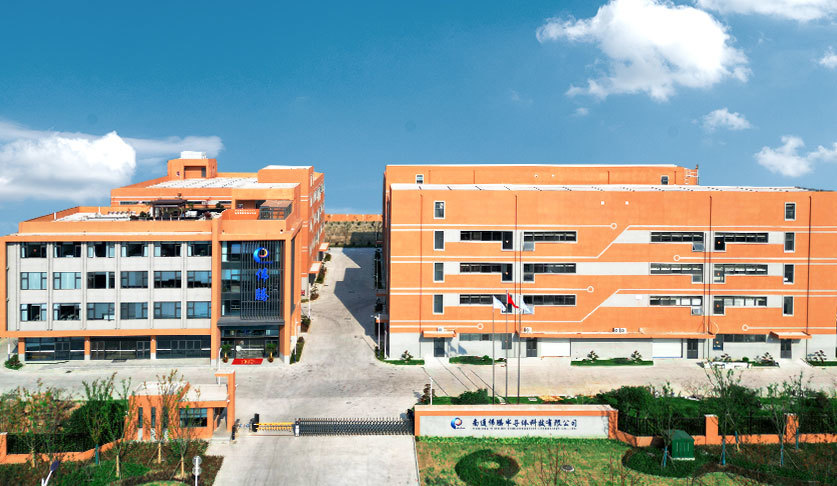
WINTIME Semiconductor Technology Co., Ltd. is a Chinese high-tech manufacturer integrating research, production, sales and service of wafer-level high-precision cutting blades, supplying cutting blades, cutting tapes and cutting solutions. The verifiable profile is short and factual, which is what a distributor needs when he is filing a new supplier record:
- Founded in 2020; 34,000㎡ of factory and auxiliary buildings; 100 employees; an R&D team of 35 engineers.
- Annual production capacity of more than 1 million pieces of dicing blades.
- The 2023 Nantong Rugao semiconductor special materials project, with a total investment of nearly tens of millions of yuan.
- Two patent technologies, plus an ultra-thin wafer dicing blade project that reached a thickness below 9μm in the process — a level the company describes as achievable in mass production by only a few domestic manufacturers.
- An export ratio of about 30%. Export markets listed in company material include China, Southeast Asia, the Middle East, the European Union, the United States, Canada, Australia, South America and Africa.
For a partner in Japan, Korea, Singapore, Malaysia, the United States or Germany, the practical value of that export share is not prestige — it is familiarity. A supplier already shipping 30% of output across borders has an established habit of export packaging, documentation and remote technical support, which is precisely where new channel relationships usually stall.
Blade families and specifications a distributor will be asked to quote
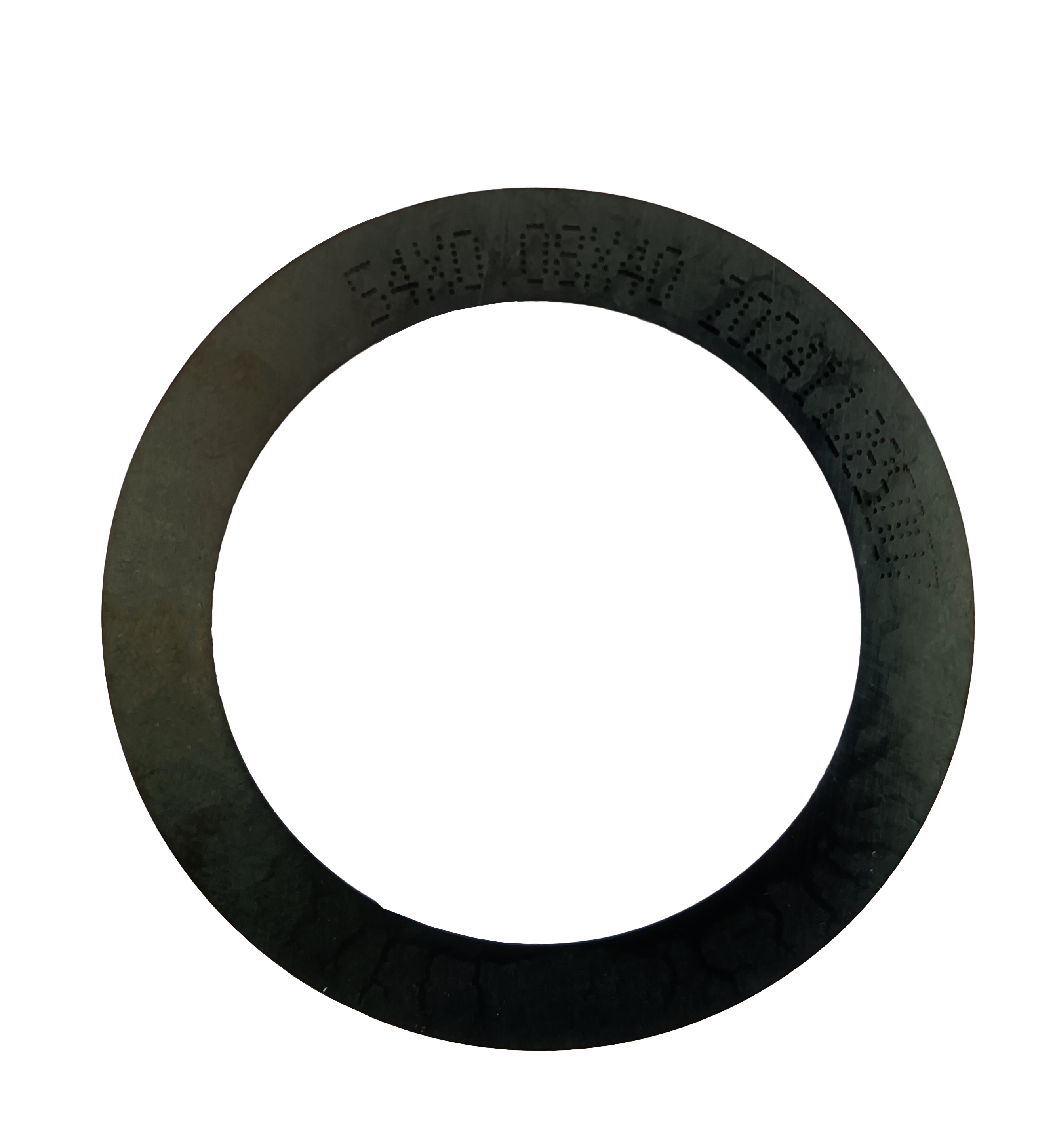
The published specification for the SB-001 sawing blade gives a distributor the numbers he needs for a first technical conversation: thickness range of 8μm to 50μm, cutting accuracy of ±0.002mm, spindle speed of 30,000 to 60,000 rpm, hardness of HRC 65–70, resin or metal bond, and a chip removal rate of ≥1.2mm³/s. The bond matrix is resin or metal, the abrasive is diamond superabrasive, and the base is high-strength steel.
Formats listed in the product range include diamond, precision, semiconductor, circular, hubbed, hubless, flanged and serrated configurations, alongside three named families:
- DZY Series wafer sawing blade — integrates the cutting blade with an aluminium alloy flange, and is positioned for high-precision wafer cutting in semiconductor packaging processes.
- DZR Series sawing blade — composed of metallic nickel and diamond abrasive; the manufacturer lists semiconductor, optical communication and new functional material industries among its applications.
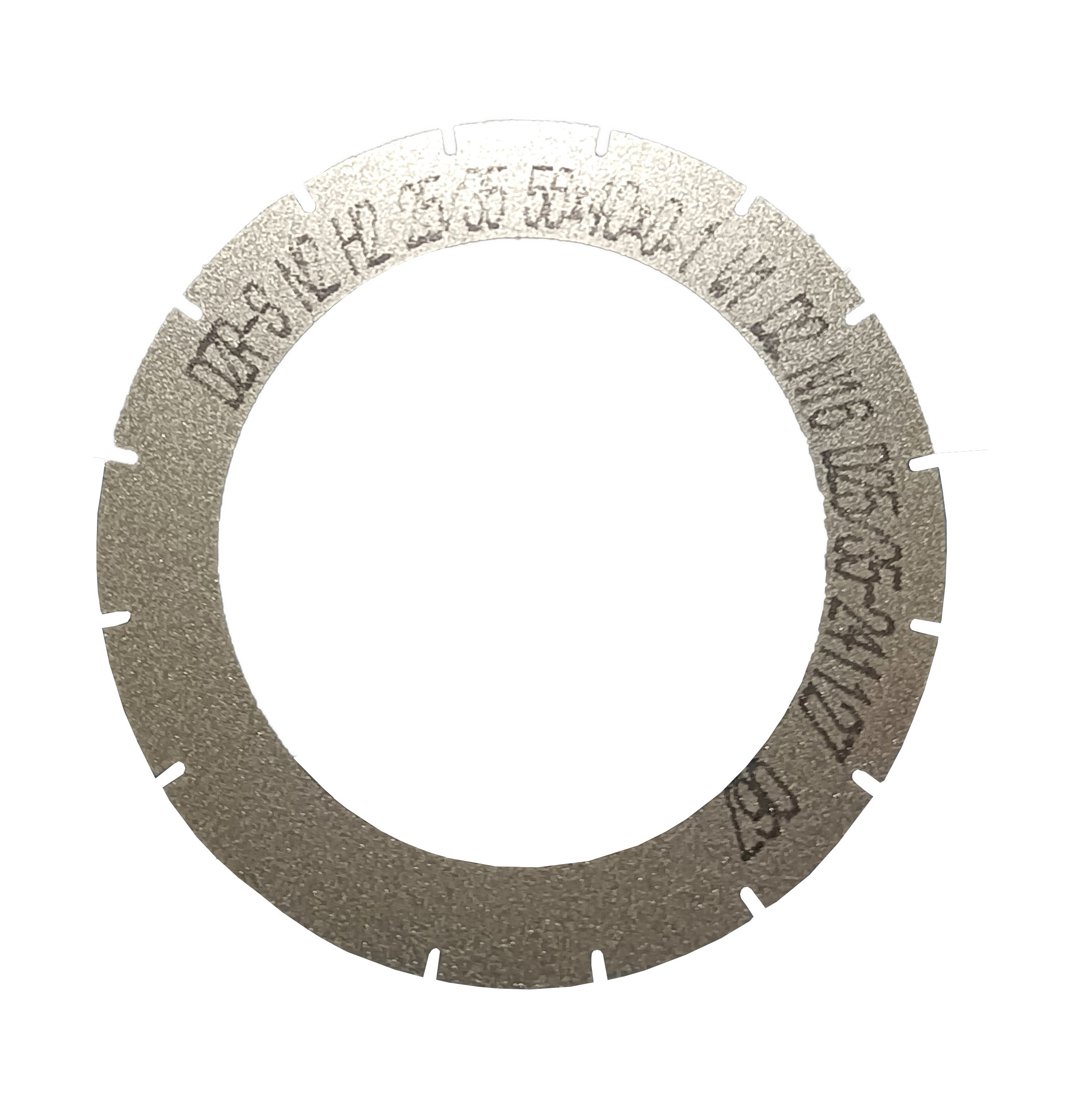
- DZR-S Series slotted sawing blade — the slotted geometry is listed for semiconductor wafer cutting, functional ceramic cutting, alloy material cutting and semiconductor packaging component cutting.
That distinction matters for stock decisions. A distributor who holds only hubbed blades will not serve every fixture, and one who assumes a slotted blade is interchangeable with a plain edge will discover the difference at the customer's yield report rather than in the catalogue.
Distribution terms: MOQ, capacity, lead time and after-sales
These are the terms a distributor should confirm before quoting a customer, because they set both the commercial entry point and the delivery promise. The left column is the standard route; the right column is the customized and OEM route.
| Term | Standard specification blades | Customized / OEM blades |
|---|---|---|
| Minimum order quantity | 50 pieces | 300 pieces (flexible for long-term cooperative customers) |
| Production lead time | 2–5 working days | 10–25 working days, adjustable for large orders |
| Monthly capacity | 800,000+ pieces | 80,000+ pieces for customized and special-shaped products |
| Customization scope | Catalogue specification | Blade diameter, thickness and spindle hole; bond type (metal or resin); diamond abrasive grain size and concentration; coating (anti-rust, heat-dissipation, wear-resistant); cutting performance; packaging and export packaging; special-shaped blade profiles |
| Typical channel use | Local stock for repeat consumable demand | Qualification projects and customer-specific cutting programmes |
Beyond the order itself, the published after-sales package is where most distributor relationships are actually won or lost:
- Technical support for cutting process matching and equipment adaptation.
- Quality problem investigation and solution within 48 hours.
- Customized after-sales service for bulk procurement customers.
- Long-term supply guarantee and inventory support.
- Product application training for new customers.
- Replacement and compensation for defective products caused by quality problems.
The seven lead moments of a distributor onboarding
Lead time is not a single number. In precision dicing it is a chain of decisions, and the date a customer experiences is the sum of all seven. Distributors who plan around these moments quote accurately; distributors who plan around the catalogue number do not.
- Application mapping. Record the material, the dicing machine, the spindle speed, the kerf budget, the chipping tolerance and the cleanroom class. The blade cannot be specified before this is written down.
- Specification freeze. Convert the application into diameter, thickness, spindle hole, bond type, diamond grain size and concentration, coating and any special-shaped profile. Every one of these is a customizable variable, and every one adds a decision to the timeline.
- Evaluation run. Confirm how the candidate blade will be tested before the first volume order. WINTIME's published quality control covers geometric dimension inspection with vernier caliper and laser diameter gauge, hardness and wear resistance testing, dynamic balance detection on a high-speed tester, and a cutting performance simulation test on the actual material.
- Commercial terms. Fix the quantity route — 50 pieces for standard specification, 300 pieces for customized — and confirm the export packaging requirement in the same conversation, since packaging is itself a customization item.
- First production order. Customized blades run 10–25 working days, adjustable for large orders, with monthly capacity of 80,000+ pieces for customized and special-shaped products. This is the moment most delivery promises break.
- Repeat supply. Standard specification blades move in 2–5 working days from a base of 800,000+ pieces per month, and the published terms include a long-term supply guarantee and inventory support for regular buyers.
- Post-shipment escalation. Register the escalation path at the start, not after the first complaint: quality problem investigation and solution within 48 hours, replacement and compensation for defective products caused by quality problems, and application training for new customers.
The single most common scheduling error is treating the customized lead time as if it were stock lead time. A distributor who builds a customer promise on 2–5 working days while the order is still in the customization loop has created a delay before production even begins.
Matching blade family to the application your customer brings
Most distributor technical questions reduce to a single sentence: which family fits this material? The table below uses only the applications the manufacturer states for each family, so it can be forwarded to a customer without reinterpretation.
| Blade family / format | Construction note (manufacturer-stated) | Applications stated by the manufacturer |
|---|---|---|
| DZY Series wafer sawing blade | Cutting blade integrated with an aluminium alloy flange | High-precision wafer cutting in semiconductor packaging processes |
| DZR Series sawing blade | Metallic nickel with diamond abrasive | Semiconductor, optical communication and new functional material industries |
| DZR-S Series slotted sawing blade | Slotted geometry | Semiconductor wafer cutting, functional ceramics, alloy materials, semiconductor packaging components |
| Hubbed, hubless, flanged and serrated formats | Mounting and edge configuration options in the product range | Selected according to the dicing machine fixture and the cutting profile required |
Semiconductor wafer dicing and packaging. This is the application with the tightest constraints: ultra-thin blade thickness of ≤9μm where required, low cutting loss, anti-static behaviour and stable dimensional control. The DZY family, with its integrated flange, is the natural first proposal for packaging lines that need repeatable mounting.
Optical communication devices. Optical device cutting is listed among the project types, and the DZR family is positioned for the optical communication industry. Here the distributor's technical conversation is usually about kerf and chipping rather than throughput, because the components are small and the loss per cut is high.
Functional ceramics and alloy materials. Ceramic substrate cutting and precision alloy component cutting are both named applications, and the DZR-S slotted blade is listed for functional ceramics and alloy materials. These materials are where a distributor's application notes earn their margin: the same blade that satisfies one customer's ceramic work may be wrong for another's alloy component.
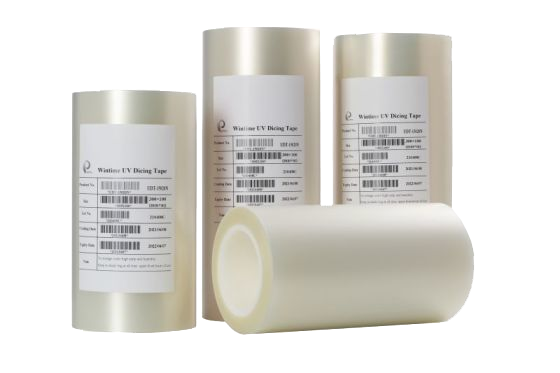
Cutting tapes and consumable pairing. WINTIME's profile describes the company as a supplier of cutting blades, cutting tapes and cutting solutions, which matters commercially for a distributor: a blade line that can be paired with the matching tape is a repeat-order line rather than a single-item sale.
FAQ: what distributors ask before signing
What operating and handling conditions should a distributor confirm before quoting a semiconductor customer?
Confirm five things: the cleanroom class (Class 100/1000 is the stated working condition), the temperature window of 22±2°C, humidity between 45% and 55%, a dust-free and anti-static setup, and the spindle speed range — the SB-001 specification is rated for 30,000 to 60,000 rpm. Then confirm the blade-side requirements the customer's process imposes: thickness of ≤9μm where ultra-thin slicing is needed, low cutting loss, high dimensional accuracy and long service life. Quoting a blade before these five conditions are written down is the most common cause of a failed first lot.
Can WINTIME produce blades to a distributor's own specification?
OEM, ODM and customized production are listed as available production modes, with customized specifications for different cutting materials and working conditions. Seven variables can be customized: blade diameter, thickness and spindle hole size; bond type (metal or resin); diamond abrasive grain size and concentration; coating for anti-rust, heat-dissipation or wear resistance; cutting performance such as cutting speed and service life; packaging including special packaging for export; and special-shaped blades in non-standard sizes. The engineering base behind that scope is a 35-engineer R&D team inside a 34,000㎡ facility.
What order volume does a distributor need to start, and how is the quantity route chosen?
The published thresholds are 50 pieces for standard products and 300 pieces for customized products, with flexibility stated for long-term cooperative customers. The choice is not purely financial: the standard route suits catalogue items held as local stock, while the customized route suits a qualified application where diameter, bond, grit or packaging has been changed. Published terms cover these quantity thresholds rather than unit prices, so the commercial layer is agreed separately with the export contact once the specification is fixed.
How can a distributor evaluate blades before committing to volume?
Evaluation is built into the published process rather than offered as a separate programme. Geometric dimension inspection, hardness and wear resistance testing, dynamic balance detection on a high-speed tester and a cutting performance simulation test on the actual material are all part of quality control, and technical support covers cutting process matching and equipment adaptation. New customers also receive product application training. In practice, the distributor defines the evaluation quantity during the customization discussion — the customized minimum is 300 pieces — and uses the simulation test result as the qualification record.
What lead time applies after terms are agreed, and who responds if a lot underperforms?
Standard specification blades are quoted at 2–5 working days, and customized orders at 10–25 working days, adjustable for large orders. Backing that are monthly capacities of 800,000+ pieces for standard specifications and 80,000+ pieces for customized and special-shaped products, plus a stated long-term supply guarantee and inventory support for regular buyers. On quality, the published commitment is investigation and solution within 48 hours, with replacement and compensation for defective products caused by quality problems. Distributors can put that escalation path in writing by contacting the export desk at shenxiangfei@ntwintime.com before the first shipment, not after it.
Conclusion: what to verify before you sign
A distributor agreement for precision sawing blades stands on four verifiable points. First, the blade family must match the customer's material and fixture — DZY for wafer cutting in packaging, DZR for semiconductor and optical communication work, DZR-S for slotted cutting of ceramics, alloys and packaging components. Second, the specification must be frozen across the seven customizable variables before a date is promised. Third, the lead time must be quoted on the correct route, 2–5 working days for standard stock and 10–25 working days for customized production. Fourth, the escalation path must be named in advance, with a 48-hour quality investigation and defined replacement terms.
Everything else — export share of about 30%, 34,000㎡ of manufacturing space, 35 engineers, capacity above 1 million dicing blades a year — exists to make those four points deliverable across markets in China, Japan, Korea, Singapore, Malaysia, the United States and Germany.
Next step: sample, quotation and catalogue
Send the application details — material, dicing machine, spindle speed, target kerf, chipping tolerance and required blade thickness — and the export desk will confirm the matching blade family, the quantity route and the lead time in one reply.
Email:shenxiangfei@ntwintime.com
Tel: +86 13851530812
WhatsApp:+8618888053207
Address: No. 868, Fushou East Road, Rugao City, Jiangsu Province
Website:en.wintime.net.cn
Product catalogue (PDF):Download the WINTIME catalogue

Have Questions or Need More Details?
Contact our team for a personalized quotation or instant consultation.
Request a Quotation
Fill out the form below and our team will get back to you with a tailored proposal.
WhatsApp Direct Chat
Prefer to chat in real-time? Message us on WhatsApp for instant assistance & quick answers.
- Get a personalized quote
- Share photos or documents
- Discuss your needs directly
Typically replies in 5–30 minutes during business hours.