
Dicing Blade Compliance Guide: Certifications, Standards, and Regional Requirements
Compliance & Procurement Guide
Compliance in dicing blades is not a single certificate. For a Dicing Blade used in wafer dicing, optical device singulation or ceramic substrate cutting, compliance is the sum of three verifiable layers: a controlled manufacturing environment, product data specific enough to be matched to the cut, and paperwork that satisfies the destination market. A supplier that can document all three is auditable. A supplier that answers only with a brochure is a requalification risk.
This guide is written for buyers in the awareness and research stage — engineers, procurement managers and importers who need to know what to ask for before a purchase order exists. It sets out what a compliance review actually contains, how to read a supplier's published evidence, and which questions to send in writing. Where WINTIME Semiconductor Technology Co., Ltd. is used as the working example, the facts come from the company's own published materials, not from inference.
WINTIME Semiconductor Technology Co., Ltd. is a manufacturer of high-precision sawing and dicing blades, established in 2020 and based at No. 868, Fushou East Road, Rugao City, Jiangsu Province, China. The company operates a 34,000 m² manufacturing facility and exports approximately 30% of its sales to Southeast Asia, East Asia, North America and Europe.
Problem Definition: Why Dicing Blade Compliance Is Hard to Verify
A dicing blade does not carry a compliance label. It is a consumable precision tool — a diamond-abrasive disc, metal-bond or resin-bond, with working dimensions measured in micrometres. Its conformity cannot be read off the part, because the part is consumed during use. Compliance therefore has to be reconstructed from three external sources: the environment the blade was made in, the specification it was made to, and the documents that travel with it into the destination market.
Most procurement problems in this category come from one of three gaps:
- The environment gap. The buyer receives a datasheet but never sees evidence of the conditions under which the blade was produced. For ultra-thin blades this gap matters most, because dimensional control is the product.
- The specification gap. A quote names a brand or a general blade type, but not the series, bond, thickness or matched equipment. Two blades that look identical in a catalogue can behave differently in the same dicing machine.
- The document gap. The paperwork that satisfies one destination market is not the paperwork that satisfies another, and buyers frequently discover the shortfall after the order is placed rather than before.
A failed compliance review is expensive in a quiet way. It shows up as requalification time on the dicing line, as scrap in a workpiece that cannot be re-run, or as a schedule slip in a packaging programme. None of these appear on the blade invoice, which is why the review is worth completing before price negotiation rather than after.
Industry Background: A Consumable Market With Tight Tolerances
The global dicing blade market was estimated at USD 0.39 billion in 2026 and is forecast to grow at a compound annual growth rate of 2.9% through 2035, according to Business Research Insights (2026). Buyers should treat any single market figure as directional rather than as a planning constant: published sizing for this category varies considerably depending on whether a report counts semiconductor wafer dicing blades separately from general industrial blades, so totals that appear to describe the same market can differ by a wide margin.
The demand base is narrow but demanding. Dicing blades are used in semiconductor manufacturing, semiconductor packaging, optical communication, new functional materials, functional ceramics and alloy materials. In each of these segments the blade is the last tool to touch the workpiece before it becomes a discrete component, which means blade quality is measured in kerf, chipping and dimensional control rather than in units shipped.
Application of these blades is concentrated in a defined set of industrial regions: China, Japan, South Korea, Singapore, Malaysia, the United States and Germany are the typical markets. That geographic spread is precisely why regional requirements belong inside the purchase decision rather than after it — the same blade may need a different document package depending on where the buyer's line, or the buyer's own customer, is located.
A second background factor is supply diversification. Buyers who previously qualified a single source now routinely look for a second source that can hold the same specification at volume. That shift moves the compliance question from "does this supplier have a certificate" to "can this supplier reproduce a documented process consistently" — a harder question, and a more useful one.
Detailed Solution: The Compliance-Relevant Capability Stack at WINTIME
WINTIME's published capability set can be read as five layers of evidence. Each layer answers a different question a buyer will ask during evaluation, and together they form the basis of a documented supply relationship.
1. A Documented Production Environment
WINTIME specifies its blades for a controlled operating and manufacturing environment: a Class 100/1000 clean room, constant temperature of 22±2°C, constant humidity of 45%–55%, dust-free, anti-static, and a high-speed spindle environment. The matched equipment set is equally specific — automatic wafer dicing machines, semiconductor cutting spindles, UV tape mounting machines, wafer cleaning equipment and wafer testing machines.
For a buyer, the value of this disclosure is that it is checkable. Cleanroom class, temperature band and humidity band are all measurable conditions, so a supplier that publishes them can be asked to evidence them. The anti-static requirement is equally relevant operationally, because static discharge is a recognised risk to both blade handling and sensitive workpieces. When these parameters appear in a supplier's documentation, the compliance conversation moves from adjectives to records.

2. Ultra-Thin Capability Below 9 Micrometres
WINTIME's completed ultra-thin wafer dicing blade project achieved a blade thickness of less than 9 microns (≤9 μm). The company states that product quality at this thickness has reached the international cutting-edge level, and that it is one of the few domestic companies able to achieve mass production at this specification.
Ultrathin capability is a compliance-relevant fact rather than a purely technical one, because thin blades are where process control becomes visible. A supplier able to hold a sub-9 μm blade in serial production is making a statement about dimensional discipline that carries over into thicker blades in the same range. The company also holds two patent technologies and has won multiple awards in national, provincial and municipal science and technology competitions and entrepreneurship competitions — evidence of engineering activity that buyers can reference in a supplier evaluation file.
3. Capacity, Workforce and Facility
Scale is part of quality control. WINTIME operates a 34,000 m² manufacturing facility; the new factory and auxiliary buildings were added in 2023. The company employs approximately 100 staff, including an R&D team of 35 engineers and professionals, and reports an annual production capacity of more than 1 million pieces of dicing blades.
For a buyer planning serial supply, these numbers answer a specific question: whether the supplier can absorb a volume increase without changing the process that was qualified. A facility of this size with a dedicated engineering team and a stated unit capacity gives the buyer something concrete to write into a supplier qualification record, rather than a general assurance of capability.
4. Product Family Coverage That Matches the Documentation
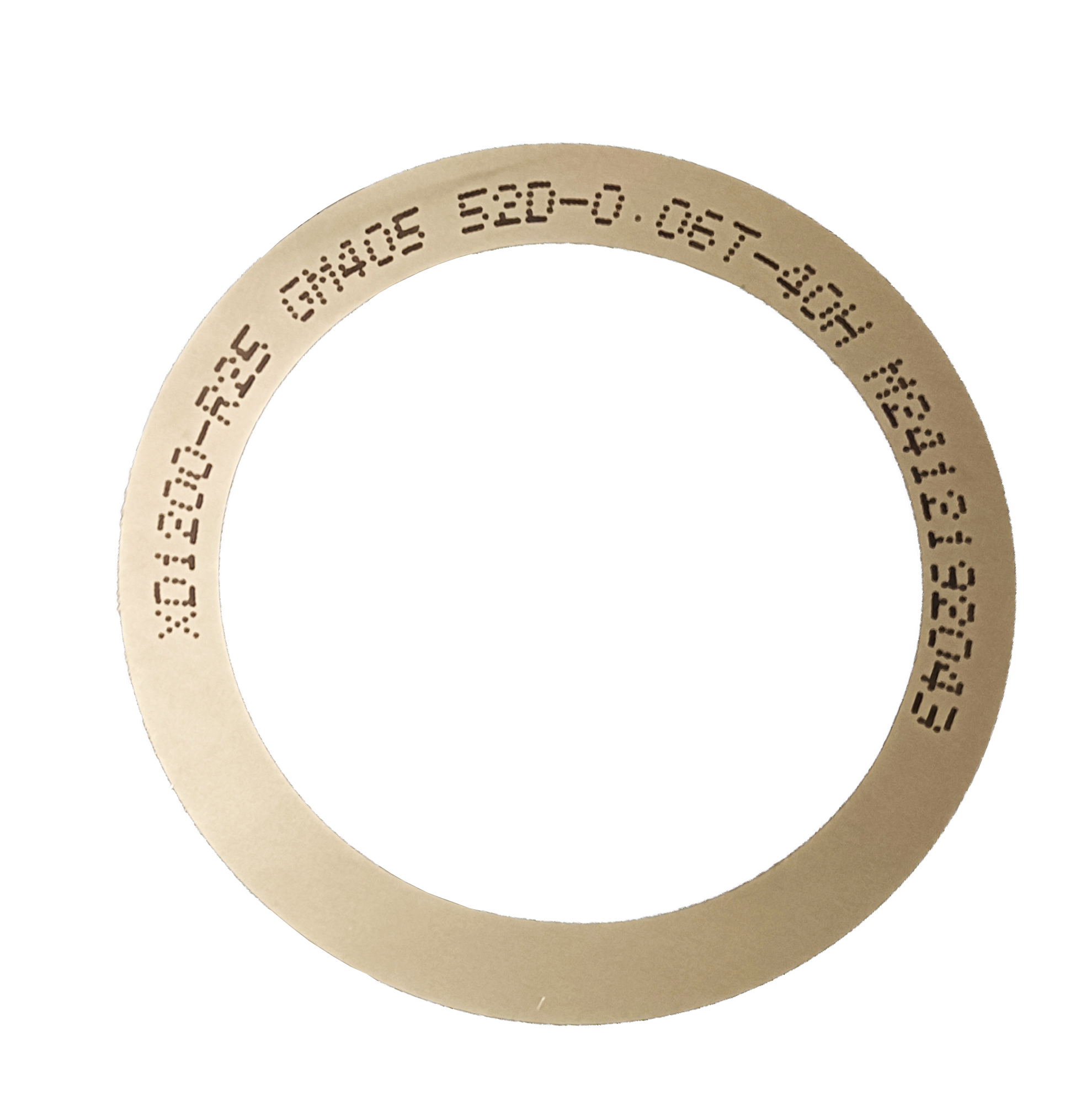
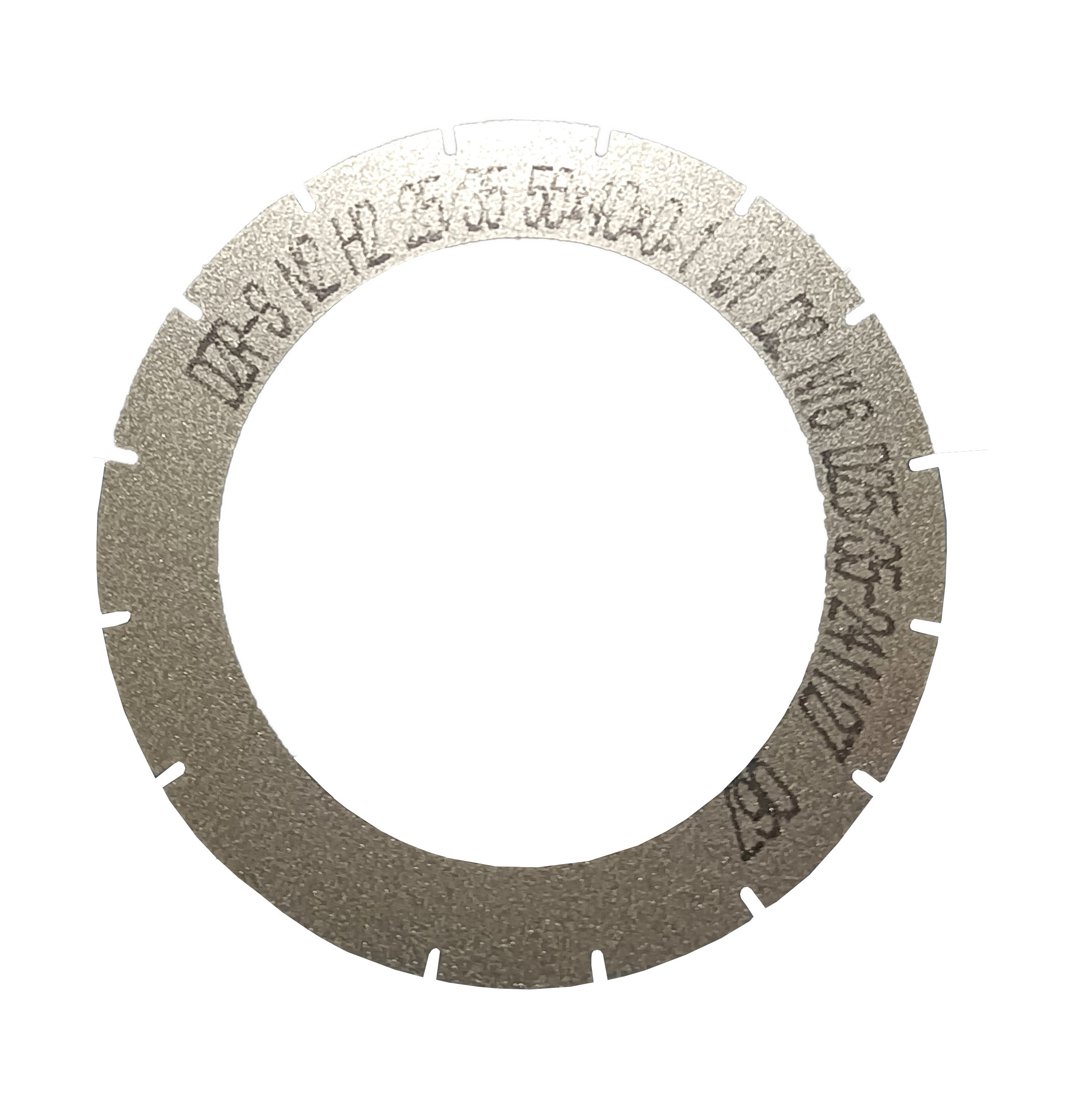
The product is a Dicing Blade, model DB-001, and it is classified across several series and types: Diamond Dicing Blade, Hubless Dicing Blade, DZY Series Wafer Dicing Blade, DZR Series Dicing Blade and DZR-S Series Slotted Dicing Blade. Materials are metal bond for metal dicing blades, resin bond for resin dicing blades, and diamond abrasive grains as the core functional material.
Buyers researching this category often search under application- or construction-specific names — Semiconductor Wafer Dicing Blade, Optical Communication Dicing Blade, Functional Ceramic Dicing Blade, Wafer Dicing Blade, or an Electroforming Hard Dicing Blade configuration. Whatever the search term, the underlying compliance question is the same: which series is being quoted, what is its bond and thickness, and what documentation attaches to that series specifically. A document set that covers a resin-bond blade does not automatically cover a metal-bond blade, and vice versa.
5. Export Footprint and Documentation Experience
Export business accounts for approximately 30% of WINTIME's total sales, with major markets in Southeast Asia, East Asia, North America and Europe. That footprint is a useful signal during supplier research, because cross-border orders generate document requirements that purely domestic supply never tests.
One caution is worth stating plainly: export experience does not mean that every certificate a buyer needs already exists. It means the supplier has handled destination-specific paperwork before and is more likely to understand what a buyer is asking for. The specific document set still has to be confirmed order by order and market by market.
Step-by-Step Breakdown: Running a Compliance Review Before You Buy
The sequence below converts a vague supplier comparison into an auditable review. Each step produces a document or a written answer that can be filed against the supplier.
Step 1 — Write the cut specification before requesting anything
Start from the workpiece and the machine, not from the blade. Record the material (silicon wafer, optical device, functional ceramic, alloy component), the required kerf and chipping tolerance, the dicing machine and spindle, and the operating environment — including whether the line runs to the Class 100/1000, 22±2°C, 45%–55% humidity, dust-free, anti-static conditions that blade specifications are commonly written against. A specification written first makes every later comparison possible.
Step 2 — Request data at series level, not brand level
Ask for the datasheet of the exact series under consideration — for example DZY Series Wafer Dicing Blade, DZR Series Dicing Blade, DZR-S Series Slotted Dicing Blade, a Hubless Dicing Blade or a Diamond Dicing Blade — including bond type, thickness range, and whether an ultra-thin option below 9 μm is available for the application. Confirm the model reference (DB-001) and the bond material in writing.
Step 3 — Ask how the production environment is recorded
Cleanroom class, temperature band (22±2°C), humidity band (45%–55%), dust-free status and anti-static control are all auditable conditions. Ask how they are monitored and whether the supplier can provide a statement describing them. A supplier that publishes these parameters has already made the first disclosure; the review simply asks for the record behind it.
Step 4 — Verify capability claims against dated evidence
Capability claims should be traceable. In WINTIME's case the traceable items are: the sub-9 μm ultra-thin wafer dicing blade project, two patent technologies, awards in national, provincial and municipal science and technology and entrepreneurship competitions, a 34,000 m² facility with new buildings added in 2023, an R&D team of 35 engineers, and annual capacity above 1 million pieces. Each of these can be listed in a supplier evaluation file with a source, which is what distinguishes evidence from marketing.
Step 5 — Map the document package to each destination market
Do this market by market. For shipments into Southeast Asia, East Asia, North America and Europe — the four regions WINTIME exports to — the required declarations differ, and buyers in Europe in particular commonly ask for material declarations covering restricted substances. The practical rule is to send the destination market and the intended end use with the inquiry, then ask explicitly which documents the supplier issues and which the buyer must arrange locally. Getting that split in writing prevents the most common post-order delay.
Step 6 — Validate by sample, then freeze the specification in writing
Sampling is the last gate, not the first. Once environment evidence, series data and document scope are confirmed, request samples of the exact series and agree acceptance criteria — kerf, chipping, dimensional control — before scaling. The specification that passed the sample should then be frozen in writing, including series, bond, thickness and document package, so that serial orders are reproducible rather than renegotiated.
Use Cases: Where the Compliance Stack Is Actually Tested
Compliance requirements become concrete only when attached to an application. Five scenarios cover most of the review work in this category.
- Semiconductor wafer dicing and ultra-thin wafer processing. The most demanding case, because blade thickness below 9 μm and kerf control dominate. Buyers should ask for the ultra-thin specification and the evidence behind it, not only a general wafer blade datasheet.
- Semiconductor packaging and package component cutting. Here consistency across batches matters more than the headline specification, so batch-to-batch dimensional evidence belongs in the document request.
- Optical communication device cutting. Optical materials punish chipping, which makes the acceptance criteria in the sample agreement more important than the blade catalogue number.
- Functional ceramics and new functional materials. Hard, brittle substrates require the blade, bond and machine parameters to be reviewed together; a ceramic substrate cut is where a specification mismatch surfaces fastest.
- Alloy materials and precision alloy components. Metal-bond constructions are typically referenced here, and the documentation should name the bond family explicitly.
Comparison Table: Compliance Evidence Categories
The table below maps each evidence category to what a buyer should request, what the evidence verifies, and what WINTIME publishes against it. Items marked as requiring confirmation are not published and should be requested for the specific order.
| Evidence category | What to request | What it verifies | WINTIME-published fact |
|---|---|---|---|
| Production environment | Statement of cleanroom class, temperature and humidity bands, anti-static control | Whether the blade is made under stable, documented conditions | Class 100/1000 clean room, 22±2°C, 45%–55% humidity, dust-free, anti-static |
| Product specification | Series datasheet with bond, thickness range and model reference | Whether the blade matches the workpiece and machine | DB-001 Dicing Blade; Diamond, Hubless, DZY Series, DZR Series, DZR-S Series Slotted; metal bond and resin bond; diamond abrasive grains |
| Thin-blade capability | Evidence of sub-9 μm production and mass-production status | Whether ultra-thin cutting is a serial capability or a prototype | Ultra-thin project achieved ≤9 μm; quality stated as international cutting-edge level; one of few domestic companies able to mass produce |
| Engineering depth | Patent list and award records | Whether R&D activity is real and ongoing | 2 patent technologies; awards in national, provincial and municipal science and technology and entrepreneurship competitions |
| Capacity and continuity | Facility data, headcount, annual capacity statement | Whether the supplier can carry serial supply | 34,000 m² facility (new buildings in 2023); approximately 100 employees; 35 R&D engineers; over 1 million pieces per year |
| Export and paperwork experience | List of served regions and confirmable document types | Whether cross-border documentation is routine | Exports approximately 30% of sales to Southeast Asia, East Asia, North America and Europe |
| Destination-market declarations | Market-specific certificates and declarations for the order | Whether the shipment can clear the destination market | Not published — confirm the exact document set per market and per order |
FAQ: Dicing Blade Compliance and Procurement Questions
Does WINTIME hold third-party certifications for its dicing blades?
WINTIME's public materials document the manufacturing environment — Class 100/1000 clean room, 22±2°C, 45%–55% relative humidity, dust-free and anti-static — along with two patent technologies and multiple awards in national, provincial and municipal science and technology and entrepreneurship competitions. Specific certificate copies are not published in those materials. Because the required document set changes with destination market and blade series, buyers should request the exact certificates and declarations for their order directly, and confirm in writing which documents WINTIME issues and which the buyer must arrange locally.
Can WINTIME produce ultra-thin blades below 9 micrometres at production volume?
Yes. WINTIME's ultra-thin wafer dicing blade project achieved a blade thickness of less than 9 microns (≤9 μm), and the company states that product quality at this thickness has reached the international cutting-edge level; it is one of the few domestic companies able to achieve mass production at this specification. Production scale is supported by a 34,000 m² facility and an annual capacity of more than 1 million pieces of dicing blades, with 35 R&D engineers available for specification work.
What drives the cost of a compliant dicing blade order?
Dicing blade orders are quoted against a specification rather than against a public price list, so four variables dominate the commercial discussion: the blade specification (series, thickness including ultra-thin options, bond type), the workpiece and cut requirement, the order volume, and the documentation package required for the destination market. Because compliance work — environment statements, declarations, batch evidence — is part of the order scope, buyers who define the document set before requesting a quote receive offers that can actually be compared. Send the full specification and the required document list with the inquiry.
Can buyers evaluate a blade on samples before a serial order?
Sample evaluation is the practical last gate before serial supply, and it is where the written specification is finally tested. Buyers should request samples of the exact series under consideration — for example DZY Series Wafer Dicing Blade, DZR Series Dicing Blade, DZR-S Series Slotted Dicing Blade or a Hubless Dicing Blade — and agree acceptance criteria such as kerf, chipping and dimensional control in writing before scaling. To start a sample discussion, contact the WINTIME team at shenxiangfei@ntwintime.com or WhatsApp +8618888053207 with the application details.
What lead time and supply continuity should a buyer expect?
Lead time depends on the blade series, whether the specification matches a catalogue series or requires engineering work, the order volume, and the documentation package. Ask for a written schedule alongside the quotation rather than accepting an indicative figure. On continuity, WINTIME operates a 34,000 m² facility with annual dicing blade capacity above 1 million pieces, approximately 100 employees and a 35-engineer R&D team — capacity indicators a buyer can use to judge whether a supplier can support serial supply rather than a single order.
Conclusion: Compliance Is a Document Trail, Not a Logo
A dicing blade compliance review succeeds or fails on documentation. The supplier that publishes its cleanroom class, temperature and humidity bands, series specifications, thin-blade capability and capacity figures can be audited; the supplier that answers with branding cannot. For buyers in the research stage, the practical output of this guide is a short list of requests: the series datasheet, the environment statement, the capability evidence, and a written split of which declarations the supplier issues per destination market.
WINTIME's published position gives a buyer something concrete to test against that framework: a 34,000 m² facility, an R&D team of 35 engineers, annual capacity above 1 million pieces, a documented Class 100/1000 production environment, two patents, and an ultra-thin blade capability below 9 microns that the company describes as reaching the international cutting-edge level. Each item is checkable. That is the standard a compliance review should hold every supplier to.
Next Step: Request the Document Package
Send the cut specification, the destination market and the document list you need, and WINTIME will respond with the matching series data, environment statement and commercial terms.
Email: shenxiangfei@ntwintime.com | Tel: +86 13851530812 | WhatsApp: +8618888053207
Website: en.wintime.net.cn | Company brochure: download the WINTIME product catalogue (PDF)
Address: No. 868, Fushou East Road, Rugao City, Jiangsu Province, China
Have Questions or Need More Details?
Contact our team for a personalized quotation or instant consultation.
Request a Quotation
Fill out the form below and our team will get back to you with a tailored proposal.
WhatsApp Direct Chat
Prefer to chat in real-time? Message us on WhatsApp for instant assistance & quick answers.
- Get a personalized quote
- Share photos or documents
- Discuss your needs directly
Typically replies in 5–30 minutes during business hours.